Loading
Loading
Research Overview
Nonapeptide neuropeptide produced in the hypothalamus; activates oxytocin receptors throughout the brain and peripheral tissue to regulate social bonding, trust, sexual behaviour, uterine contractions, and lactation.
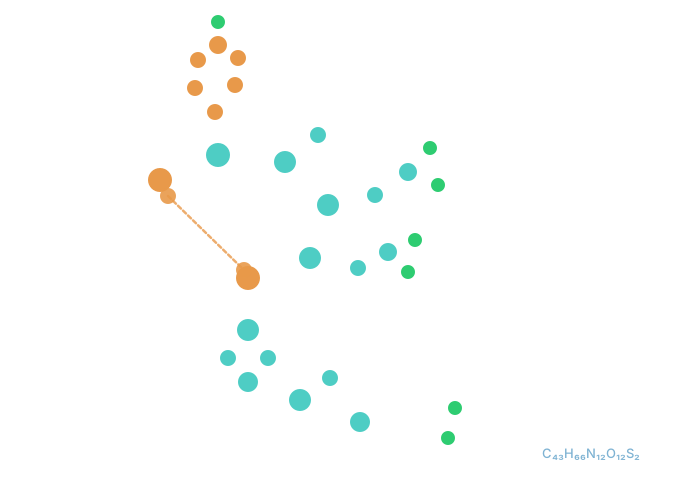
Oxytocin (Cys-Tyr-Ile-Gln-Asn-Cys-Pro-Leu-Gly-NH2) is a nonapeptide that acts both as a peripheral hormone affecting uterine contractility and milk ejection, and as a central neuropeptide modulating social behaviour, stress responses, and metabolic regulation. Preclinical research has established oxytocin as a pleiotropic signalling molecule with effects across the reproductive, social, and metabolic systems, making it a widely studied research tool in both neuroendocrinology and behavioural neuroscience.
Sold strictly as a research chemical for non-human, in-vitro, and laboratory use
FDA approved compound
Prescription availability in Australia and internationally
In Australia, oxytocin peptide has no TGA approval for therapeutic use. It is sold by Capital Peptides strictly as a research chemical for non-human, in-vitro, and laboratory research use only.
Oxytocin Peptide research is most relevant to protocols examining:
Social bonding, trust, and prosocial behaviour research
Postpartum care and breastfeeding support studies
Sexual function and intimacy enhancement investigations
Autism spectrum disorder social cognition research
Initial phase
Effects begin quickly. Initial signalling starts within the first few days. Start at the lowest dose and assess tolerance.
Early response
Measurable effects begin to establish. Mid-cycle assessment is appropriate at this point in well-designed protocols.
Peak activity window
Primary outcomes are typically strongest in this window. Human trial literature provides benchmarks for comparison.
Washout & review
Allow full washout (~5× half-life: ~3–5 min (IV); longer with sub-q). Review data, confirm baseline recovery before any repeat protocol.
Nonapeptide neuropeptide produced in the hypothalamus; activates oxytocin receptors throughout the brain and peripheral tissue to regulate social bonding, trust, sexual behaviour, uterine contractions, and lactation.
| Parameter | Value |
|---|---|
| Dose range | 10–24 IU/day (research) |
| Alt. dose 2 | 100 IU nasal spray protocols |
| Schedule | Protocol-dependent |
| Route | Intranasal, Subcutaneous, Intravenous |
| Half-life | ~3–5 min (IV); longer with sub-q |
Available from Capital Peptides
For research use only. Capital Peptides products are not approved by the TGA for therapeutic use. By purchasing you confirm you are a licensed research entity or qualified professional.