Loading
Loading
Research Overview
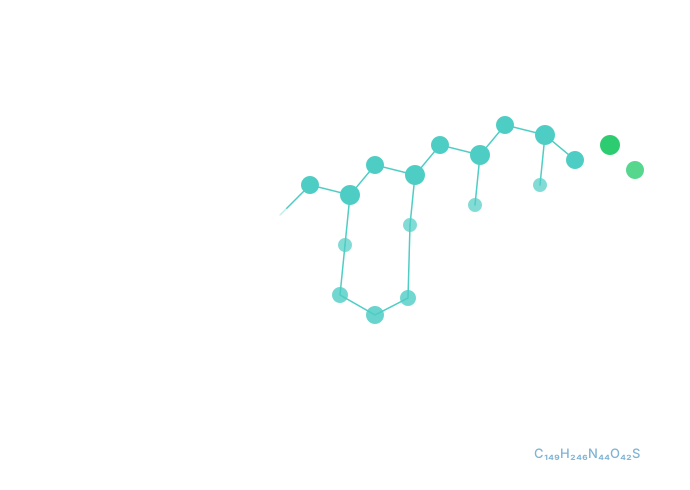
Synthetic analogue of the first 29 amino acids of GHRH; binds pituitary GHRH receptors to stimulate pulsatile GH release. Historically used for paediatric growth hormone deficiency.
Sermorelin (GHRH 1-29 NH2) is the N-terminal fragment of human growth hormone-releasing hormone that retains full biological activity at the GHRH receptor. Preclinical research has used sermorelin to study pituitary somatotroph biology, growth hormone secretion dynamics, and the downstream consequences of amplified GH axis activity in laboratory animal models. Its shorter sequence compared to full-length GHRH has made it a convenient research tool for investigating GH-axis biology.
In preclinical endocrinology research, sermorelin has been studied for its ability to stimulate episodic growth hormone release from pituitary somatotrophs through GHRH receptor-mediated cAMP signalling. Animal model studies have examined the pulsatile nature of sermorelin-stimulated GH secretion, its dose-response characteristics, and the relationship between GHRH receptor activity and downstream IGF-1 production in relevant model systems.
Sold strictly as a research chemical for non-human, in-vitro, and laboratory use
FDA approved compound
Listed as prohibited under WADA anti-doping regulations
Prescription availability in Australia and internationally
In Australia, sermorelin (ghrh analogue) peptide has no TGA approval for therapeutic use. It is sold by Capital Peptides strictly as a research chemical for non-human, in-vitro, and laboratory research use only.
Sermorelin (GHRH Analogue) Peptide research is most relevant to protocols examining:
Age-related GH decline and adult GH deficiency research
Sleep quality and slow-wave sleep investigations
Researchers seeking a shorter-acting, more physiological GHRH analogue
Paediatric growth hormone deficiency model studies
Initial phase
Compound begins accumulating in target tissue. Most researchers note subtle changes by end of week one. Baseline measurements recommended.
Early response
Measurable effects begin to establish. Mid-cycle assessment is appropriate at this point in well-designed protocols.
Peak activity window
Primary outcomes are typically strongest in this window. Human trial literature provides benchmarks for comparison.
Washout & review
Allow full washout (~5× half-life: ~10–20 min). Review data, confirm baseline recovery before any repeat protocol.
Synthetic analogue of the first 29 amino acids of GHRH; binds pituitary GHRH receptors to stimulate pulsatile GH release. Historically used for paediatric growth hormone deficiency.
| Parameter | Value |
|---|---|
| Dose range | 200–500 mcg/day |
| Schedule | Nightly |
| Route | Subcutaneous |
| Half-life | ~10–20 min |
Community & Anecdotal Signal
Community signal is moderate and clinically inflected. Sermorelin's history as a legitimate pharmaceutical gives it a different user profile than research peptides. Many anecdotal reports come from anti-aging clinic patients rather than grey market users, which skews the signal toward supervised use. Sleep quality improvements are reported consistently, often described before body composition changes. GH pulse restoration in older users is the primary framing in community discussion. Tolerance development over extended cycles is flagged by experienced users, with cyclical protocols commonly re
Anecdotal reports are not clinical evidence. Signal may reflect sourcing quality, dosing variation, and expectation bias.
Available from Capital Peptides
For research use only. Capital Peptides products are not approved by the TGA for therapeutic use. By purchasing you confirm you are a licensed research entity or qualified professional.