Capital Peptides
← All research overviews

Tirzepatide Peptide Research Overview

Important Notice: All information provided is for educational and informational purposes only. All peptides mentioned are intended exclusively for laboratory and in-vitro research and are not approved to diagnose, treat, cure, or prevent any disease.

Simplified Summary

Tirzepatide is a synthetic peptide that has been widely investigated in preclinical research for its interaction with metabolic signaling pathways. Structurally designed to act on both glucose-dependent insulinotropic polypeptide (GIP) and glucagon-like peptide-1 (GLP-1) receptors, it represents a dual incretin receptor agonist studied under controlled experimental conditions. Unlike endogenous peptides, tirzepatide is engineered to mimic and enhance naturally occurring hormonal signals involved in energy balance and glucose regulation, though its full range of mechanisms continues to be explored in scientific settings.

Across laboratory and animal-based models, tirzepatide has been examined for its potential influence on metabolic processes such as glucose homeostasis, insulin signaling, and lipid metabolism. Research often focuses on how it interacts with incretin receptors to modulate pathways associated with pancreatic function, appetite regulation, and energy utilization. Investigations also explore its effects on signaling cascades, receptor activation, and feedback mechanisms that may contribute to overall metabolic balance.

In addition to metabolic research, tirzepatide has been studied for its potential role in body weight regulation and energy intake within experimental environments. Preclinical findings suggest that its dual-receptor activity may influence satiety-related pathways and gastrointestinal signaling, as well as broader endocrine responses linked to nutrient processing and storage. These studies aim to better understand how combined GIP and GLP-1 receptor engagement may differ from single-pathway activation.

To support consistent experimental outcomes, tirzepatide is synthesized with enhanced stability for laboratory use, allowing researchers to closely evaluate its pharmacological behavior in controlled settings. All findings referenced are derived exclusively from non-clinical studies. There are no established conclusions regarding human safety, pharmacokinetics, dosing, or therapeutic applications, and all observations remain within the scope of ongoing scientific investigation.

Key Findings Reported in Preclinical Models

  • Neuronal and cellular systems: Tirzepatide has been investigated in cellular and tissue-based models, particularly those related to metabolic regulation. Experimental exposure in vitro has been associated with changes in intracellular signaling pathways linked to insulin sensitivity, glucose uptake, and energy utilization. Some findings suggest involvement in pathways that influence cellular metabolism and mitochondrial activity under controlled laboratory conditions.
  • Metabolic and glucose regulation models in animals: In animal-based studies, tirzepatide has been examined for its effects on glucose homeostasis and insulin response. Observations often focus on how dual activation of GIP and GLP-1 receptors may influence pancreatic beta-cell signaling, glucagon modulation, and systemic glucose balance. These models frequently assess changes in metabolic markers under both normal and experimentally induced dysregulation.
  • Body weight and energy balance models: Preclinical research has explored tirzepatide's potential influence on body weight and energy intake. Findings in animal models suggest that it may interact with pathways involved in satiety signaling, gastric emptying, and nutrient absorption. These studies aim to understand how dual incretin receptor engagement may alter feeding behavior and overall energy balance.
  • Endocrine and hormonal signaling studies: Tirzepatide has been evaluated for its interaction with endocrine pathways related to metabolic hormones. Research examines its potential effects on insulin secretion, glucagon suppression, and other hormone-mediated signaling processes. Investigations also consider its role in feedback mechanisms that regulate nutrient metabolism and energy storage.
  • Lipid metabolism and cardiovascular-related models: Some preclinical studies have assessed tirzepatide in the context of lipid metabolism and cardiovascular markers. Findings suggest potential involvement in pathways related to lipid processing, fat distribution, and biochemical markers associated with metabolic health, though these mechanisms remain under investigation.
  • Gene expression and biochemical pathway analysis: Molecular and biochemical assays indicate that tirzepatide may influence gene expression and enzymatic activity tied to metabolic regulation. These include pathways associated with insulin signaling, lipid metabolism, and cellular energy balance, as observed in both in vitro systems and animal models.
  • Peptide stability and laboratory formulation research: To support consistent experimental outcomes, synthesized forms of tirzepatide have been optimized for stability and reproducibility in laboratory settings. These formulations allow researchers to better examine its pharmacological behavior and receptor interactions under controlled experimental conditions.

Introduction

Tirzepatide research sits at the intersection of peptide biology, metabolic regulation, and endocrine signaling within controlled experimental models. Peptide-based signaling molecules are increasingly understood as complex regulators rather than isolated messengers—they coordinate multi-system communication networks that influence glucose metabolism, energy balance, and hormonal feedback mechanisms. In preclinical research, disruptions in these systems are often associated with impaired glucose regulation, altered insulin sensitivity, and broader metabolic imbalances.

Within this framework, tirzepatide has attracted scientific attention due to its dual activity on glucose-dependent insulinotropic polypeptide (GIP) and glucagon-like peptide-1 (GLP-1) receptors. Unlike endogenous incretin hormones, tirzepatide is a synthetic peptide designed to engage multiple receptor pathways simultaneously. Early investigations focused on its interaction with incretin signaling systems, particularly its potential to influence pancreatic function, insulin secretion, and glucagon regulation in experimental settings.

As research expanded, tirzepatide has been examined across a wider range of preclinical models, including those involving metabolic dysregulation, energy imbalance, and endocrine signaling alterations. Findings suggest that its activity may involve coordinated interactions between receptor activation, intracellular signaling cascades, and hormonal feedback systems that contribute to maintaining metabolic homeostasis under varying experimental conditions. These investigations often explore how dual-receptor engagement may differ from single-pathway modulation in terms of signaling efficiency and systemic response.

Despite growing scientific interest, tirzepatide research remains grounded in controlled experimental environments when considering foundational mechanisms. Variability in study design, model selection, and peptide formulation highlights the importance of careful interpretation. Ongoing investigation aims to further clarify how tirzepatide may influence metabolic pathways, endocrine signaling, and energy regulation within the scope of non-clinical research.

Molecular Origin & Structural Characteristics

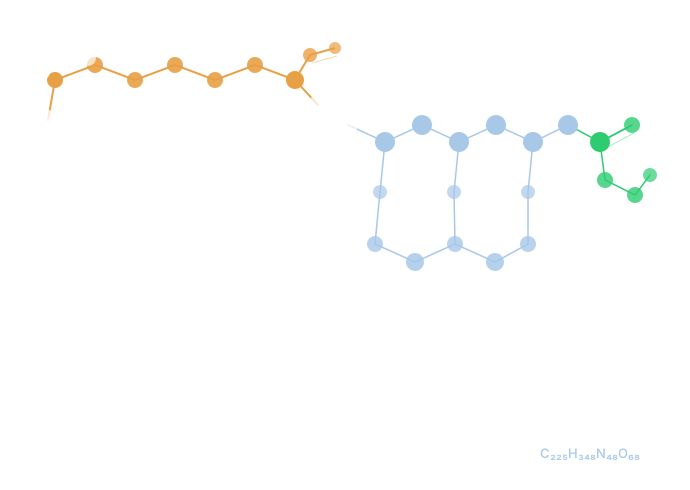
Tirzepatide is a synthetic peptide engineered for research involving metabolic and endocrine signaling pathways. It is structurally designed to function as a dual agonist of glucose-dependent insulinotropic polypeptide (GIP) and glucagon-like peptide-1 (GLP-1) receptors, incorporating features that allow it to mimic and extend the activity of naturally occurring incretin hormones. Unlike endogenous peptides, tirzepatide is not directly derived from a single native sequence but instead represents a modified construct optimized for receptor interaction and experimental stability.

From a structural standpoint, tirzepatide is a larger peptide compared to short-chain regulatory peptides, consisting of a sequence tailored to support dual receptor binding. It includes modifications that enhance its resistance to enzymatic degradation, improving its persistence in biological systems during experimental evaluation. Additionally, lipidation strategies have been incorporated into its structure to promote binding to serum proteins such as albumin, which may influence its distribution and half-life in laboratory models.

Structure-function analyses suggest that tirzepatide's biological activity depends on its ability to maintain conformational compatibility with both GIP and GLP-1 receptors. Subtle changes in its amino acid sequence or structural components have been shown in experimental settings to alter receptor affinity and downstream signaling effects. These findings highlight the importance of its engineered configuration in supporting dual-pathway activation.

Unlike smaller endogenous peptides, tirzepatide demonstrates enhanced stability and prolonged activity due to its structural modifications. It is typically introduced into preclinical models through controlled administration, where its interactions with metabolic tissues and receptor systems can be observed. Research has examined how its molecular design facilitates receptor binding, signaling amplification, and interaction with systemic metabolic pathways.

Compared to simpler peptide systems, tirzepatide represents a more complex and purpose-built molecule with distinct pharmacological properties. Ongoing research continues to investigate how its structural features—including receptor-binding domains, stability enhancements, and biochemical properties—contribute to its observed activity across experimental models focused on metabolic regulation and endocrine signaling.

Mechanistic Insights & Cellular Targets

Preclinical investigations suggest that Tirzepatide interacts with interconnected metabolic and endocrine pathways, primarily through activation of GIP and GLP-1 receptors. Rather than acting through a single isolated mechanism, its effects are often described as coordinated across multiple signaling systems, with outcomes influenced by experimental conditions, tissue types, and metabolic states. Most mechanistic insights are derived from in vitro studies and animal models examining glucose regulation, hormone signaling, and energy balance.

Incretin Receptor Interaction

Tirzepatide has been extensively studied for its dual interaction with GIP and GLP-1 receptor systems. Experimental findings suggest that simultaneous activation of these receptors may influence intracellular signaling cascades related to insulin secretion, glucagon modulation, and nutrient metabolism. These interactions are central to its role in metabolic pathway research.

Metabolic and Hormonal Regulation

A key focus of tirzepatide research involves its influence on endocrine signaling. Preclinical studies examine its effects on insulin dynamics, glucagon activity, and hormone-mediated feedback systems that regulate glucose homeostasis. These investigations explore how dual incretin receptor engagement may coordinate hormonal responses under varying metabolic conditions.

Cellular Signaling and Gene Expression

Some studies indicate that tirzepatide may influence gene expression associated with metabolic regulation, including pathways linked to insulin sensitivity, lipid metabolism, and cellular energy utilization. Observed changes in transcriptional activity are often evaluated in relation to receptor-mediated signaling cascades.

Appetite and Energy Balance Pathways

In models examining energy intake and expenditure, tirzepatide has been associated with signaling pathways involved in satiety and gastrointestinal function. Research explores how receptor activation may influence neural and hormonal signals that regulate feeding behavior and nutrient processing.

Lipid Metabolism and Biochemical Markers

Preclinical investigations have also assessed tirzepatide's potential role in lipid metabolism. Findings suggest possible interactions with pathways involved in fat storage, lipid breakdown, and circulating metabolic markers, though these mechanisms remain under active study.

Inflammatory and Cellular Stress Markers

Some experimental research has explored tirzepatide's influence on inflammatory signaling and cellular stress responses. Observations include potential modulation of cytokine activity and oxidative stress pathways, particularly in models of metabolic imbalance.

Peptide Stability and Metabolic Processing

Due to its engineered structure, tirzepatide demonstrates increased resistance to enzymatic degradation compared to many endogenous peptides. Research has examined how its stability and interaction with metabolic enzymes contribute to its persistence and activity in experimental systems.

Distribution and Tissue Interaction

Tirzepatide has been evaluated for its interaction with various metabolic tissues, including pancreatic, hepatic, and adipose systems. Studies focus on how its molecular properties influence distribution, receptor engagement, and systemic signaling effects within controlled models.

Context-Dependent Effects

Importantly, tirzepatide's observed activity varies across experimental conditions. Factors such as dosage, administration method, and metabolic state of the model system significantly influence outcomes. Current evidence supports a framework in which tirzepatide modulates interconnected metabolic and endocrine pathways, contributing to regulatory processes strictly within preclinical research settings.

Preclinical Research Landscape

The preclinical research landscape surrounding Tirzepatide is extensive and methodologically diverse, reflecting strong scientific interest in peptide-based modulation of metabolic and endocrine systems. Since its development as a dual incretin receptor agonist, tirzepatide has been examined across a wide range of experimental platforms, including in vitro cellular assays, animal-based metabolic studies, and molecular-level investigations. These approaches collectively contribute to a growing body of evidence, though variability in study design, model selection, and experimental conditions continues to shape interpretation.

In Vitro Experimental Systems

Cell-based models play a foundational role in tirzepatide research. Pancreatic, hepatic, adipose, and endocrine-related cell lines have been used to investigate its effects on intracellular signaling pathways associated with insulin response, glucose uptake, and lipid metabolism. In these controlled environments, tirzepatide exposure has been associated with changes in receptor activation, second messenger systems, and gene expression linked to metabolic regulation.

Additional in vitro systems include co-culture and metabolic stress models, where tirzepatide has been evaluated for its interaction with pathways related to cellular energy balance and biochemical adaptation. As with many peptide-focused studies, outcomes vary depending on concentration, exposure duration, and the metabolic state of the cells, contributing to differences across findings.

Metabolic and Energy Regulation Models

Animal studies focused on metabolic function represent a central component of tirzepatide research. These models often examine glucose homeostasis, insulin sensitivity, and energy utilization under both baseline and experimentally altered metabolic conditions. Observations are typically paired with biochemical analyses assessing hormone levels, receptor activity, and systemic metabolic markers.

Body Weight and Nutrient Processing Models

Preclinical investigations have also explored tirzepatide in models related to body weight regulation and nutrient metabolism. These studies assess parameters such as energy intake, satiety signaling, and gastrointestinal processing. Findings suggest that dual incretin receptor engagement may influence pathways involved in appetite regulation and nutrient handling, though mechanisms continue to be refined.

Endocrine and Hormonal Signaling Models

Tirzepatide has been widely studied in experimental systems examining endocrine function. These models evaluate hormone-related signaling pathways, including insulin secretion, glucagon activity, and feedback mechanisms that regulate glucose balance. Research often focuses on how coordinated receptor activation may influence hormonal rhythms and metabolic stability.

Inflammatory and Metabolic Stress Models

A growing area of research involves tirzepatide's potential interaction with inflammatory signaling and metabolic stress pathways. Experimental models incorporating induced metabolic imbalance or oxidative stress have reported changes in cytokine activity and biochemical stress markers following peptide exposure. These findings suggest possible links between metabolic regulation and inflammatory responses, though underlying mechanisms remain under investigation.

Molecular and Biochemical Investigations

At the molecular level, tirzepatide has been examined for its interaction with intracellular signaling cascades and enzymatic systems. Research explores its influence on pathways related to insulin signaling, lipid metabolism, and cellular energy regulation. These studies aim to better understand how dual receptor activation translates into coordinated cellular responses in experimental settings.

Methodological Variability and Limitations

Despite substantial research activity, the tirzepatide literature exhibits variability in experimental design. Differences in peptide formulation, dosing strategies, delivery methods, and model systems contribute to inconsistencies across findings. While many studies report promising mechanistic insights, replication across diverse experimental conditions remains an important consideration.

Importantly, all available findings discussed here are derived exclusively from non-clinical research contexts. There are no definitive conclusions regarding human safety, pharmacokinetics, dosing protocols, or therapeutic applications within this scope. Tirzepatide remains a subject of ongoing scientific investigation, primarily utilized to explore mechanisms related to metabolic regulation, endocrine signaling, and energy balance in controlled experimental environments.

Safety Considerations & Research Limitations

All currently available data on Tirzepatide within this context originate from controlled experimental and preclinical research environments. While broader scientific literature includes clinical investigation, the focus here remains strictly on mechanistic and laboratory-based findings. Key parameters—such as long-term biological effects across diverse model systems, tissue-specific distribution in experimental settings, and detailed intracellular processing—continue to be explored. As such, interpretation of tirzepatide's activity in this overview should remain limited to controlled research conditions.

Several limitations define the current preclinical landscape. Study outcomes often vary depending on model selection, experimental design, peptide formulation, and administration protocols. Differences in metabolic assays, hormonal measurements, and induced model conditions (such as insulin resistance or metabolic stress) contribute to variability across findings. In many cases, results are highly context-dependent, making direct comparison between studies challenging.

Peptide structure and stability also play a significant role. Although tirzepatide has been engineered with modifications to enhance resistance to enzymatic degradation and prolong activity, variations in formulation, storage, and delivery methods across studies may influence its observed behavior. Even minor differences in experimental handling can affect receptor interaction, signaling intensity, and downstream biological responses.

Context-specific responses add another layer of complexity. While tirzepatide is consistently associated with modulation of metabolic and endocrine pathways in preclinical models, the magnitude and nature of these effects may differ depending on the physiological state of the system being studied. Factors such as baseline metabolic condition, receptor expression levels, and experimental stressors can all shape outcomes.

The broader research landscape may also be influenced by publication bias, where studies demonstrating significant or positive findings are more likely to be reported than those with neutral results. Additionally, although research interest is high, variability in methodologies and limited direct replication across independent laboratories can affect the consistency and generalizability of findings.

Taken together, these considerations underscore that tirzepatide remains an actively studied compound within experimental science. While mechanistic insights continue to expand, important gaps persist in fully characterizing its behavior across diverse biological systems. Ongoing research is essential to refine understanding and ensure that interpretations remain grounded in reproducible, well-controlled scientific evidence.

Conclusion

Tirzepatide represents a significant focus of investigation within preclinical research centered on metabolic regulation, endocrine signaling, and energy balance. As a purpose-built peptide designed to engage both GIP and GLP-1 receptor pathways, it has been studied across a wide range of experimental systems, including metabolic models, hormone regulation studies, and cellular-level analyses. Its engineered structure and dual-receptor activity distinguish it from single-pathway peptides, positioning it as a valuable model for examining coordinated signaling across complex metabolic networks.

Across in vitro systems and animal models, tirzepatide has been associated with interactions involving glucose homeostasis, insulin dynamics, lipid metabolism, and energy intake regulation. These findings suggest that its activity may function through integrated and context-dependent mechanisms, rather than a single isolated pathway. Recurring areas of interest—particularly its role in incretin signaling, endocrine feedback systems, and metabolic adaptation—highlight its relevance as a research tool in experimental physiology.

At the same time, the tirzepatide research landscape presents important limitations within preclinical contexts. While mechanistic insights continue to evolve, variability in experimental design, model selection, and peptide formulation can influence reported outcomes. Differences in methodology and study conditions make direct comparisons challenging, and consistent replication across independent systems remains an ongoing consideration in foundational research.

Accordingly, tirzepatide should be regarded as a key investigational peptide contributing to the broader understanding of metabolic and endocrine regulation. At the same time, gaps remain in fully characterizing its mechanisms across diverse biological systems, emphasizing the need for continued, well-controlled research to refine and expand current scientific knowledge.

References

  • Coskun, T., et al. (2018). LY3298176, a novel dual GIP and GLP-1 receptor agonist for the treatment of type 2 diabetes mellitus: From discovery to clinical proof of concept. Molecular Metabolism.
  • Willard, F. S., et al. (2020). Tirzepatide is an imbalanced and biased dual GIP and GLP-1 receptor agonist. Journal of Clinical Investigation Insight.
  • Frias, J. P., et al. (2018). Efficacy and safety of LY3298176 in patients with type 2 diabetes: A randomized, controlled phase 2 trial. The Lancet.
  • Jastreboff, A. M., et al. (2022). Tirzepatide once weekly for the treatment of obesity. The New England Journal of Medicine.
  • Ludvik, B., et al. (2021). Tirzepatide versus insulin degludec in type 2 diabetes (SURPASS-3). The Lancet.
  • Min, T., & Bain, S. C. (2021). The role of tirzepatide in the management of type 2 diabetes: The SURPASS trials. Diabetes Therapy.
  • Samms, R. J., et al. (2021). Tirzepatide: Dual GIP and GLP-1 receptor agonism in metabolic regulation. Molecular Metabolism.
  • Thomas, M. K., et al. (2019). Tirzepatide improves markers of beta-cell function and insulin sensitivity. Diabetologia.
  • Heise, T., et al. (2022). Pharmacokinetic and pharmacodynamic properties of tirzepatide. Clinical Pharmacokinetics.
  • Forzano, I., et al. (2022). Tirzepatide: A systematic update on dual incretin receptor agonism. International Journal of Molecular Sciences.

For research use only. Capital Peptides products are not approved by the TGA for therapeutic use. By purchasing you confirm you are a licensed research entity or qualified professional.