Loading
Loading
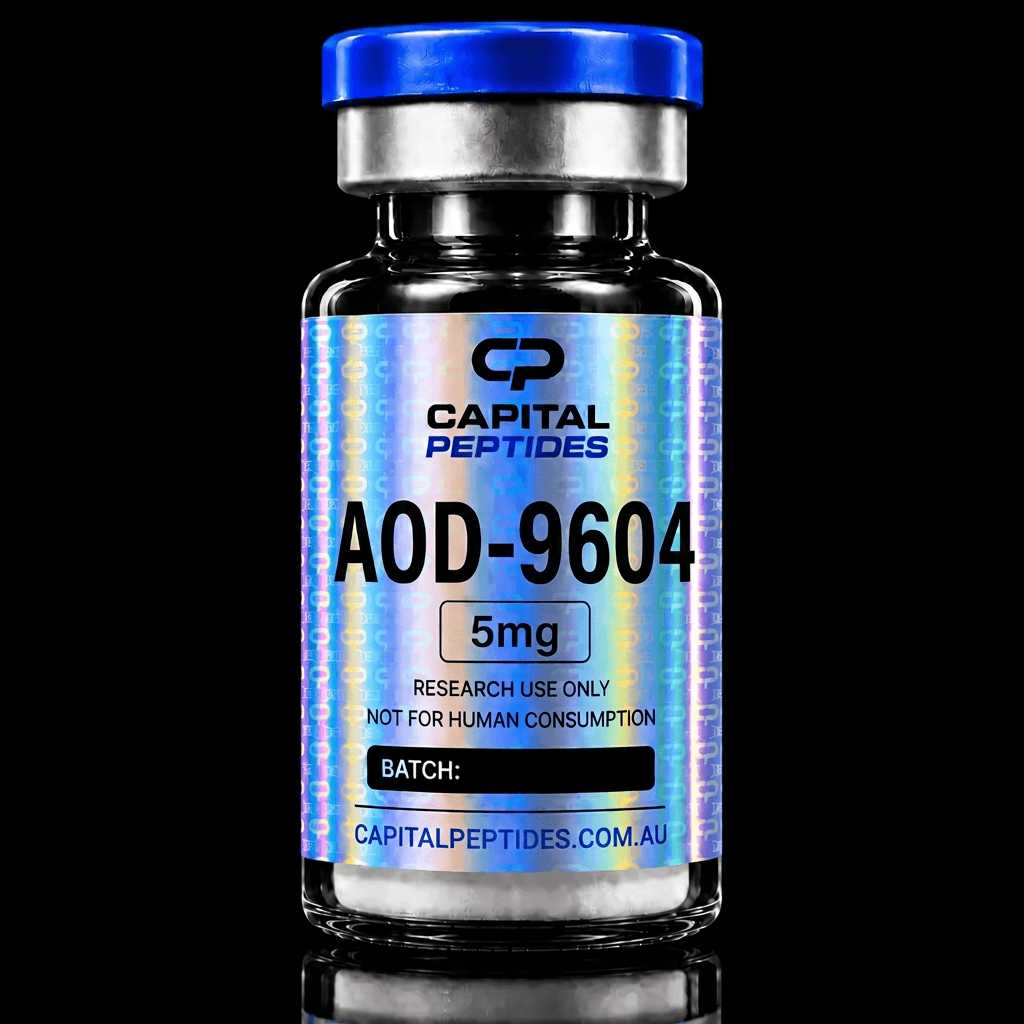
Metabolic & Body Composition · 5mg
Choose dose
Janoshik-tested · 10 vials per kit
AOD 9604 is a synthetic peptide fragment derived from the C-terminal region of human growth hormone, studied in preclinical research for its metabolic properties. Research has examined its potential to selectively stimulate lipolysis and inhibit lipogenesis, mimicking HGH's fat-metabolism effects while avoiding effects on blood glucose or muscle growth. Studies have also explored potential benefits for bone metabolism.
≥98%
Purity
Lyophilised
Format
2–3 wks
Arrival
Don't want to wait 3 weeks?
Check local stock — weekday same/next-day delivery available.
Chemical Properties
Need to work out your dose?
Use our reconstitution calculator — syringe units in seconds.
Research Use Only — Disclaimer
This product is intended solely as a research chemical for laboratory and scientific study purposes only. It is not approved by the TGA or any regulatory body for human or animal consumption, therapeutic use, or clinical application. The information provided on this website is for educational purposes only. Handling must be limited to suitably qualified professionals operating within applicable laws and regulations. This product is not classified as a drug, food, cosmetic, or medicinal product and must not be used or labelled as such. By purchasing, you confirm you are a qualified research professional and accept full responsibility for compliance with all relevant laws in your jurisdiction.
AOD-9604
AOD-9604 is a synthetic peptide fragment of human growth hormone (residues 176-191) with a tyrosine substitution at the N-terminal position. Developed at Monash University by researchers at Metabolic Pharmaceuticals, it was engineered to retain the lipolytic activity of hGH while eliminating growth-promoting, IGF-1-stimulating, and diabetogenic effects.
AOD-9604 stimulates lipolysis and inhibits lipogenesis in adipocytes via a mechanism distinct from the canonical growth hormone receptor/JAK2/STAT5 signalling pathway — it does not measurably affect IGF-1, blood glucose, or insulin levels even at high doses. The compound inhibits acetyl-CoA carboxylase and reduces de novo fatty acid synthesis. Some evidence suggests interaction with beta-3 adrenoceptors on adipocytes, contributing to thermogenic effects.
Phase I/II clinical trials documented significant fat mass reduction over 12 weeks with an acceptable safety profile. Phase III trials showed fat loss but the total body weight endpoint was not met for regulatory purposes. Research has since expanded to cartilage repair after discovery of chondrogenic properties in in vitro and animal models — chondrocyte stimulation studies are ongoing.
Key References
For research reference only. All information pertains to preclinical or published human trial data. Not intended as medical advice. This product is for research use only.
Don't have supplies? Grab them while you're here.