Loading
Loading
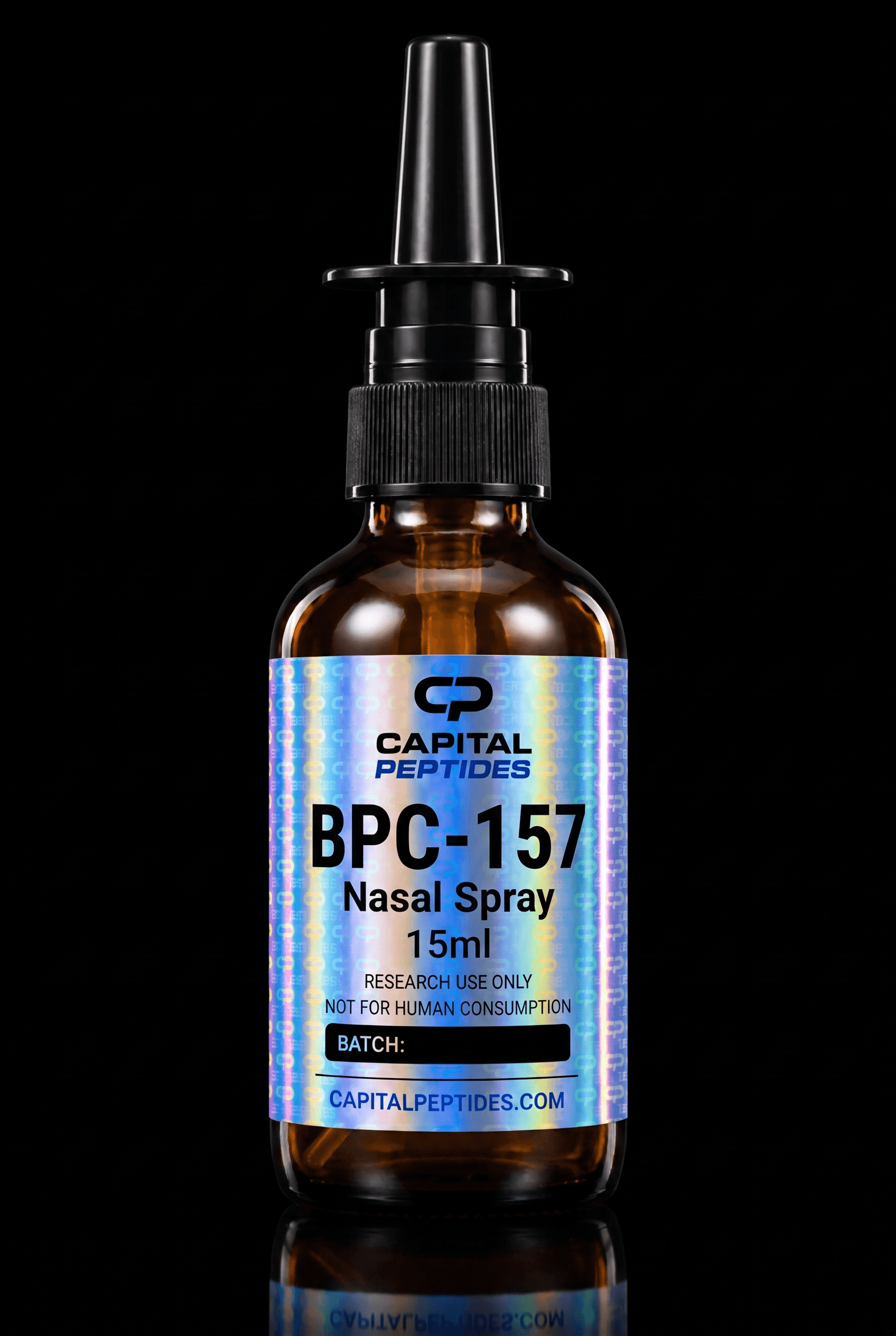
Product image is a representation — actual packaging and label may vary.
Nasal Sprays · 7ml
🕐 Pre-order — ships from 31 August 2026
This product is pre-order only right now. Your order will be dispatched once stock arrives on 31 August 2026.
$106
AUD · 1 pack
Flat rate · ships with your order
BPC-157 is a 15-amino-acid synthetic peptide (Body Protection Compound 157) studied in preclinical research for its multi-faceted biological activities. Research has examined its potential to support tissue repair by accelerating skin, tendon, and ligament healing via angiogenesis and endothelial cell modulation; neuroprotection through serotonin/dopamine pathway regulation; gastrointestinal support via mucosal integrity and anti-inflammatory effects; and liver protection with anti-fibrotic and cytoprotective properties.
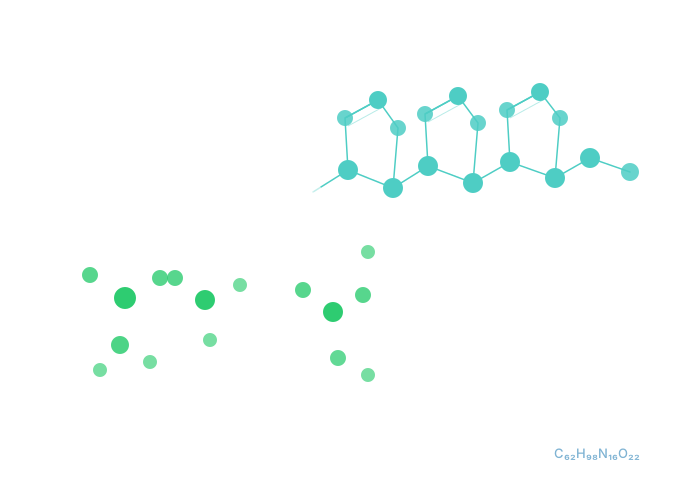
Chemical Properties
Research Use Only — Disclaimer
These consumable supplies are intended solely for use in research and laboratory settings. All items are sterile and individually packaged for professional handling. BAC water is for peptide reconstitution purposes only and is not intended for injection without appropriate professional supervision. Not for human or animal consumption in any form.
BPC-157
Body Protection Compound 157
BPC-157 is a synthetic pentadecapeptide (15 amino acids) derived from a sequence within a protective protein found in gastric juice. First described in the 1990s by researchers at the University of Zagreb, it has been studied across a broad range of preclinical models for regenerative and cytoprotective properties. Unlike many peptides it appears stable in both aqueous solution and gastric acid, facilitating study across multiple administration routes.
BPC-157 modulates multiple signalling pathways relevant to tissue repair. It upregulates VEGFR2 and promotes angiogenesis — the formation of new blood vessels required for healing. It also activates the FAK-paxillin pathway, which governs cytoskeletal organisation and cell migration. Additionally, BPC-157 influences nitric oxide (NO) synthesis and interacts with dopaminergic and serotonergic systems, which may account for its gastrointestinal and neuroprotective observations.
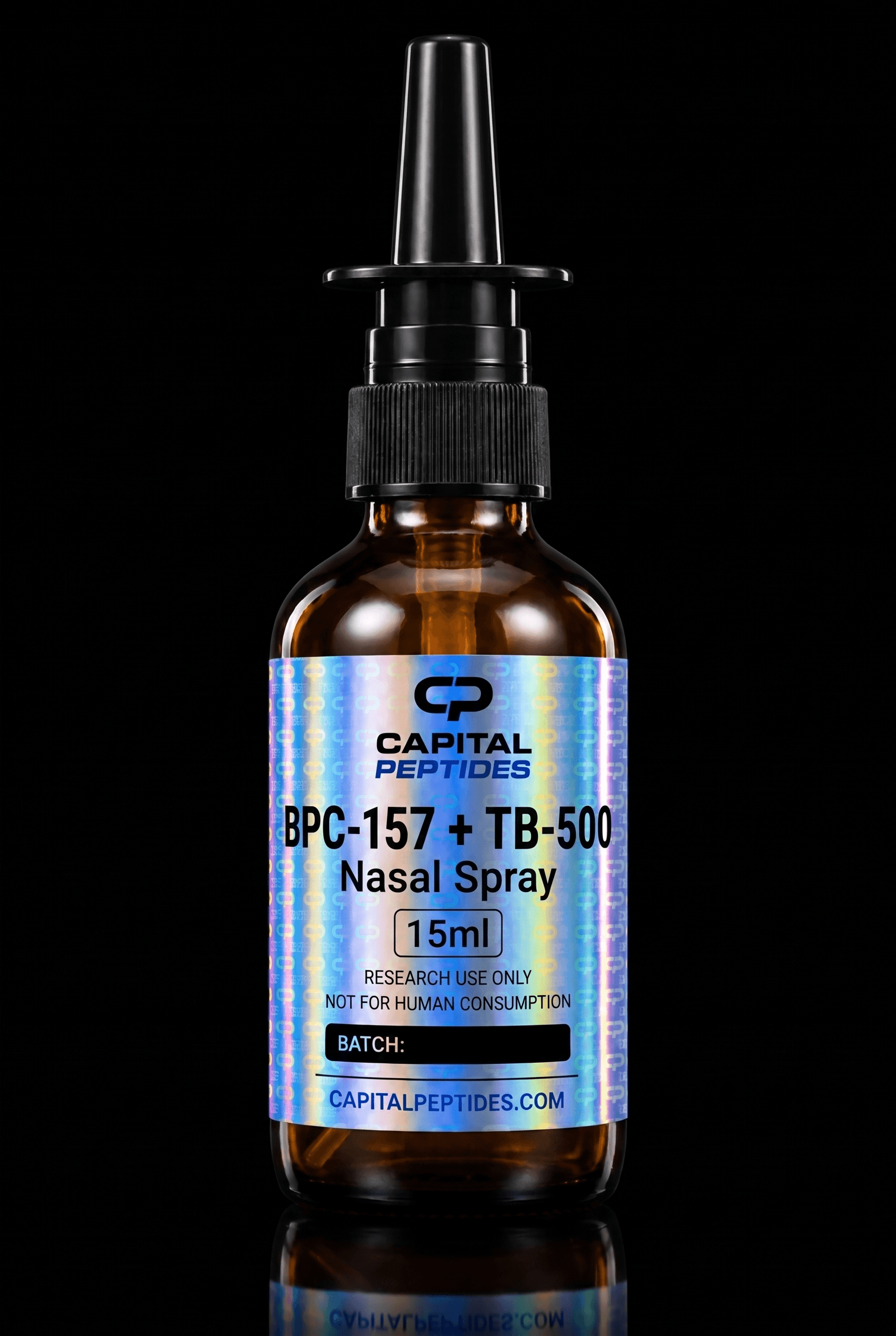
Preclinical studies have explored BPC-157 in models of tendon and ligament injury, gut barrier dysfunction, gastric ulceration, bone fracture healing, peripheral nerve repair, and anti-inflammatory activity. It has been co-studied with TB-500 (Thymosin Beta-4) in blended formulations for tissue recovery models. All published data to date is in animal or in vitro models; no human clinical trials have been published.
Key References
For research reference only. All information pertains to preclinical or published human trial data. Not intended as medical advice. This product is for research use only.