Loading
Loading
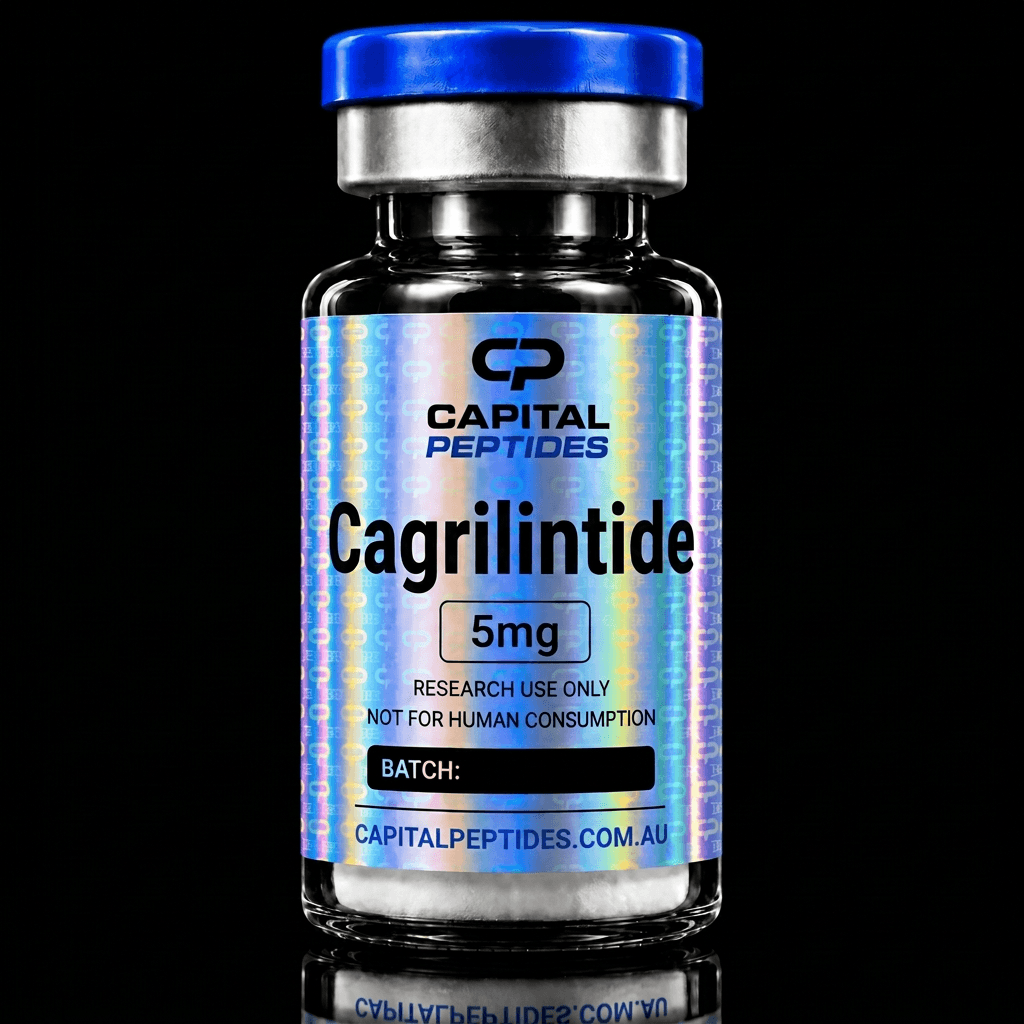
Metabolic & Body Composition · 5mg
Choose dose
Janoshik-tested · 10 vials per kit
Cagrilintide is a long-acting amylin analog studied in preclinical and clinical research for its metabolic properties. Research has examined its potential to regulate body weight and blood glucose by activating amylin and calcitonin receptors. With an extended half-life of approximately 7–8 days, studies have explored its potential for significant weight-loss effects, glycemic control, and improved patient compliance compared to native amylin.
≥98%
Purity
Lyophilised
Format
2–3 wks
Arrival
Don't want to wait 3 weeks?
Check local stock — weekday same/next-day delivery available.
Chemical Properties
Need to work out your dose?
Use our reconstitution calculator — syringe units in seconds.
Research Use Only — Disclaimer
This product is intended solely as a research chemical for laboratory and scientific study purposes only. It is not approved by the TGA or any regulatory body for human or animal consumption, therapeutic use, or clinical application. The information provided on this website is for educational purposes only. Handling must be limited to suitably qualified professionals operating within applicable laws and regulations. This product is not classified as a drug, food, cosmetic, or medicinal product and must not be used or labelled as such. By purchasing, you confirm you are a qualified research professional and accept full responsibility for compliance with all relevant laws in your jurisdiction.
Cagrilintide
AM833 — Long-Acting Amylin Analog
Cagrilintide (AM833) is a long-acting synthetic analog of amylin — the 37-amino-acid pancreatic hormone co-secreted with insulin by beta cells in response to food intake. Developed by Novo Nordisk for once-weekly subcutaneous dosing, it is in Phase 3 clinical trials in combination with semaglutide under the name CagriSema for obesity and type 2 diabetes.
Amylin acts via calcitonin receptor/RAMP complexes (AMY1, AMY2, AMY3 receptors) expressed in the area postrema, hypothalamus, and nucleus accumbens. Cagrilintide activates these receptors to produce satiety signalling, slow gastric emptying, suppress post-meal glucagon, and reduce food reward — effects mechanistically complementary to and additive with GLP-1R engagement. The GLP-1 and amylin pathways target overlapping but distinct circuits in the hypothalamic satiety network.
Phase 2 SCALE CAGRI data demonstrated dose-dependent weight loss up to 15.6% at 26 weeks for cagrilintide monotherapy. In combination with semaglutide 2.4mg (CagriSema), Phase 2 data showed weight loss exceeding 22% at 32 weeks — superior to either agent alone and approaching the efficacy of bariatric surgery. Phase 3 trials are ongoing for obesity and T2DM.
Key References
For research reference only. All information pertains to preclinical or published human trial data. Not intended as medical advice. This product is for research use only.
Don't have supplies? Grab them while you're here.