
Loading
Loading
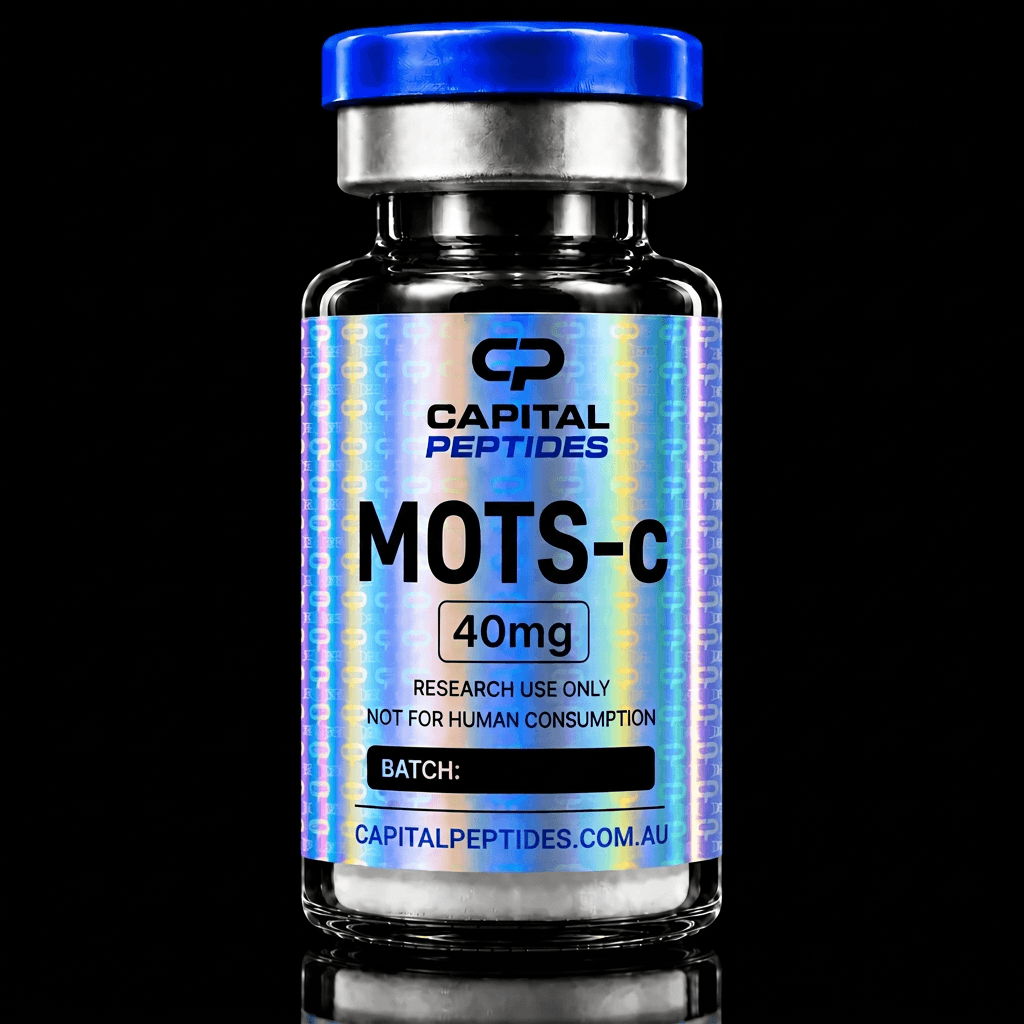
Metabolic & Body Composition · 40mg
Choose dose
Janoshik-tested · 10 vials per kit
MOTS-c is a mitochondria-derived peptide encoded by mitochondrial DNA, studied in preclinical research for its metabolic and cytoprotective properties. Research has examined its potential to regulate fatty acid oxidation and gluconeogenesis, maintain blood sugar stability, and prevent obesity and insulin resistance. Studies have also explored its anti-inflammatory and antioxidant effects, and direct modulation of nuclear DNA expression.
≥98%
Purity
Lyophilised
Format
2–3 wks
Arrival
Don't want to wait 3 weeks?
Check local stock — weekday same/next-day delivery available.
Chemical Properties
Need to work out your dose?
Use our reconstitution calculator — syringe units in seconds.
Research Use Only — Disclaimer
This product is intended solely as a research chemical for laboratory and scientific study purposes only. It is not approved by the TGA or any regulatory body for human or animal consumption, therapeutic use, or clinical application. The information provided on this website is for educational purposes only. Handling must be limited to suitably qualified professionals operating within applicable laws and regulations. This product is not classified as a drug, food, cosmetic, or medicinal product and must not be used or labelled as such. By purchasing, you confirm you are a qualified research professional and accept full responsibility for compliance with all relevant laws in your jurisdiction.
MOTS-c
Mitochondrial Open Reading Frame of the 12S rRNA-c
MOTS-c is a 16-amino-acid mitochondria-derived peptide (MDP) encoded within the 12S ribosomal RNA gene of the mitochondrial genome — not the nuclear genome. Identified in 2015 by Lee et al. at the University of Southern California, it was the first mitochondria-encoded peptide shown to regulate nuclear gene expression. Circulating levels of MOTS-c decline with age in both rodents and humans, linking it to age-related metabolic changes.
MOTS-c translocates from the mitochondria to the nucleus in response to metabolic stress — particularly glucose restriction and exercise. In the nucleus it acts as a transcriptional co-regulator, binding to antioxidant response elements (AREs) and activating AMPK signalling. MOTS-c suppresses the folate cycle and de novo purine biosynthesis in favour of the methionine cycle under glucose limitation. It also upregulates GLUT4 expression and promotes insulin-independent glucose uptake in skeletal muscle.
Preclinical studies have demonstrated MOTS-c's role in extending lifespan in C. elegans and improving metabolic parameters in murine models of obesity and type 2 diabetes. Exercise-induced MOTS-c release appears to mediate some of the metabolic benefits of physical activity. Research areas include insulin sensitivity, skeletal muscle metabolism, cardiovascular protection, and age-related metabolic decline.
Key References
For research reference only. All information pertains to preclinical or published human trial data. Not intended as medical advice. This product is for research use only.
Don't have supplies? Grab them while you're here.