Loading
Loading
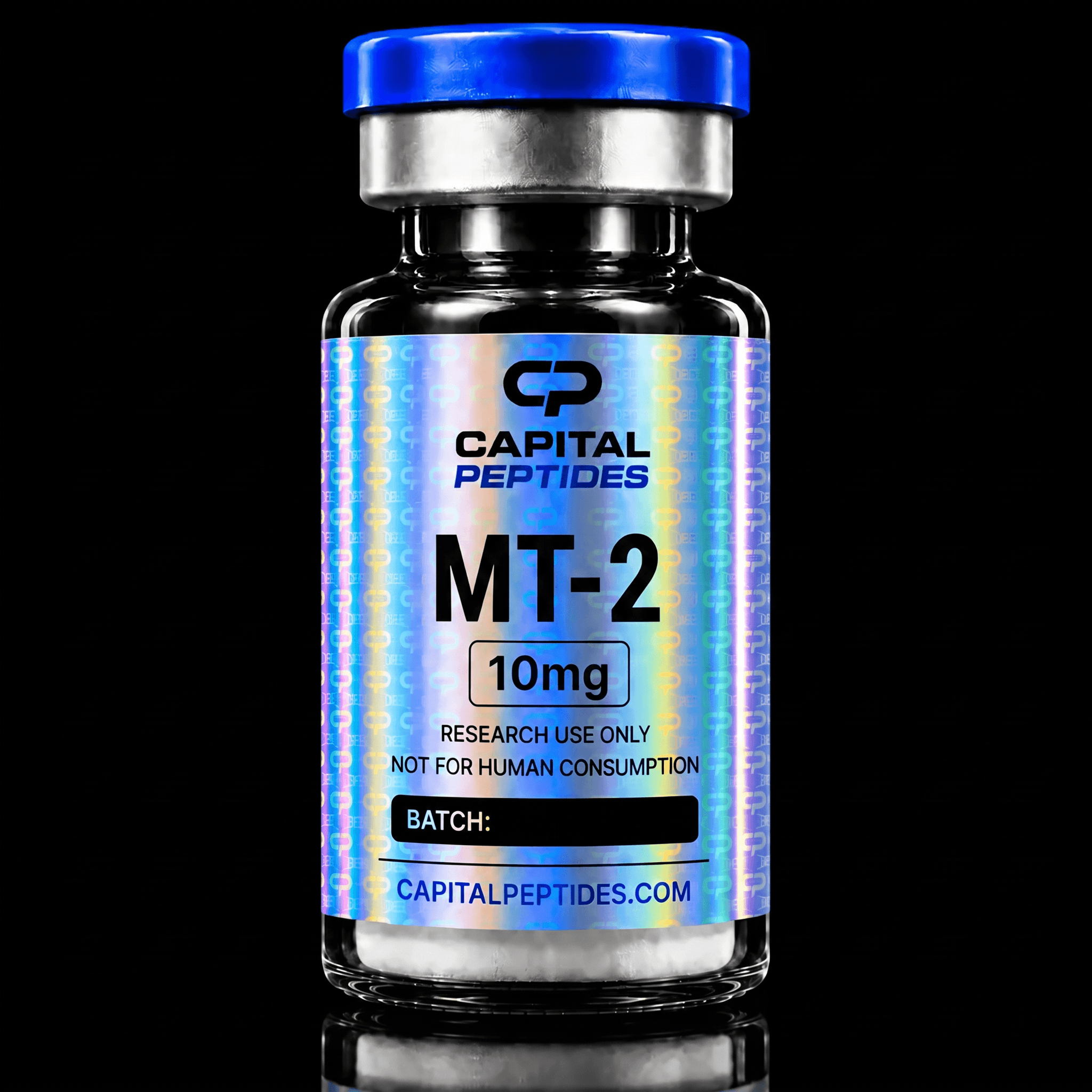
Tanning & Pigmentation · 10mg
Choose dose
Janoshik-tested · 10 vials per kit
Melanotan-2 is a synthetic cyclic analog of alpha-MSH studied in preclinical and clinical research for its melanocortin receptor activity. Research has examined its potential to stimulate melanin production, reduce UV-induced skin damage, and modulate appetite and sexual function pathways through MC3R/MC4R activation. Studies have also explored skin photoprotection and partial defence against UV-induced skin damage.
≥98%
Purity
Lyophilised
Format
2–3 wks
Arrival
Don't want to wait 3 weeks?
Check local stock — weekday same/next-day delivery available.
Chemical Properties
Need to work out your dose?
Use our reconstitution calculator — syringe units in seconds.
Research Use Only — Disclaimer
This product is intended solely as a research chemical for laboratory and scientific study purposes only. It is not approved by the TGA or any regulatory body for human or animal consumption, therapeutic use, or clinical application. The information provided on this website is for educational purposes only. Handling must be limited to suitably qualified professionals operating within applicable laws and regulations. This product is not classified as a drug, food, cosmetic, or medicinal product and must not be used or labelled as such. By purchasing, you confirm you are a qualified research professional and accept full responsibility for compliance with all relevant laws in your jurisdiction.
Melanotan II
MT-II
Melanotan II (MT-2) is a cyclic lactam heptapeptide analog of alpha-melanocyte-stimulating hormone (α-MSH), developed at the University of Arizona in the early 1980s as part of research into melanoma prevention through enhanced natural melanogenesis. Its cyclic conformation confers broader melanocortin receptor subtype activity and higher potency compared to the linear Melanotan I.
MT-2 is a non-selective melanocortin receptor agonist with activity at MC1R, MC3R, MC4R, and MC5R. MC1R stimulation on melanocytes drives eumelanin (dark brown pigment) production via cAMP elevation and subsequent PKA activation, increasing melanin synthesis without UV exposure. MC4R activation in the hypothalamus produces appetite suppression and activates pathways associated with sexual arousal. MC3R involvement may contribute to energy homeostasis effects.
Originally studied as a photoprotective pigmentation agent, MT-2 research expanded to sexual function (leading to the discovery of bremelanotide/PT-141), appetite regulation, and inflammatory modulation. The compound's non-selectivity means research must account for simultaneous activities at multiple receptor subtypes. MT-2 is not approved by any regulatory authority for therapeutic use; all data is from preclinical or observational contexts.
Key References
For research reference only. All information pertains to preclinical or published human trial data. Not intended as medical advice. This product is for research use only.
Don't have supplies? Grab them while you're here.