Loading
Loading
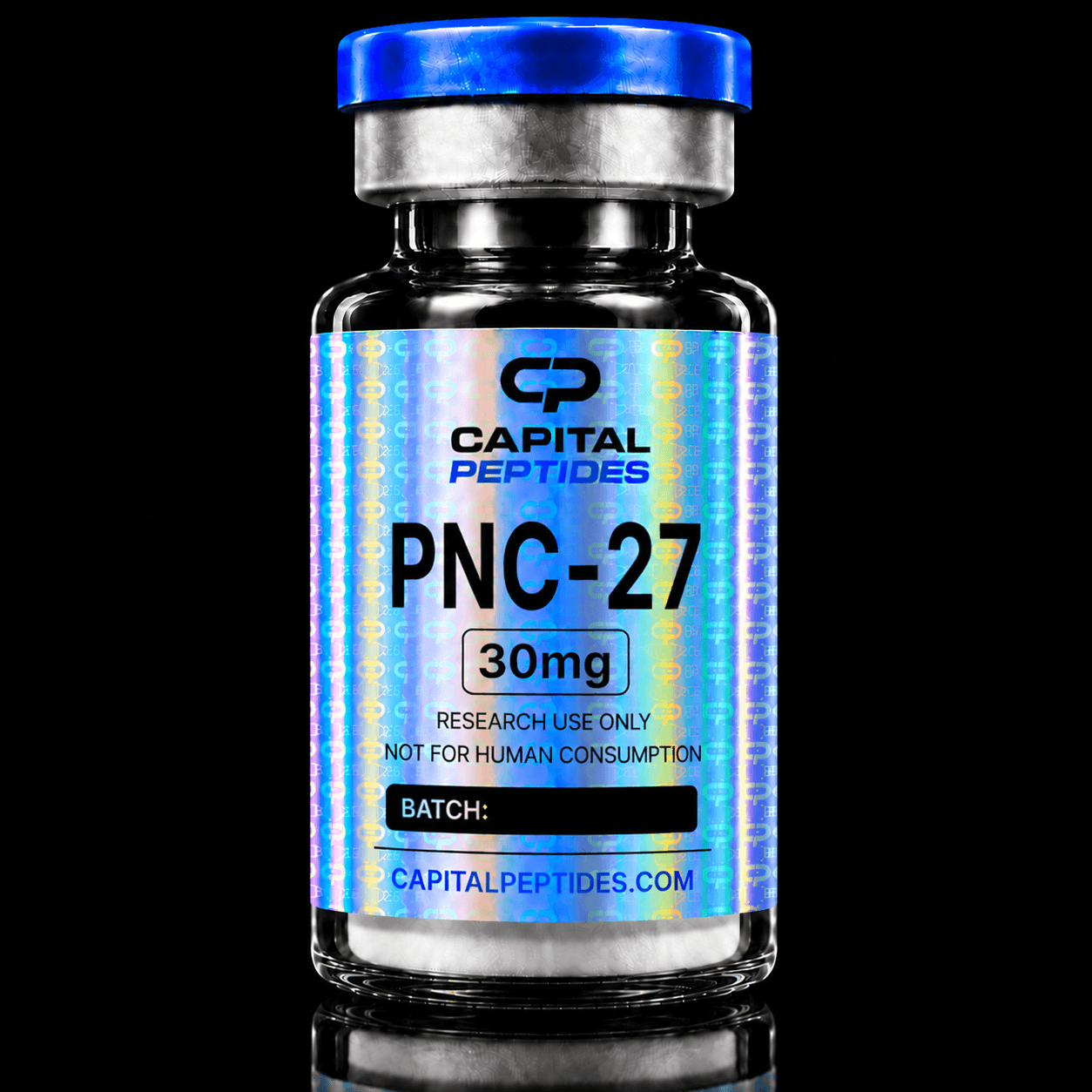
Advanced / Specialty Compounds · 30mg
Janoshik-tested · 10 vials per kit
PNC-27 is a synthetic chimeric peptide containing an MDM-2-binding domain and a transmembrane-penetrating sequence, studied in preclinical research for its selective anticancer properties. Research has examined its potential to bind HDM-2 expressed on cancer cell membranes, induce selective membranolysis of tumour cells while sparing normal cells, and trigger necrosis without apoptosis in various cancer cell lines.
≥98%
Purity
Lyophilised
Format
2–3 wks
Arrival
Don't want to wait 3 weeks?
Check local stock — weekday same/next-day delivery available.
Need to work out your dose?
Use our reconstitution calculator — syringe units in seconds.
Research Use Only — Disclaimer
This product is intended solely as a research chemical for laboratory and scientific study purposes only. It is not approved by the TGA or any regulatory body for human or animal consumption, therapeutic use, or clinical application. The information provided on this website is for educational purposes only. Handling must be limited to suitably qualified professionals operating within applicable laws and regulations. This product is not classified as a drug, food, cosmetic, or medicinal product and must not be used or labelled as such. By purchasing, you confirm you are a qualified research professional and accept full responsibility for compliance with all relevant laws in your jurisdiction.
PNC-27
p53 Activation Domain–Penetratin Fusion
PNC-27 is a synthetic peptide comprising a p53 activation domain sequence (residues 12-26 of p53) fused to a penetratin-based membrane-destabilising sequence. Developed by Bhatt et al. at Columbia University, it is designed to selectively induce apoptosis in cancer cells by targeting full-length MDM2 protein overexpressed on cancer cell surface membranes — a membrane localisation not found on normal cells.
Cancer cells (and certain pre-cancerous cells) aberrantly express full-length MDM2 protein on the external face of the plasma membrane. PNC-27's p53 activation domain mimics the p53-MDM2 binding interface, allowing selective binding to cell-surface MDM2 on cancer cells. Upon binding, the penetratin domain disrupts the plasma membrane through a pore-forming mechanism, causing direct membranolysis rather than triggering classical intracellular apoptotic signalling pathways. This produces rapid, selective cancer cell death at micromolar concentrations.
Selective cancer cell apoptosis without affecting normal cells, MDM2-targeted oncology research, breast cancer and pancreatic cancer cell models (where membranolysis was documented), melanoma cell lines, and as a proof-of-concept for cell-surface MDM2 targeting as a cancer therapy strategy.
Key References
For research reference only. All information pertains to preclinical or published human trial data. Not intended as medical advice. This product is for research use only.
Don't have supplies? Grab them while you're here.