Loading
Loading
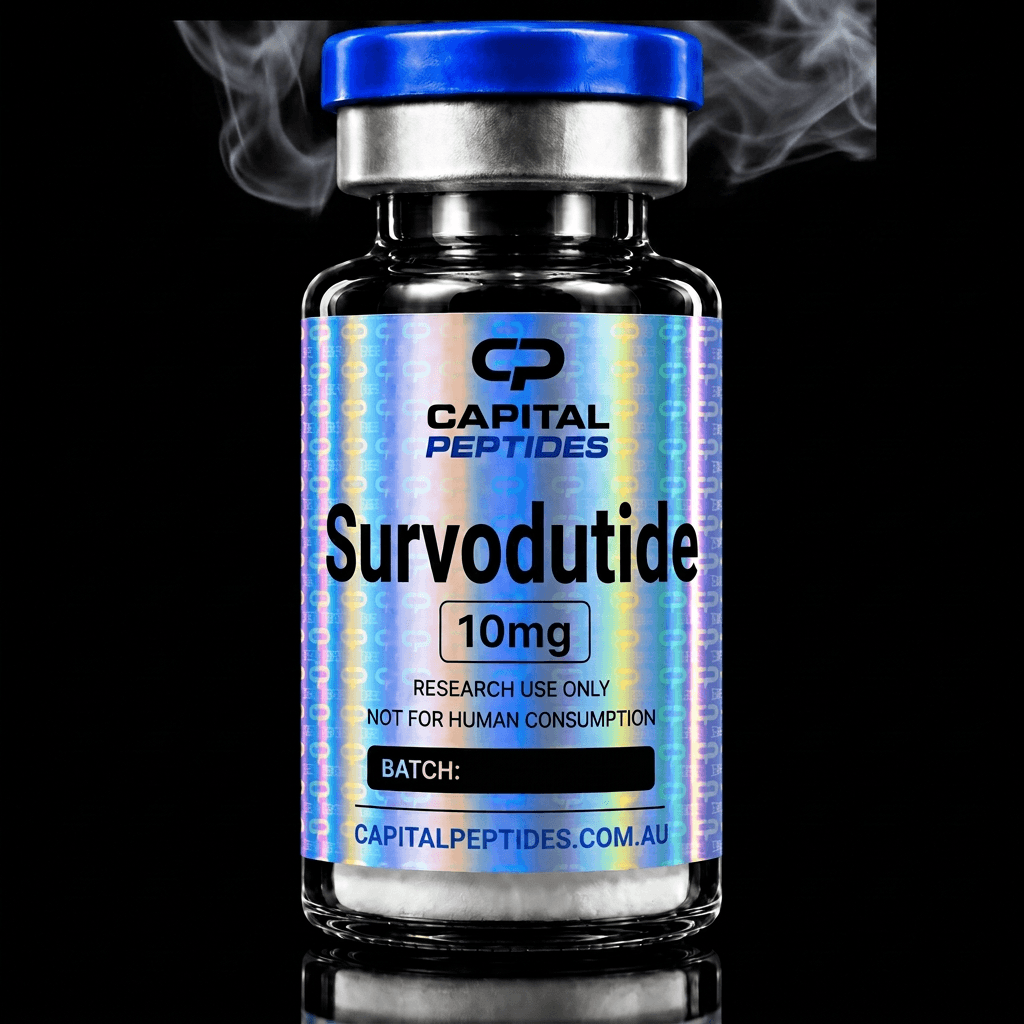
Metabolic & Body Composition · 10mg
Janoshik-tested · 10 vials per kit
Survodutide is a dual GLP-1 and glucagon receptor agonist studied in preclinical and clinical research for its metabolic regulatory properties. Research has examined its potential to suppress appetite, enhance energy expenditure through glucagon receptor activation, reduce liver fat accumulation, and improve cardiometabolic markers. Studies have explored applications in obesity and non-alcoholic steatohepatitis (NASH) models.
≥98%
Purity
Lyophilised
Format
2–3 wks
Arrival
Don't want to wait 3 weeks?
Check local stock — weekday same/next-day delivery available.
Chemical Properties
Need to work out your dose?
Use our reconstitution calculator — syringe units in seconds.
Research Use Only — Disclaimer
This product is intended solely as a research chemical for laboratory and scientific study purposes only. It is not approved by the TGA or any regulatory body for human or animal consumption, therapeutic use, or clinical application. The information provided on this website is for educational purposes only. Handling must be limited to suitably qualified professionals operating within applicable laws and regulations. This product is not classified as a drug, food, cosmetic, or medicinal product and must not be used or labelled as such. By purchasing, you confirm you are a qualified research professional and accept full responsibility for compliance with all relevant laws in your jurisdiction.
Survodutide
BI 456906 — GLP-1/Glucagon Dual Agonist
Survodutide (BI 456906) is a long-acting synthetic GLP-1/glucagon dual receptor agonist developed by Boehringer Ingelheim in partnership with Zealand Pharma. Designed for once-weekly subcutaneous administration via a fatty acid-modified peptide backbone, it entered Phase 3 clinical trials for obesity and non-alcoholic steatohepatitis (NASH).
Survodutide simultaneously activates GLP-1 receptors (appetite suppression, glucose-dependent insulin secretion, slowed gastric emptying) and glucagon receptors (increased hepatic energy expenditure, thermogenesis, lipolysis, and reduction of hepatic triglyceride content). The balanced dual agonism aims to combine GLP-1-mediated caloric restriction with glucagon-mediated fat mobilisation and hepatic lipid clearance — an approach particularly well-suited to NASH where both adiposity and hepatic steatosis are targets.
Phase 2 data demonstrated significant body weight reduction and improvement in liver histology scores (NASH resolution) in obese adults. The BOEHRINGER-NASH Phase 3 programme has focused on NASH with fibrosis. Weight loss data also showed cardiovascular risk marker improvement, supporting potential cardiovascular outcome trials. The glucagon component's distinct mechanism from GLP-1 means additive hepatic benefit is expected beyond semaglutide or tirzepatide.
Key References
For research reference only. All information pertains to preclinical or published human trial data. Not intended as medical advice. This product is for research use only.
Don't have supplies? Grab them while you're here.