Loading
Loading
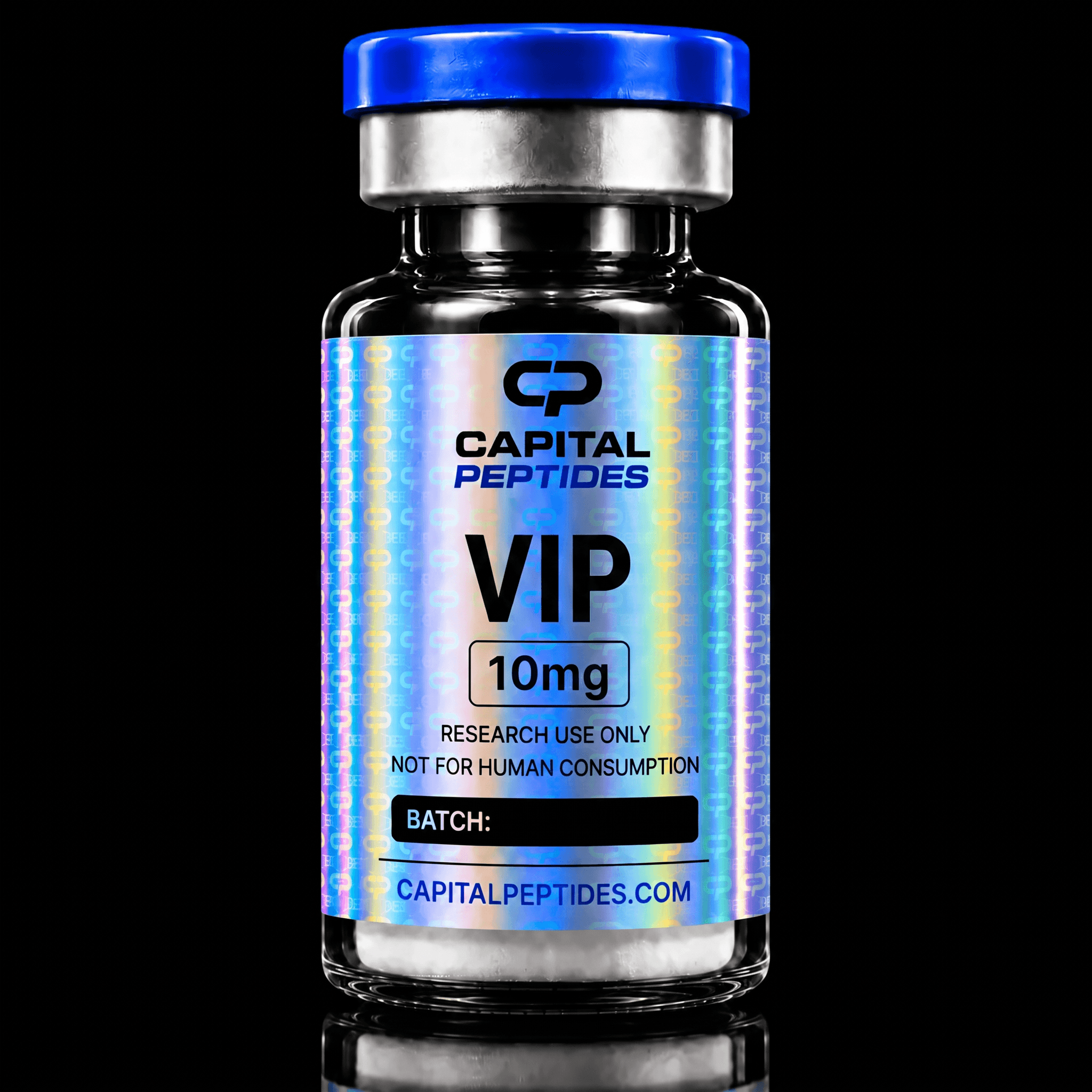
Advanced / Specialty Compounds · 10mg
Choose dose
Janoshik-tested · 10 vials per kit
VIP (Vasoactive Intestinal Peptide) is a 28-amino-acid neuropeptide studied in preclinical and clinical research for its broad neuroimmune and vasoregulatory properties. Research has examined its potential to relax smooth muscle, promote bronchodilation, regulate intestinal motility, modulate T-cell responses, suppress inflammatory cytokines, and support pulmonary arterial vasodilation. Studies have explored applications in pulmonary hypertension, autoimmune, and respiratory disease models.
≥98%
Purity
Lyophilised
Format
2–3 wks
Arrival
Don't want to wait 3 weeks?
Check local stock — weekday same/next-day delivery available.
Chemical Properties
Need to work out your dose?
Use our reconstitution calculator — syringe units in seconds.
Research Use Only — Disclaimer
This product is intended solely as a research chemical for laboratory and scientific study purposes only. It is not approved by the TGA or any regulatory body for human or animal consumption, therapeutic use, or clinical application. The information provided on this website is for educational purposes only. Handling must be limited to suitably qualified professionals operating within applicable laws and regulations. This product is not classified as a drug, food, cosmetic, or medicinal product and must not be used or labelled as such. By purchasing, you confirm you are a qualified research professional and accept full responsibility for compliance with all relevant laws in your jurisdiction.
VIP
Vasoactive Intestinal Peptide
Vasoactive Intestinal Peptide (VIP) is a 28-amino-acid neuropeptide with broad physiological roles across the nervous, immune, and gastrointestinal systems. Widely distributed in central and peripheral neurons, intestinal mucosal cells, and immune tissue, VIP was first isolated from porcine intestine in 1970 and named for its pronounced vasodilatory effects. It is now recognised as one of the most pleiotropic neuroimmune regulators.
VIP acts via VPAC1 (ubiquitous) and VPAC2 (primarily CNS, immune) G-protein-coupled receptors that signal through cAMP/PKA and PKC cascades. In smooth muscle it causes potent relaxation (vasodilation, bronchodilation, intestinal relaxation). In immune cells, VPAC1/2 activation shifts the Th1/Th2 balance toward Th2/Treg anti-inflammatory responses, reducing TNF-α, IL-6, and IL-12 while increasing IL-10 and TGF-β. In the SCN it acts as a circadian coupling signal between pacemaker neurons.
Pulmonary arterial hypertension (inhaled VIP demonstrated acute pulmonary vasodilation in Phase 2 trials), inflammatory bowel disease (VIP is depleted in IBD mucosa; restoration reduces colitis severity in animal models), autoimmune conditions (rheumatoid arthritis, multiple sclerosis — robust preclinical data), POTS and dysautonomia research, circadian rhythm modulation, neuroprotection, and Alzheimer's disease (VIP-ergic neurons are early casualties).
Key References
For research reference only. All information pertains to preclinical or published human trial data. Not intended as medical advice. This product is for research use only.
Don't have supplies? Grab them while you're here.