Loading
Loading
Research Overview
Copper-binding tripeptide (alanine-histidine-lysine); activates dermal papilla cells in vitro via copper-dependent cellular signalling in the same copper-peptide class as GHK-Cu but with distinct amino acid flanking producing follicular-biology selectivity.
Overview
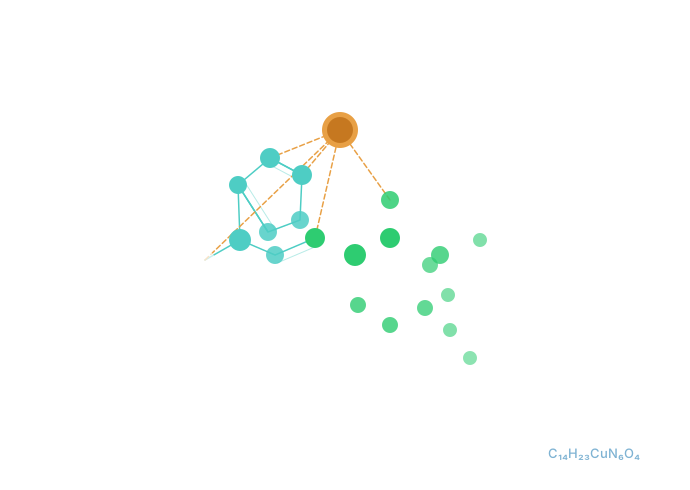
AHK-Cu is a copper-binding tripeptide comprising the amino acid sequence alanine-histidine-lysine, chelated to copper in the same chemical class as the better-characterised GHK-Cu (glycine-histidine-lysine copper). Like GHK-Cu, it utilises the histidine residue for copper coordination, but its different flanking amino acids produce a distinct biological activity profile with particular relevance to follicular biology.
In vitro research using dermal papilla cells has examined AHK-Cu's potential to activate the cellular populations responsible for hair follicle cycling and growth. Dermal papilla cells are the dermal signalling centres of hair follicles — their activation is considered a research target for follicular support applications. Most AHK-Cu research involves topical application rather than systemic administration.
Evidence for AHK-Cu effects is limited primarily to in vitro cell culture studies and some topical formulation research. Unlike GHK-Cu, which has a broader research base spanning wound healing, skin remodelling, and anti-ageing applications, AHK-Cu's research literature is narrower and more specifically directed toward follicular biology.
Compliance
Sold strictly as a research chemical for non-human, in-vitro, and laboratory use
FDA approved compound
Prescription availability in Australia and internationally
In Australia, ahk-cu (copper tripeptide-2) has no TGA approval for therapeutic use. It is sold by Capital Peptides strictly as a research chemical for non-human, in-vitro, and laboratory research use only.
Audience
AHK-Cu (Copper Tripeptide-2) research is most relevant to protocols examining:
Hair follicle biology and dermal papilla cell research
Androgenic alopecia and hair loss mechanism studies
Copper-peptide skin and scalp health investigations
Researchers comparing AHK-Cu vs GHK-Cu follicular selectivity
Protocol
Initial phase
Compound begins accumulating in target tissue. Most researchers note subtle changes by end of week one. Baseline measurements recommended.
Early response
Downstream biological effects become detectable. Key biomarkers worth monitoring from this point.
Peak activity window
Effects compound in this window. Given limited human data, careful documentation is important.
Washout & review
Allow full washout (~5× half-life: ~2 hours (topical)). Review data, confirm baseline recovery before any repeat protocol.
Pharmacology
Copper-binding tripeptide (alanine-histidine-lysine); activates dermal papilla cells in vitro via copper-dependent cellular signalling in the same copper-peptide class as GHK-Cu but with distinct amino acid flanking producing follicular-biology selectivity.
Protocol
| Parameter | Value |
|---|---|
| Dose range | 0.05–0.2% topical |
| Alt. dose 2 | 1–2 mg/day subcutaneous |
| Schedule | 1–2× daily (topical) |
| Route | Topical, Subcutaneous |
| Half-life | ~2 hours (topical) |
Safety
concentration-dependent)
Support
Available from Capital Peptides
For research use only. Capital Peptides products are not approved by the TGA for therapeutic use. By purchasing you confirm you are a licensed research entity or qualified professional.