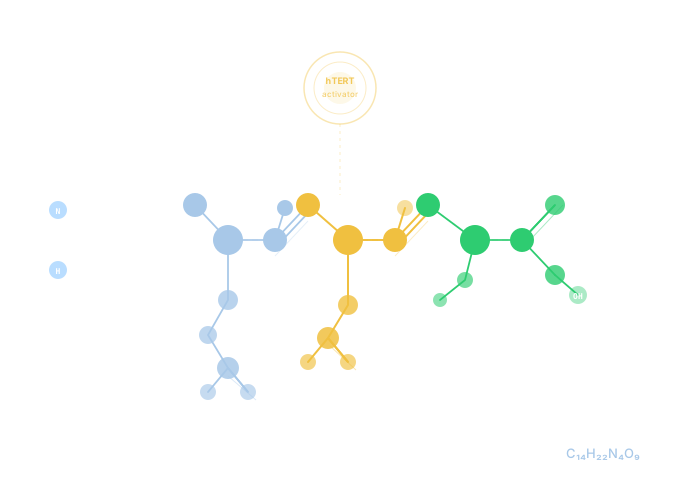
Simplified Summary
Epitalon (Epithalon) is a synthetic peptide that has been widely explored in preclinical research for its potential role in cellular aging and biological regulation. Derived from a naturally occurring peptide known as epithalamin—associated with the pineal gland—Epitalon consists of a short chain of amino acids and has been studied for its possible influence on molecular processes linked to longevity and cellular stability. Unlike many peptides designed purely in laboratories, Epitalon is modeled after endogenous compounds, though its full biological significance remains under active scientific investigation.
Across laboratory and animal-based models, Epitalon has been examined for its potential interaction with mechanisms related to telomeres—the protective structures at the ends of chromosomes. Research has explored whether Epitalon may influence telomerase activity, an enzyme associated with maintaining telomere length, as well as its broader role in genomic integrity and cellular replication. These studies often focus on how the peptide may interact with signaling pathways involved in aging, DNA protection, and cell cycle regulation.
In addition to its relevance in cellular aging research, Epitalon has been investigated for its potential involvement in circadian rhythm regulation and neuroendocrine signaling. Some experimental findings suggest possible interactions with the pineal gland and melatonin-related pathways, which may connect Epitalon to biological timing systems and regulatory processes governing sleep-wake cycles and hormonal balance.
To support controlled experimentation, Epitalon has been synthesized and stabilized for laboratory use, allowing researchers to examine its properties under consistent conditions. All findings referenced are derived exclusively from non-clinical studies. There are no established conclusions regarding human safety, pharmacokinetics, dosing, or therapeutic applications, and all observations remain within the scope of ongoing scientific investigation.
Key Findings Reported in Preclinical Models
- Cellular aging and telomere-associated systems: Epitalon has been investigated in cell-based models for its potential interaction with telomere dynamics. Experimental exposure in vitro has been associated with activity linked to telomerase regulation, an enzyme involved in maintaining chromosome integrity. Some findings suggest a possible role in supporting cellular stability and replication processes under controlled laboratory conditions, particularly in relation to aging-associated cellular changes.
- Genomic stability and DNA-related pathways: In molecular studies, Epitalon has been examined for its potential influence on DNA integrity and repair mechanisms. Preclinical observations have explored its interaction with pathways involved in oxidative stress mitigation and chromosomal protection, with a focus on how it may contribute to maintaining genomic consistency during cellular turnover.
- Pineal gland and circadian-associated models: Animal-based and in vitro research has evaluated Epitalon in relation to pineal gland function and circadian regulation. Findings have explored its possible interaction with melatonin-related pathways and biological timing systems, particularly in models designed to assess disruptions in circadian rhythms and neuroendocrine signaling cycles.
- Neuroendocrine system studies: Epitalon has been studied for its potential role in neuroendocrine modulation, with investigations focusing on hormone-related signaling pathways. Preclinical research has examined its interaction with regulatory processes involving melatonin secretion, as well as broader hypothalamic-pituitary signaling under experimental conditions.
- Oxidative stress and cellular resilience models: Some experimental studies have explored Epitalon's potential involvement in oxidative stress response pathways. Observations suggest possible interactions with antioxidant-related mechanisms and cellular defense systems, particularly in models assessing environmental or induced stressors at the cellular level.
- Immune and adaptive response models: Preclinical investigations have also considered Epitalon's potential role in immune-related signaling and adaptive responses. Findings from laboratory models suggest it may interact with pathways associated with immune modulation and cellular communication, though these mechanisms remain under ongoing study.
- Gene expression and biochemical pathway analysis: Molecular assays indicate that Epitalon may influence gene expression linked to aging, metabolic regulation, and cellular signaling. Research has explored its interaction with transcriptional activity and enzymatic processes involved in maintaining cellular homeostasis in vitro and in animal-based models.
- Peptide stability and laboratory formulation research: To support consistent experimental outcomes, synthesized forms of Epitalon have been developed and stabilized for laboratory use. These formulations aim to improve peptide integrity and reproducibility across studies, enabling more precise observation of its biological interactions under controlled conditions.
Introduction
Epitalon Research occupies a distinct position at the intersection of peptide biology, cellular aging, and neuroendocrine regulation within controlled experimental models. Peptides in this category are increasingly viewed not merely as signaling agents, but as modulators of complex biological systems—coordinating interactions between genetic regulation, cellular repair mechanisms, and hormonal signaling networks. In preclinical studies, disruptions in these systems are often associated with accelerated cellular aging, genomic instability, and altered circadian or endocrine activity.
Within this context, Epitalon (Epithalon) has drawn scientific interest due to its proposed relationship with telomere biology and age-associated cellular processes. Modeled after epithalamin, a naturally occurring peptide linked to the pineal gland, Epitalon has been explored for its potential influence on telomerase activity and chromosomal stability. Early investigations focused on its interaction with telomeres and DNA-related pathways, as well as its possible connection to regulatory systems involved in cellular replication and longevity under laboratory conditions.
As research expanded, Epitalon has been examined across a broader spectrum of preclinical models, including those involving oxidative stress, genomic protection, circadian rhythm regulation, and neuroendocrine signaling. Experimental findings suggest that its activity may involve interactions with gene expression pathways, enzymatic processes, and hormonal feedback systems—particularly those associated with melatonin production and pineal gland function. These investigations often aim to understand how Epitalon may contribute to maintaining cellular balance and systemic regulation under varying experimental conditions.
Despite growing interest, Epitalon Research remains firmly within the preclinical domain. Variability in study design, peptide formulation, and experimental models underscores the need for careful interpretation of findings. Ongoing research continues to explore how Epitalon may interact with mechanisms related to cellular aging, genetic stability, and biological timing systems, all within the boundaries of controlled laboratory investigation.
Molecular Origin & Structural Characteristics
Epitalon (Epithalon) is a synthetic tetrapeptide derived from epithalamin, a naturally occurring peptide complex associated with the pineal gland. Its amino acid sequence—Ala-Glu-Asp-Gly (AEDG)—is notably short, consisting of just four residues. Despite its compact size, Epitalon has been the subject of extensive preclinical research due to its proposed involvement in cellular regulation and age-associated biological processes. While it is synthetically produced for laboratory use, its design is based on endogenous peptide structures, positioning it as a biomimetic compound rather than a purely artificial construct.
From a structural perspective, Epitalon is significantly smaller than many regulatory peptides and lacks complex secondary or tertiary folding. This simplicity allows for relatively high molecular flexibility, which may enable interactions with a variety of intracellular targets in experimental systems. The presence of both acidic residues (glutamic acid and aspartic acid) and a neutral glycine residue contributes to its solubility and potential compatibility within diverse biochemical environments, particularly those involving nucleic acids and enzymatic systems.
Structure-function investigations suggest that even minor alterations to the Epitalon sequence can influence its activity in vitro, indicating that the integrity of its four-amino acid chain is critical for maintaining its observed biological interactions. Due to its small size and lack of inherent protective modifications, Epitalon may be susceptible to enzymatic degradation, which has led to the development of stabilized formulations in research settings to improve consistency and experimental reproducibility.
Unlike larger peptide hormones, Epitalon does not originate from a single well-defined precursor protein and is typically introduced exogenously in preclinical models. Its low molecular weight has prompted investigation into its ability to penetrate cellular compartments and interact with intracellular systems, including those associated with nuclear activity. However, clearly defined receptor-binding mechanisms have not been fully established, and its activity is often described in terms of broader regulatory interactions rather than specific ligand-receptor binding.
Overall, Epitalon represents a minimalistic peptide structure with potentially complex biological implications. Ongoing research continues to explore how its sequence, biochemical properties, and molecular flexibility contribute to its observed interactions in models focused on cellular aging, genomic stability, and neuroendocrine regulation.
Mechanistic Insights & Cellular Targets
Preclinical investigations suggest that Epitalon interacts with a range of cellular and molecular pathways linked to aging, genomic maintenance, and biological regulation. Rather than acting through a single, clearly defined receptor, Epitalon is often described as a modulatory peptide whose activity appears to depend on cellular context, experimental conditions, and the specific biological systems under observation. Most mechanistic insights are derived from in vitro studies and animal models examining telomere biology, oxidative stress, and endocrine signaling.
Telomerase Activity and Telomere Regulation
A central focus of Epitalon research is its potential interaction with telomerase, the enzyme responsible for maintaining telomere length. Preclinical findings suggest that Epitalon may influence pathways associated with telomere preservation, with observations centered on chromosomal stability and cellular replication in controlled laboratory models.
Gene Expression and Nuclear Interaction
Epitalon has been studied for its potential to affect gene expression at the transcriptional level. Experimental data indicate possible interactions with DNA-related processes, including regulation of genes associated with aging, cellular repair, and metabolic function. These effects are often explored in the context of nuclear signaling and chromatin-related activity.
Oxidative Stress and Cellular Defense Mechanisms
Some preclinical studies suggest that Epitalon may interact with pathways involved in oxidative stress response. Observations include potential modulation of antioxidant-related systems and cellular defense mechanisms, particularly in models exposed to environmental or induced stressors.
Neuroendocrine and Pineal Gland Signaling
Research has explored Epitalon's relationship with neuroendocrine regulation, especially in connection with the pineal gland. Experimental findings have examined its potential interaction with melatonin-related pathways and hormonal signaling systems that regulate circadian rhythms and biological timing.
Circadian Rhythm and Biological Timing Models
In models focused on circadian disruption, Epitalon has been evaluated for its potential role in modulating biological rhythms. These studies often investigate how it may interact with signaling pathways that coordinate sleep-wake cycles and endocrine timing under controlled experimental conditions.
Cellular Proliferation and Apoptotic Balance
Epitalon has been examined in relation to cellular lifecycle processes, including proliferation and programmed cell death (apoptosis). Preclinical findings suggest that it may influence signaling pathways that help maintain a balance between cell survival and turnover, though mechanisms remain under investigation.
Immune and Adaptive Signaling Pathways
Some research has explored Epitalon's potential involvement in immune-related signaling. Observations suggest possible interactions with pathways associated with cellular communication and adaptive responses, particularly in models examining systemic regulation and stress adaptation.
Peptide Stability and Metabolic Processing
Due to its small size, Epitalon may be subject to enzymatic breakdown in biological systems. As a result, stabilized formulations are often used in research to improve peptide persistence and allow for more consistent observation of its biological activity, including interactions with peptide-processing enzymes.
Cellular Uptake and Distribution
Epitalon's low molecular weight has led to investigations into its ability to penetrate cellular and subcellular compartments. Some studies suggest potential localization within intracellular environments, including areas associated with genetic material, although precise transport mechanisms remain under active study.
Context-Dependent Activity
Importantly, Epitalon's observed effects vary across experimental models. Outcomes are influenced by variables such as dosage, delivery method, and the biological system under investigation. Current evidence supports a model in which Epitalon interacts with interconnected pathways involving genomic regulation, oxidative balance, and neuroendocrine signaling—strictly within preclinical research settings.
Preclinical Research Landscape
The preclinical research landscape surrounding Epitalon (Epithalon) is broad and methodologically diverse, reflecting sustained scientific interest in peptides associated with cellular aging, genomic stability, and neuroendocrine regulation. Since its development as a synthetic analog of epithalamin, Epitalon has been examined across a wide range of experimental systems—including in vitro cellular models, animal-based studies, and molecular-level investigations focused on telomere biology and regulatory signaling. Collectively, these approaches contribute to a growing but still evolving body of research, with notable variability in experimental design, peptide formulation, and interpretation of findings.
In Vitro Experimental Systems
Cell-based models serve as a primary foundation for Epitalon research. Various cell types—including fibroblasts, epithelial cells, and other proliferative systems—have been used to examine its potential effects on telomere dynamics, gene expression, and cellular replication. In these controlled environments, Epitalon exposure has been associated with changes in enzymatic activity linked to telomerase, as well as markers related to cellular aging and oxidative stress under induced laboratory conditions.
Additional in vitro investigations include models focused on DNA integrity and transcriptional regulation, where Epitalon has been evaluated for its potential interaction with nuclear processes. As with many peptide studies, outcomes vary depending on experimental parameters such as concentration, exposure duration, and the specific cellular context, contributing to differences across reported findings.
Aging and Longevity Models in Animals
Animal-based studies represent a central area of Epitalon research, particularly in models designed to explore aging-related processes. These investigations often examine biological markers associated with cellular lifespan, tissue integrity, and systemic regulation over time. Observations are typically paired with biochemical and molecular analyses to assess telomere-related activity, oxidative stress markers, and physiological changes under controlled experimental conditions.
Neuroendocrine and Circadian Regulation Models
Epitalon has also been studied in preclinical models focused on neuroendocrine signaling and circadian rhythm regulation. Research in this area often explores its interaction with pineal gland function and melatonin-associated pathways. Experimental findings examine how Epitalon may influence biological timing systems, hormonal cycles, and regulatory feedback mechanisms under both normal and disrupted conditions.
Oxidative Stress and Cellular Resilience Models
A significant portion of Epitalon research involves models designed to simulate oxidative stress and environmental challenges at the cellular level. These studies evaluate markers of cellular defense, including antioxidant-related activity and responses to induced stressors. Findings suggest potential interactions with pathways involved in maintaining cellular resilience and biochemical balance in controlled settings.
Immune and Inflammatory Research Models
Emerging research has explored Epitalon's potential involvement in immune-related and inflammatory signaling pathways. Experimental models incorporating induced stress or immune activation have examined changes in cytokine expression and cellular communication processes following peptide exposure. These findings point to possible interactions between immune regulation and broader systemic pathways, though mechanisms remain under investigation.
Molecular and Biochemical Investigations
At the molecular level, Epitalon has been examined for its interaction with enzymatic systems, gene expression pathways, and intracellular signaling networks. Research has focused on understanding how it may influence transcriptional activity, protein synthesis, and metabolic regulation within experimental models. These studies aim to clarify how Epitalon contributes to communication within and between cells under controlled laboratory conditions.
Methodological Variability and Limitations
Despite ongoing interest, the Epitalon research landscape is characterized by considerable heterogeneity. Studies differ in peptide synthesis methods, stabilization techniques, dosing strategies, delivery approaches, and experimental endpoints. Replication across independent research groups remains limited, and inconsistencies in methodology contribute to variability in observed outcomes.
Importantly, all available findings are derived exclusively from non-clinical research. There are no established conclusions regarding human safety, pharmacokinetics, dosing protocols, or therapeutic applications. Epitalon remains an investigational peptide, primarily utilized as a research tool for studying mechanisms related to cellular aging, genomic stability, and neuroendocrine regulation within controlled experimental environments.
Safety Considerations & Research Limitations
All currently available data on Epitalon (Epithalon) are derived exclusively from preclinical research, including in vitro experiments and animal-based models. To date, no controlled human studies have established its safety profile, pharmacokinetics, biodistribution, or tolerability. As a result, key parameters—such as dose-response relationships, long-term exposure effects, metabolic pathways, and tissue-specific distribution—remain largely undefined. Any interpretation of Epitalon's biological activity should therefore be confined strictly to controlled experimental settings.
Several limitations shape the current research landscape. Study outcomes often vary depending on experimental design, model selection, peptide preparation, and delivery method. Differences in assays related to telomere activity, gene expression, and oxidative stress measurement contribute to variability across findings. In many cases, results are highly context-dependent, making it difficult to directly compare outcomes between studies or draw consistent conclusions.
Peptide stability is another important consideration. Due to its small size and lack of structural modifications for enhanced resistance, Epitalon may be susceptible to enzymatic degradation in biological systems. This has led to the use of stabilized formulations in some research settings; however, such variations in synthesis, handling, and delivery may introduce additional inconsistencies that affect observed outcomes.
Context-specific responses further complicate interpretation. While Epitalon is often associated with pathways related to telomere regulation, cellular aging, and neuroendocrine signaling in preclinical models, some studies report variable or limited effects depending on the biological system, experimental conditions, and duration of exposure. These differences highlight the importance of baseline cellular state, environmental factors, and model-specific variables.
The broader body of research may also be influenced by publication bias, where studies reporting statistically significant findings are more likely to be published than those with neutral or negative results. Additionally, limited replication across independent laboratories restricts the ability to validate findings and establish reproducibility.
Taken together, these factors underscore that Epitalon remains an investigational peptide within preclinical science. Substantial gaps persist in safety evaluation, mechanistic clarity, and translational relevance. Further research is required before any conclusions can extend beyond foundational scientific inquiry.
Conclusion
Epitalon (Epithalon) represents a distinct area of investigation within preclinical research focused on cellular aging, genomic stability, and neuroendocrine regulation. As a synthetic peptide modeled after epithalamin—an endogenous compound associated with the pineal gland—Epitalon has been explored across a variety of experimental systems, including telomere-focused studies, oxidative stress models, circadian rhythm investigations, and molecular-level analyses. Its compact structure and biomimetic origin distinguish it from more complex engineered peptides, positioning it as a useful model for examining peptide interactions within regulatory biological networks.
Across in vitro systems and animal models, Epitalon has been associated with processes involving telomerase activity, gene expression, and cellular defense mechanisms. These findings suggest that Epitalon may function as a context-dependent modulator within interconnected pathways related to aging, DNA integrity, and systemic regulation, rather than acting through a single, clearly defined mechanism. Recurring areas of interest—particularly its relationship with telomere maintenance, oxidative balance, and pineal-associated signaling—highlight its relevance as a research tool in experimental biology.
At the same time, the Epitalon research landscape presents clear limitations. All available data remain confined to preclinical settings, with considerable variability in experimental design, peptide formulation, and study conditions. Differences in methodology, model selection, and outcome measures complicate direct comparison across studies, and independent replication remains limited. There are no established conclusions regarding human safety, efficacy, or clinical application.
Accordingly, Epitalon should be regarded as an investigational peptide that contributes to the foundational understanding of cellular regulation, aging-related processes, and neuroendocrine signaling. However, significant gaps remain in mechanistic clarity and translational relevance, underscoring the need for further systematic and controlled research.
References
- Khavinson, V. Kh., Bondarev, I. E., & Butyugov, A. A. (2003). Epithalon peptide induces telomerase activity and telomere elongation in human somatic cells. Bulletin of Experimental Biology and Medicine.
- Araj, S. K., et al. (2025). Overview of Epitalon—Highly bioactive pineal tetrapeptide with promising properties. International Journal of Molecular Sciences.
- Khavinson, V. K., et al. (2020). AEDG peptide (Epitalon) stimulates gene expression and cellular function in aging cells. Molecules (MDPI).
- Al-dulaimi, S., et al. (2025). Epitalon increases telomere length in human cell lines through telomerase upregulation. Preclinical study (PMC/Research platforms).
- Ullah, S., et al. (2025). Epitalon-activated telomerase and cellular function in experimental models. Life Sciences / ScienceDirect.
- Malinin, V. V. (2005). Effect of Epitalon on telomerase activity and proliferative potential in human somatic cells. Karger / Biomedical research publication.
- Gatta, M., et al. (2025). Antioxidant tetrapeptide Epitalon and cellular protection in experimental models. Stem Cell Reviews and Reports.
- General overview: Epitalon (synthetic pineal peptide) and its biological effects.
For research use only. Capital Peptides products are not approved by the TGA for therapeutic use. By purchasing you confirm you are a licensed research entity or qualified professional.