Loading
Loading
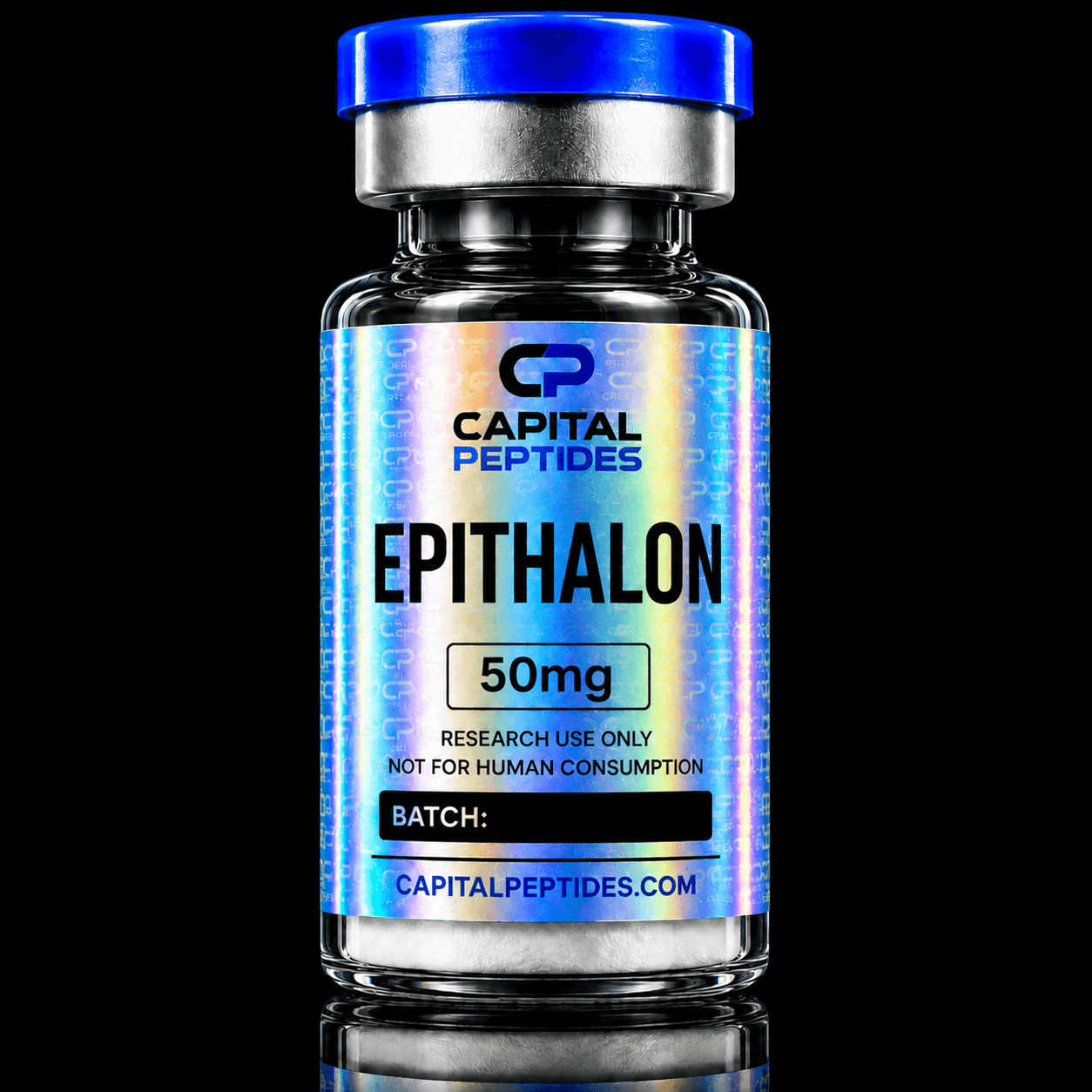
Regenerative & Anti-Aging · 50mg
Choose dose
Janoshik-tested · 10 vials per kit
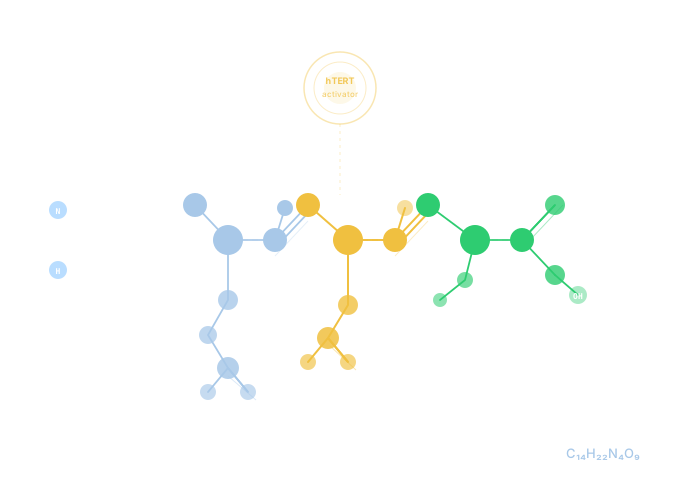
Epithalon is a synthetic tetrapeptide studied in preclinical research as a telomerase activator and longevity-associated peptide. Research has examined its potential to enhance TERT gene expression, lengthen telomeres, regulate melatonin and cortisol circadian rhythms, and inhibit spontaneous tumour development in animal models. Studies have explored potential applications in aging-related diseases and retinitis pigmentosa.
≥98%
Purity
Lyophilised
Format
2–3 wks
Arrival
Don't want to wait 3 weeks?
Check local stock — weekday same/next-day delivery available.
Chemical Properties
Need to work out your dose?
Use our reconstitution calculator — syringe units in seconds.
Research Use Only — Disclaimer
This product is intended solely as a research chemical for laboratory and scientific study purposes only. It is not approved by the TGA or any regulatory body for human or animal consumption, therapeutic use, or clinical application. The information provided on this website is for educational purposes only. Handling must be limited to suitably qualified professionals operating within applicable laws and regulations. This product is not classified as a drug, food, cosmetic, or medicinal product and must not be used or labelled as such. By purchasing, you confirm you are a qualified research professional and accept full responsibility for compliance with all relevant laws in your jurisdiction.
Epithalon
Ala-Glu-Asp-Gly Tetrapeptide
Epithalon (also spelled Epitalon) is a synthetic tetrapeptide (Ala-Glu-Asp-Gly) modelled on epithalamin, a pineal gland extract. Developed by Vladimir Khavinson and colleagues at the St. Petersburg Institute of Bioregulation and Gerontology, it is one of the most extensively studied short peptide bioregulators in the Russian gerontological literature and has been studied in both animal models and limited human pilot trials.
The most-cited mechanism of Epithalon is telomerase activation: in vitro studies have shown that the tetrapeptide can induce telomerase expression in human somatic cells — including retinal pigment epithelial cells and fibroblasts — potentially extending replicative lifespan. Epithalon has also been studied for its effects on the hypothalamus-pituitary-pineal axis, including normalising melatonin secretion rhythms in aged animal models. Antioxidant and anti-tumour properties have been reported in preclinical settings.
Russian-language literature describes studies showing extended median and maximum lifespan in animal models, reduced spontaneous tumour incidence, and improved circadian melatonin rhythmicity. Western preclinical studies have confirmed telomerase induction and anti-apoptotic effects in retinal cell lines. Some pilot human studies have suggested improved antioxidant status and melatonin levels in elderly subjects.
Key References
For research reference only. All information pertains to preclinical or published human trial data. Not intended as medical advice. This product is for research use only.
Don't have supplies? Grab them while you're here.