
Capital Peptides
← All research overviews

Humanin Peptide Research

Important Notice: All information provided is for educational and informational purposes only. All peptides mentioned are intended exclusively for laboratory and in-vitro research and are not approved to diagnose, treat, cure, or prevent any disease.

Simplified Summary

Humanin is a mitochondria-encoded peptide that has been investigated extensively in preclinical research as a regulator of cellular stress responses. First identified in experimental screens for factors that attenuate neuronal cell death, Humanin is now recognized as a member of the broader class of mitochondrial-derived peptides involved in intracellular and intercellular signaling. The peptide is composed of 24 amino acids and is encoded within the mitochondrial 16S ribosomal RNA gene, distinguishing it from nuclear-encoded signaling peptides.

Across in vitro systems and animal models, Humanin has been examined for its interactions with apoptotic regulators, mitochondrial membranes, and cell-surface receptor complexes. Experimental findings indicate that Humanin can bind pro-apoptotic proteins within cells while also activating survival-associated signaling pathways when acting extracellularly. These mechanisms have been studied in neuronal, cardiac, endothelial, pancreatic, and metabolic research models subjected to oxidative, ischemic, inflammatory, or metabolic stress.Humanin levels have been observed to change with age and metabolic status in experimental organisms, and altered expression has been reported in multiple disease-associated animal models. Stabilized Humanin analogs have been developed to enhance experimental potency and persistence in preclinical settings. All observations described are derived exclusively from non-clinical research. No human trials have established safety, pharmacokinetics, dosing parameters, or therapeutic relevance, and all findings remain investigational.

Key Findings Reported in Preclinical Models

  • Neuronal cell culturesHumanin and analogs were associated with reduced apoptosis following amyloid-β exposure and oxidative stress via Bax/Bid interaction and PI3K/AKT pathway engagement.
  • Rodent Alzheimer's disease modelsAdministration of Humanin analogs correlated with reduced amyloid burden, altered glial activation, and preserved performance in maze-based behavioral assays.
  • Ischemia/reperfusion models (heart and brain)Treatment with Humanin analogs was associated with smaller infarct size and reduced apoptotic markers in cardiomyocytes and neurons.
  • Metabolic models in rodentsCentral and peripheral delivery was associated with altered insulin signaling, hepatic glucose output, and pancreatic β-cell integrity in experimental diabetes paradigms.
  • Vascular injury modelsHumanin analogs were associated with reduced endothelial dysfunction and attenuated smooth muscle proliferation following arterial injury.
  • Aging and lifespan modelsElevated Humanin expression correlated with stress resistance and lifespan extension in invertebrate models and with favorable metabolic profiles in long-lived rodent strains.

Introduction

Humanin Research has emerged at the intersection of mitochondrial biology, cellular stress signaling, and age-associated disease modeling. Mitochondria are increasingly recognized not only as bioenergetic organelles but also as dynamic signaling hubs that influence cell survival, apoptosis, and metabolic adaptation. Disruption of mitochondrial homeostasis is a recurring feature in experimental models of neurodegeneration, metabolic dysfunction, cardiovascular injury, and organismal aging. These conditions are characterized by elevated oxidative stress, impaired energy metabolism, and activation of intrinsic cell-death pathways.

Within this context, mitochondrial-derived peptides have gained attention as endogenous regulators that convey mitochondrial status to the cytosol and extracellular environment. Humanin, a short peptide encoded within the mitochondrial genome, represents one of the earliest and most extensively studied members of this class. Initial investigations focused on its capacity to counteract apoptosis in neuronal culture systems exposed to Alzheimer's disease-associated stressors. Subsequent work expanded its study into a wide range of experimental models, revealing context-dependent associations with metabolic regulation, inflammatory signaling, and tissue resilience.

Despite growing mechanistic insight, Humanin Research remains firmly preclinical. Studies vary widely in model systems, peptide analogs, and delivery strategies, underscoring the need for careful interpretation. Understanding how Humanin integrates mitochondrial signals with cellular stress responses continues to inform fundamental research into mitochondrial communication and adaptive survival pathways.

Molecular Origin & Structural Characteristics

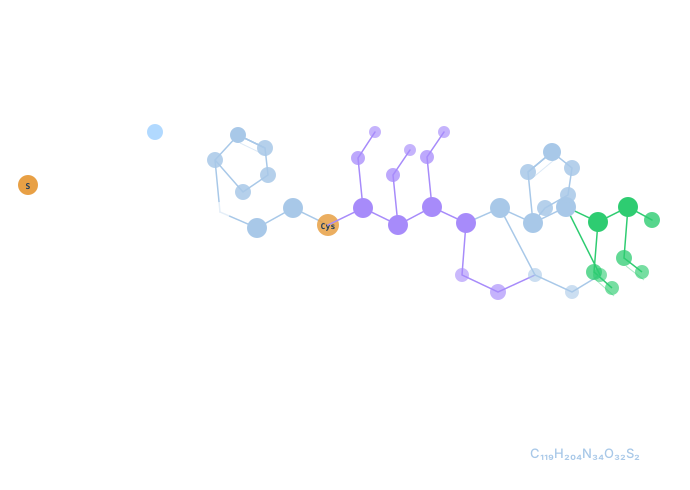
Humanin is a short peptide encoded within the mitochondrial genome, representing an uncommon class of bioactive microproteins derived from mitochondrial ribosomal RNA. Specifically, Humanin is translated from a 75-base pair open reading frame embedded within the mitochondrial 16S ribosomal RNA gene (MT-RNR2). This organization makes Humanin a notable example of a functional "gene within a gene," as MT-RNR2 primarily encodes a structural RNA component of the mitochondrial ribosome rather than a conventional protein-coding transcript. The canonical Humanin peptide consists of 24 amino acids with the sequence MAPRGFSCLLLLTSEIDLPVKRRA, although mitochondrial translation may initiate with a formyl-methionine, consistent with prokaryote-like features of mitochondrial protein synthesis.

Comparative genomic analyses have identified multiple nuclear loci (MTRNR2L1-13) with high sequence homology to mitochondrial Humanin. These loci are considered nuclear mitochondrial DNA segments (Numts) and may contribute to Humanin-like peptide expression in certain contexts, though their translational relevance remains under investigation. Orthologs of Humanin are present across species, including rodent variants such as "rattin," which contains a C-terminal extension, supporting the evolutionary conservation of this peptide family and suggesting selective pressure to maintain its structure and function.

Structure-function studies have demonstrated that Humanin activity is highly dependent on its primary amino acid sequence. The Pro³-Ser¹⁴ region constitutes a critical functional core, with substitutions at residues such as Ser⁷, Cys⁸, Leu⁹, Leu¹², Thr¹³, Ser¹⁴, or Pro¹⁹ abolishing observed bioactivity in experimental systems. These findings indicate that Humanin's biological actions rely on precise residue positioning rather than general physicochemical properties. Modifications to this core region have been exploited to generate analogs with enhanced experimental potency. The best-characterized example is the S14G substitution, which produces HNG, a Humanin analog exhibiting markedly increased activity in vitro and in animal models, likely due to increased conformational flexibility and altered binding dynamics.

Humanin lacks a classical N-terminal signal peptide, yet it is detected both intracellularly and extracellularly. Experimental work has identified two internal hydrophobic motifs—Leu⁹-Leu¹¹ and Pro¹⁹-Val²⁰—that are essential for non-canonical secretion. Mutation of these motifs disrupts extracellular release without eliminating intracellular peptide presence, suggesting that Humanin utilizes unconventional export mechanisms such as direct membrane translocation or vesicle-mediated pathways. Prior to secretion, Humanin appears to localize to the mitochondrial matrix or inner membrane, consistent with its site of translation.

Structural studies further indicate that Humanin can form dimers, a property regulated by specific residues including Ser⁷ and Leu⁹. Dimerization has been correlated with enhanced activity in experimental assays, potentially by increasing binding avidity to intracellular targets or cell-surface receptor complexes. In parallel, Humanin stability is tightly regulated within cells. The peptide is subject to ubiquitin-proteasome-mediated degradation, with the E3 ligase TRIM11 identified as a key regulator of intracellular Humanin turnover. Together, these features describe Humanin as a structurally constrained, tightly regulated mitochondrial-derived peptide whose biological properties are inseparable from its unique genomic origin and precise amino acid composition.

Mechanistic Insights & Cellular Targets

Preclinical investigations indicate that Humanin engages multiple intracellular and extracellular mechanisms that converge on cellular stress resistance. Rather than acting through a single receptor or pathway, Humanin has been characterized as a pleiotropic signaling peptide whose effects depend on cell type, stress context, and subcellular localization. Mechanistic insights have been derived primarily from in vitro systems and animal models subjected to apoptotic, metabolic, oxidative, or ischemic stress.

Transcriptional and Epigenetic Regulation

Extracellular Humanin has been shown to activate transcriptional programs associated with cell survival through engagement of receptor complexes involving CNTF receptor α, WSX-1, and gp130. In neuronal and metabolic cell models, this interaction leads to downstream activation of JAK/STAT3 signaling, resulting in altered expression of stress-response and anti-apoptotic genes. STAT3-dependent transcriptional changes have been linked to enhanced resistance to metabolic and inflammatory stress in rodent models, although direct epigenetic modifications attributable to Humanin remain incompletely defined.

Chondrocyte Survival Signaling

Chondrocyte viability is a critical determinant of cartilage integrity, particularly under conditions of mechanical overload, oxidative stress, or inflammatory challenge. Experimental data from cultured chondrocytes indicate that Cartalax exposure is associated with attenuation of apoptotic signaling pathways. Reduced activation of executioner caspases, including caspase-3, has been observed in stressed cartilage cells treated with Cartalax, accompanied by lower expression of stress-responsive transcription factors such as p53.

These findings suggest that Cartalax influences intracellular checkpoints governing stress-induced cell death. Rather than acting as a direct anti-apoptotic agent, the peptide appears to modulate upstream regulatory networks that determine whether chondrocytes initiate survival or death programs in response to environmental stressors.

Cardiomyocyte Survival Signaling

In cardiac ischemia/reperfusion models, Humanin analogs have been associated with activation of PI3K/AKT signaling and suppression of mitochondrial apoptotic cascades. These effects coincide with reduced caspase activation and preservation of mitochondrial membrane potential in cardiomyocytes. Pharmacological inhibition of PI3K abrogates these associations, supporting a pathway-specific mechanism observed under experimental ischemic stress.

Cell Cycle Activity and Regenerative Markers

In select neural and pancreatic cell systems, Humanin exposure has been correlated with altered expression of cell-cycle regulators and survival-associated markers. These observations are limited to experimental contexts and do not indicate uncontrolled proliferation. Instead, they suggest transient modulation of survival and repair signaling during acute stress conditions.

Fibroblast and Extracellular Matrix Modulation

Vascular injury models indicate that Humanin analogs may influence fibroblast activation and smooth muscle cell behavior. Reduced expression of inflammatory mediators and extracellular matrix-associated proteins has been reported following peptide administration in arterial injury paradigms, suggesting indirect modulation of remodeling processes.

Mitochondrial Integrity and Energy Metabolism

Intracellularly, Humanin directly interacts with pro-apoptotic proteins Bax and Bid, preventing their translocation to the mitochondrial membrane and subsequent pore formation. This interaction stabilizes mitochondrial membrane integrity and preserves oxidative phosphorylation under stress in cultured cells. In metabolic models, Humanin has also been associated with improved mitochondrial efficiency and altered substrate utilization.

Redox Signaling and Oxidative Stress

Across multiple experimental systems, Humanin exposure correlates with reduced oxidative damage markers and modulation of redox-sensitive signaling pathways. These effects are observed in neurons, endothelial cells, and cardiomyocytes subjected to reactive oxygen species-generating insults.

Cytoskeletal and Nuclear Structural Proteins

Indirect effects on cytoskeletal stability have been reported in neuronal cultures, potentially secondary to preserved mitochondrial function and reduced apoptotic signaling. Direct binding of Humanin to structural proteins has not been conclusively demonstrated.

Context-Dependent Cellular Responses and Integration

Importantly, Humanin's effects are not uniform across all models. Disease-specific variables, stress severity, and peptide analog selection influence outcomes. Collectively, available data support a model in which Humanin integrates mitochondrial status with cellular survival pathways through coordinated intracellular inhibition of apoptosis and extracellular activation of pro-survival signaling, exclusively within preclinical experimental systems.

Preclinical Research Landscape

The preclinical research landscape surrounding Humanin is broad, methodologically diverse, and spans multiple biological systems, reflecting sustained interest in mitochondrial-derived peptides as regulators of cellular stress responses. Since its initial discovery, Humanin has been evaluated in a wide range of experimental paradigms, including cell culture systems, acute injury models, chronic disease models, aging studies, and comparative longevity research. Collectively, these investigations have generated a substantial body of mechanistic and phenotypic data, while also revealing notable variability across models, protocols, and peptide analogs.

In Vitro Experimental Systems

Cell-based studies represent the foundational layer of Humanin research. Neuronal cultures exposed to amyloid-β peptides, oxidative stress, excitotoxic insults, or serum deprivation have been among the most frequently used systems. In these models, Humanin and stabilized analogs have been associated with reduced apoptotic markers, preserved mitochondrial membrane potential, and altered survival signaling. Similar observations have been reported in cardiomyocytes subjected to hypoxia-reoxygenation, endothelial cells exposed to inflammatory stimuli, and pancreatic β-cell lines challenged with metabolic stressors.

Beyond neuronal systems, fibroblasts, vascular smooth muscle cells, and immune-related cell lines have also been employed to explore Humanin's broader cytoprotective profile. These studies commonly focus on intracellular protein-protein interactions, receptor-mediated signaling pathways, and mitochondrial dynamics. However, in vitro findings are highly sensitive to experimental variables such as peptide concentration, exposure duration, cell differentiation state, and stress severity, contributing to variability across reports.

Neurodegeneration and Central Nervous System Models

Animal models of neurodegeneration constitute one of the most extensively studied areas of Humanin research. Transgenic mouse models expressing Alzheimer's disease-associated mutations have been used to evaluate the peptide's effects on amyloid accumulation, synaptic markers, neuroinflammation, and behavioral outcomes. In these systems, Humanin analogs have been associated with reduced pathological burden and preserved cognitive performance under experimental conditions. Acute neurotoxicity models, including amyloid fragment injection and cholinergic blockade, further support context-dependent neuroprotective associations.

Humanin has also been evaluated in experimental models of ischemic and hemorrhagic stroke. In these paradigms, post-insult administration of Humanin analogs has been associated with reduced infarct volume, attenuated apoptotic signaling, and improved neurological scoring. Complementary in vitro oxygen-glucose deprivation studies reinforce these observations at the cellular level. Notably, synergistic effects have been reported when Humanin is combined with inhibitors of necroptosis, underscoring the multifactorial nature of cell death pathways in acute CNS injury.

Metabolic and Endocrine Research Models

Metabolic regulation represents another major domain of preclinical Humanin research. Rodent models of insulin resistance, diet-induced obesity, and chemically induced diabetes have been used to examine the peptide's influence on glucose homeostasis and insulin signaling. Central administration studies emphasize hypothalamic signaling pathways, particularly STAT3-dependent modulation of hepatic glucose production. Peripheral delivery models highlight associations with altered skeletal muscle glucose uptake, pancreatic islet preservation, and inflammatory marker profiles.

Genetic models further enrich this landscape. Transgenic mice overexpressing Humanin exhibit altered metabolic phenotypes compared with controls, while long-lived and short-lived mouse strains display divergent endogenous Humanin levels. These comparative studies support a correlation between Humanin expression, insulin sensitivity, and metabolic resilience, though causal relationships remain difficult to establish within complex endocrine networks.

Cardiovascular and Vascular Injury Models

In cardiovascular research, Humanin has been evaluated primarily in ischemia/reperfusion and vascular injury models. Myocardial infarction paradigms demonstrate associations between Humanin analog exposure and reduced cardiomyocyte apoptosis, preserved contractile function, and altered oxidative stress markers. Parallel studies in endothelial dysfunction and atherosclerosis-prone mouse strains report improved endothelial signaling and reduced lesion formation under experimental conditions.

Vascular remodeling models, including carotid artery injury, provide additional insight into Humanin's potential influence on smooth muscle cell proliferation and inflammatory signaling. These findings suggest a modulatory role in vascular repair processes, although outcomes vary depending on injury severity, treatment timing, and analog selection.

Aging, Longevity, and Comparative Biology

Humanin research is closely intertwined with aging biology. In invertebrate models such as Caenorhabditis elegans, Humanin expression has been associated with extended lifespan and enhanced stress resistance, often linked to conserved longevity pathways. In mammals, age-related declines in endogenous Humanin levels have been documented in rodents and humans, while sustained expression is observed in long-lived animal models.

Comparative studies extend to species with exceptional longevity, where Humanin expression patterns differ markedly from those of shorter-lived counterparts. These observations support the hypothesis that mitochondrial-derived peptides participate in conserved stress-adaptation mechanisms across species, though direct extrapolation to human aging remains speculative.

Methodological Variability and Limitations

Despite the breadth of data, the Humanin preclinical literature is characterized by substantial heterogeneity. Studies differ widely in peptide formulation, analog potency, route of administration, dosing frequency, and experimental endpoints. Replication across laboratories is uneven, and negative or neutral findings are less frequently reported. Additionally, some models demonstrate limited or no response to Humanin, emphasizing disease- and context-specific constraints.

Importantly, no standardized framework exists for comparing outcomes across systems, and translational relevance remains uncertain. All available data are derived from non-clinical research, and no human intervention studies have established safety, pharmacokinetics, or efficacy. As such, the preclinical research landscape positions Humanin as a valuable investigative tool for studying mitochondrial signaling and cellular resilience, while underscoring the need for cautious interpretation and further foundational research.

Safety Considerations & Research Limitations

All data regarding Humanin are derived exclusively from preclinical research, including in vitro systems and animal models. To date, no controlled human studies have been conducted to evaluate the safety, pharmacokinetics, biodistribution, or tolerability of Humanin or its analogs. As a result, fundamental parameters such as dose-response relationships, long-term exposure effects, metabolic clearance, and tissue-specific accumulation remain undefined. Any interpretation of biological activity must therefore be confined strictly to experimental contexts.

Several limitations are inherent to the existing literature. Experimental outcomes vary substantially depending on the model system, peptide analog, route of administration, and timing relative to injury or stress exposure. Many studies rely on stabilized or engineered analogs rather than native Humanin, complicating direct comparisons and obscuring the relevance of endogenous peptide behavior. Additionally, the short half-life and rapid degradation of native Humanin present technical challenges that may bias results toward modified constructs with altered biological properties.

Context-dependent effects further complicate interpretation. While Humanin is frequently associated with cytoprotective signaling, some studies report neutral or divergent outcomes in specific disease models, including oncology-related systems, raising questions about tissue specificity and unintended cellular responses. Publication bias toward positive findings and limited replication across laboratories also constrain confidence in generalizability.

Collectively, these limitations underscore that Humanin remains an investigational research peptide. Substantial mechanistic, toxicological, and translational gaps must be addressed before any conclusions beyond basic biological research can be drawn.

Conclusion

Humanin represents one of the most extensively studied mitochondrial-derived peptides in contemporary preclinical research. Initially identified through experimental screening in neurodegeneration models, it has since been investigated across a wide spectrum of biological systems, including metabolic regulation, cardiovascular injury, vascular remodeling, and aging-related stress paradigms. Its unique mitochondrial genomic origin and compact structure distinguish Humanin from conventional signaling peptides and position it as a model for understanding mitochondria-to-cell communication.

Across in vitro systems and animal models, Humanin and its engineered analogs have been associated with coordinated modulation of apoptotic signaling, mitochondrial integrity, metabolic pathways, and inflammatory responses. These observations suggest that Humanin functions as a context-dependent integrator of cellular stress signals rather than a pathway-specific effector. The consistency of certain mechanistic themes—particularly inhibition of mitochondrial apoptosis and activation of pro-survival signaling—supports its value as a research tool for studying endogenous resilience mechanisms.

At the same time, the Humanin literature highlights important limitations. Findings remain exclusively preclinical, outcomes vary across disease models, and many studies rely on modified analogs with altered stability and potency. No conclusions regarding human safety, efficacy, or translational applicability can be drawn. As such, Humanin should be viewed as an investigational peptide that has advanced fundamental understanding of mitochondrial signaling while continuing to raise important questions that warrant further basic research.

References

  • Hashimoto Y., Niikura T., Tajima H., et al. A rescue factor abolishing neuronal cell death by a wide spectrum of familial Alzheimer's disease genes and Aβ. Proc Natl Acad Sci USA. 2001;98(11):6336-6341.
  • Hashimoto Y., Niikura T., Ito Y., et al. Detailed characterization of neuroprotection by a rescue factor Humanin against various Alzheimer's disease-relevant insults. J Neurosci. 2001;21(23):9235-9245.
  • Guo B., Zhai D., Cabezas E., et al. Humanin peptide suppresses apoptosis by interfering with Bax activation. Nature. 2003;423(6938):456-461.
  • Ikonen M., Liu B., Hashimoto Y., et al. Interaction between the Alzheimer's survival peptide Humanin and insulin-like growth factor-binding protein 3 regulates cell survival and apoptosis. Proc Natl Acad Sci USA. 2003;100(22):13042-13047.
  • Cobb L.J., Lee C., Xiao J., et al. Naturally occurring mitochondrial-derived peptides are age-dependent regulators of apoptosis, insulin sensitivity, and inflammatory markers. Aging (Albany NY). 2016;8(4):796-809.
  • Yamagishi Y., Hashimoto Y., Niikura T., Nishimoto I. Identification of essential amino acids in Humanin, a neuroprotective factor against Alzheimer's disease-relevant insults. Peptides. 2003;24(4):585-595.
  • Terashita K., Hashimoto Y., Niikura T., et al. Two serine residues distinctly regulate the rescue function of Humanin, an inhibiting factor of Alzheimer's disease-related neurotoxicity: functional potentiation by isomerization and dimerization. J Neurochem. 2003;85(6):1521-1534.
  • Muzumdar R.H., Huffman D.M., Calvert J.W., et al. Acute humanin therapy attenuates myocardial ischemia and reperfusion injury in mice. Arterioscler Thromb Vasc Biol. 2010;30(10):1940-1948.
  • Chiba T., Yamada M., Hashimoto Y., et al. Development of a femtomolar-acting Humanin derivative named colivelin by attaching activity-dependent neurotrophic factor to its N-terminus: characterization of colivelin-mediated neuroprotection against Alzheimer's disease-relevant insults in vitro and in vivo. J Neurosci. 2005;25(52):10252-10261.
  • Gilon C., Gitlin-Domagalska A., Lazarovici P., et al. Novel Humanin analogs confer neuroprotection in vitro and in vivo by mutations that stabilize the peptide in an active conformation. Neuropharmacology. 2020;168:108013.
  • Wang J., Wang Y., Lin H., et al. Humanin, a mitochondrial-derived peptide, is secreted by astrocytes and improves neuronal energy metabolism. Cell Metab. 2021;33(10):2077-2093.e9.
  • Niikura T., Kita Y., Abe Y., et al. A tripartite motif protein TRIM11 binds and destabilizes Humanin, a neuroprotective peptide against Alzheimer's disease-relevant insults. Eur J Neurosci. 2003;17(6):1150-1158.
  • Muzumdar R.H., Huffman D.M., Atzmon G., et al. Humanin: a novel central regulator of peripheral insulin action. PLoS ONE. 2009;4(7):e6334.
  • Ying G., Iribarren P., Zhou Y., et al. Humanin, a newly identified neuroprotective factor, uses the G-protein-coupled formylpeptide receptor-like-1 (FPRL1) as a functional receptor. J Exp Med. 2004;199(5):621-627.
  • Hashimoto Y., Kurita M., Aiso S., Nishimoto I., Matsuoka M. Humanin inhibits neuronal cell death by interacting with a cytokine receptor complex or complexes involving CNTF receptor α/WSX-1/gp130. Mol Biol Cell. 2009;20(12):2864-2873.
  • Jia Y., Yang L., Chen Q., et al. Humanin analog protects against germ cell apoptosis and heat-induced testicular injury via the IL-27 receptor (WSX-1)/gp130/STAT3 pathway. Cell Death Dis. 2021;12(7):686.
  • Matsuoka M., Hashimoto Y. Humanin and the receptors for Humanin. Mol Neurobiol. 2010;41(1):22-28. 18. Ma Z., Liu Z. Humanin decreases mitochondrial membrane permeability by interacting with Bax and Bid. Biochim Biophys Acta. 2018;1859(9):789-801.

For research use only. Capital Peptides products are not approved by the TGA for therapeutic use. By purchasing you confirm you are a licensed research entity or qualified professional.
Related products