Simplified Summary
LL-37 is a naturally occurring antimicrobial peptide that has been extensively examined in preclinical research for its potential role in host defense and immune system regulation. Derived from the human cathelicidin precursor protein (hCAP18), LL-37 consists of a short chain of amino acids and is widely studied for its activity within innate immune pathways under controlled experimental conditions. As an endogenous peptide, it is recognized for its broad-spectrum antimicrobial properties, though many aspects of its biological function remain under active scientific investigation.
Across laboratory and animal-based models, LL-37 has been explored for its potential interactions with microbial membranes, as well as its role in modulating immune responses. Research has investigated how this peptide may influence signaling pathways involved in inflammation, chemotaxis, and cellular communication. Particular attention has been given to its interaction with immune cells such as macrophages, neutrophils, and epithelial cells, along with its potential involvement in cytokine regulation and barrier defense mechanisms.
In addition to its antimicrobial activity, LL-37 has been evaluated for its potential role in tissue-related processes within experimental settings. Some preclinical findings suggest that it may contribute to wound-healing pathways, angiogenesis, and cellular proliferation, as well as responses to environmental stressors and microbial challenges.
To support experimental consistency, LL-37 has been synthesized and stabilized for laboratory use, enabling researchers to investigate its structural behavior and biological activity under controlled conditions. All findings referenced are derived exclusively from non-clinical studies. There are no established conclusions regarding human safety, pharmacokinetics, dosing, or therapeutic applications, and all observations remain within the scope of ongoing scientific investigation.
Key Findings Reported in Preclinical Models
- Microbial membrane interaction and disruption models: LL-37 has been extensively investigated in in vitro systems for its interaction with bacterial, viral, and fungal membranes. Experimental findings suggest that the peptide may disrupt microbial membrane integrity, potentially leading to altered permeability and structural destabilization. These observations are often examined under controlled laboratory conditions to better understand its role in innate defense mechanisms.
- Immune cell and inflammatory response models: In cellular and animal-based studies, LL-37 has been explored for its potential influence on immune cell activity. Research suggests it may interact with macrophages, neutrophils, and dendritic cells, with observed effects on chemotaxis, cytokine signaling, and inflammatory pathway modulation. These models often focus on how LL-37 may contribute to immune signaling balance and host response to external challenges.
- Barrier function and epithelial system studies: Preclinical investigations have examined LL-37 in epithelial and mucosal models, where it may play a role in maintaining barrier integrity. Findings suggest potential involvement in regulating epithelial cell responses, including antimicrobial defense at skin and mucosal surfaces, as well as interactions with microbiota under controlled experimental conditions.
- Wound-healing and tissue response models: LL-37 has been evaluated in models related to tissue repair and regeneration. Some findings indicate potential involvement in processes such as angiogenesis, cellular migration, and proliferation. These observations are typically studied in the context of injury-response simulations and controlled healing environments in laboratory and animal models.
- Biofilm and microbial resistance studies: In microbiological assays, LL-37 has been examined for its potential effects on biofilm formation and microbial persistence. Experimental data suggest that it may interfere with biofilm development or stability, which is often associated with microbial resistance mechanisms in controlled settings.
- Gene expression and signaling pathway analysis: Molecular studies indicate that LL-37 may influence gene expression related to immune regulation, inflammation, and cellular defense pathways. These analyses often focus on transcriptional changes, receptor-mediated signaling, and downstream biochemical cascades observed in vitro and in animal models.
- Peptide stability and laboratory formulation research: To ensure consistency across experiments, synthesized and stabilized forms of LL-37 have been developed for research use. These formulations are designed to enhance peptide stability, reduce degradation, and improve reproducibility in controlled laboratory environments, enabling more precise investigation of its biological activity.
Introduction
LL-37 Research sits at the intersection of antimicrobial peptide biology, innate immunity, and immunological signaling within controlled experimental models. Antimicrobial peptides are increasingly recognized as multifunctional regulators rather than solely defensive molecules—they participate in complex communication networks across immune and epithelial systems, influencing processes such as microbial defense, inflammatory signaling, and tissue homeostasis. In preclinical research, dysregulation in these systems is often associated with increased susceptibility to microbial challenges, impaired barrier function, and altered immune responses.
Within this framework, LL-37 has drawn significant scientific attention due to its origin as an endogenous peptide derived from the human cathelicidin precursor (hCAP18). Unlike fully synthetic compounds, LL-37 is naturally produced by various cell types, including epithelial cells and immune cells such as neutrophils. Early investigations focused on its direct antimicrobial activity, particularly its ability to interact with and disrupt microbial membranes. Over time, research has expanded to examine its broader involvement in immune signaling pathways, including interactions with cytokines, chemokines, and pattern recognition receptors in experimental settings.
As research has progressed, LL-37 has been studied across a wide range of preclinical models, including those involving infection, inflammation, tissue injury, and barrier dysfunction. Findings suggest that its activity may extend beyond antimicrobial defense to include modulation of immune cell recruitment, regulation of inflammatory responses, and participation in cellular processes such as proliferation and angiogenesis. These effects are often explored through receptor-mediated signaling pathways and intracellular mechanisms linked to maintaining physiological balance under varying experimental conditions.
Despite growing interest, LL-37 Research remains within the preclinical domain. Variability in experimental models, peptide formulation, and environmental conditions underscores the need for careful interpretation of findings. Ongoing investigation aims to further clarify how LL-37 contributes to antimicrobial defense, immune regulation, and tissue-related processes within controlled laboratory environments.
Molecular Origin & Structural Characteristics
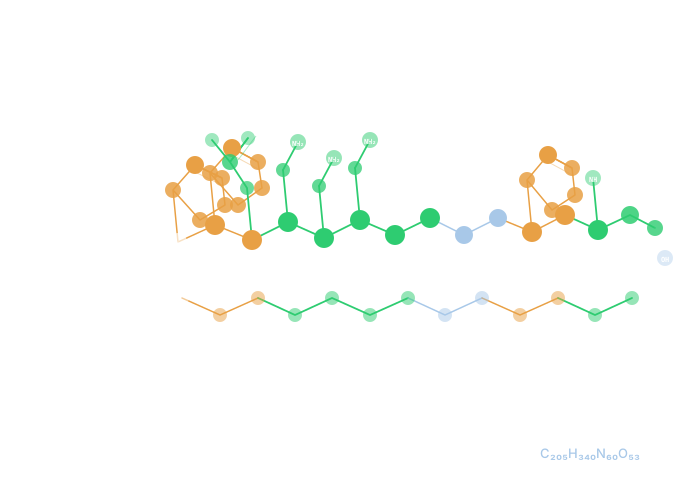
LL-37 is a cationic antimicrobial peptide derived from the human cathelicidin precursor protein (hCAP18), which is encoded by the CAMP gene. Following proteolytic cleavage, the active LL-37 peptide is released as a 37-amino acid sequence beginning with two leucine residues. As an endogenous peptide, it is produced by various cell types, including neutrophils, epithelial cells, and macrophages, particularly in response to inflammatory or microbial stimuli.
From a structural perspective, LL-37 adopts an amphipathic α-helical conformation under physiological conditions, a feature that is central to its interaction with microbial membranes. Its positively charged (cationic) nature allows it to associate with negatively charged components of bacterial, viral, and fungal membranes. This structural property is considered critical for its observed membrane-disruptive activity in experimental models.
Structure-function analyses indicate that LL-37's biological activity is closely tied to its full-length sequence and helical configuration. Modifications to its amino acid sequence or truncations have been shown to alter its antimicrobial potency and immunomodulatory behavior in vitro. Unlike smaller peptides, LL-37 exhibits a balance between structural flexibility and defined secondary structure, enabling interaction with a wide range of molecular targets.
Due to its susceptibility to proteolytic degradation in biological environments, stabilized and synthetic analogs of LL-37 have been developed for research purposes. These formulations aim to enhance peptide stability, extend activity duration, and improve reproducibility across experimental systems.
LL-37 has also been studied for its ability to interact with cellular membranes beyond microbial targets, including host cells. Experimental observations suggest potential involvement in membrane-associated signaling and intracellular uptake, although the exact mechanisms of transport and receptor binding remain areas of ongoing investigation. Compared to smaller peptides, LL-37 represents a structurally dynamic molecule with multifunctional properties that continue to be explored across preclinical models involving immune response, microbial defense, and tissue-related processes.
Mechanistic Insights & Cellular Targets
Preclinical investigations suggest that LL-37 interacts with a broad network of immune, cellular, and molecular pathways involved in host defense, inflammation, and tissue homeostasis. Rather than functioning solely as a direct antimicrobial agent, LL-37 is increasingly described as a modulatory peptide whose activity varies depending on environmental context, cell type, and experimental conditions. Most mechanistic insights are derived from in vitro studies and animal models examining infection, inflammation, and immune signaling.
Microbial Membrane Interaction
LL-37 has been widely studied for its direct interaction with microbial membranes. Experimental findings suggest that its amphipathic structure enables insertion into lipid bilayers, potentially leading to membrane destabilization, pore formation, or altered permeability. These interactions are central to its observed antimicrobial activity in controlled laboratory settings.
Immune Cell Activation and Chemotaxis
Research indicates that LL-37 may influence immune cell behavior, including chemotaxis and activation of neutrophils, monocytes, and macrophages. It has been associated with signaling pathways that regulate immune cell recruitment and coordination during experimental immune responses.
Receptor-Mediated Signaling Pathways
LL-37 has been examined for its interaction with specific cell surface receptors, including formyl peptide receptor-like 1 (FPR2/ALX) and other pattern recognition receptors. These interactions may contribute to downstream signaling cascades involving pathways such as MAPK and NF-κB, which are linked to inflammatory and immune regulatory processes in preclinical models.
Cytokine and Inflammatory Modulation
In experimental systems, LL-37 has been associated with modulation of cytokine production and inflammatory signaling. Findings suggest it may influence the balance between pro-inflammatory and anti-inflammatory responses, depending on the context and model conditions.
Gene Expression and Cellular Response
Molecular studies indicate that LL-37 may affect gene expression related to immune defense, inflammation, and cellular stress responses. Observed changes in transcriptional activity are often linked to its interaction with signaling pathways that regulate cellular adaptation and communication.
Barrier Function and Epithelial Interaction
LL-37 has been investigated in epithelial models for its role in maintaining barrier integrity and responding to microbial exposure. Experimental findings suggest potential involvement in enhancing epithelial defense mechanisms and regulating interactions with the surrounding microbiological environment.
Wound Healing and Tissue Remodeling
Preclinical research has explored LL-37's potential role in tissue repair processes. Observations include its involvement in angiogenesis, cell migration, and proliferation within controlled injury-response models, suggesting a broader function beyond antimicrobial activity.
Peptide Stability and Processing
Like many endogenous peptides, LL-37 is subject to enzymatic degradation, which can influence its activity and persistence in experimental systems. Research into stabilized analogs and delivery methods aims to improve its consistency and functional evaluation in laboratory settings.
Context-Dependent Activity
Importantly, LL-37's effects vary across experimental conditions. Factors such as peptide concentration, exposure duration, and the presence of microbial or inflammatory stimuli significantly influence observed outcomes. Current evidence supports a model in which LL-37 operates as a multifunctional regulator within interconnected immune and cellular pathways—strictly within preclinical research environments.
Preclinical Research Landscape
The preclinical research landscape surrounding LL-37 is extensive and methodologically diverse, reflecting sustained scientific interest in antimicrobial peptides involved in host defense, immune regulation, and tissue-related processes. Since its identification as the active fragment of the human cathelicidin precursor (hCAP18), LL-37 has been studied across a wide range of experimental systems, including in vitro cellular assays, animal-based infection and inflammation models, epithelial barrier studies, and molecular-level investigations. Collectively, these approaches contribute to an expanding—yet still evolving—body of research, with variability in experimental design, peptide formulation, and interpretation of findings.
In Vitro Experimental Systems
Cell-based models form a central component of LL-37 research. A variety of systems—including immune cells, epithelial cells, and microbial cultures—have been used to examine its potential effects on antimicrobial activity, inflammatory signaling, and cellular communication. In controlled environments, LL-37 exposure has been associated with changes in cytokine production, membrane interactions, and gene expression related to immune defense and stress-response pathways.
Additional in vitro studies include co-culture systems and biofilm models, where LL-37 has been evaluated for its interaction with microbial communities and host cells simultaneously. As with many peptide-based investigations, outcomes are influenced by factors such as concentration, peptide stability, and environmental conditions, contributing to variability across reported results.
Infection and Inflammation Models
Animal-based studies involving infection and inflammatory responses represent a major area of LL-37 research. These models often examine how the peptide interacts with microbial challenges and immune signaling pathways under controlled experimental conditions. Observations typically include changes in immune cell recruitment, cytokine profiles, and inflammatory markers, alongside assessments of microbial load and tissue response.
Barrier Function and Epithelial Models
LL-37 has been extensively studied in models focused on epithelial and mucosal barrier systems, including skin, respiratory, and gastrointestinal environments. These investigations explore its potential role in maintaining barrier integrity, regulating microbial interactions, and responding to environmental stressors. Findings often highlight its involvement in localized immune defense and epithelial signaling under experimental conditions.
Wound Healing and Tissue Response Models
Preclinical studies have examined LL-37 in models of tissue injury and repair. These investigations typically assess processes such as cellular migration, proliferation, and angiogenesis, alongside inflammatory signaling. Observations suggest that LL-37 may participate in coordinated tissue responses following experimental injury, though mechanisms remain under investigation.
Biofilm and Microbial Resistance Research
A significant area of LL-37 research involves its interaction with biofilms and persistent microbial structures. Experimental models have explored its potential to influence biofilm formation, stability, and disruption. These studies are particularly relevant for understanding microbial resilience and adaptive responses in controlled laboratory environments.
Molecular and Biochemical Investigations
At the molecular level, LL-37 has been studied for its interaction with signaling pathways, receptors, and gene expression networks associated with immune regulation and cellular defense. Research often focuses on pathways such as MAPK, NF-κB, and receptor-mediated signaling mechanisms that influence inflammation and host response in vitro and in animal models.
Methodological Variability and Limitations
Despite extensive research, the LL-37 literature is characterized by notable heterogeneity. Studies differ in peptide synthesis methods, stabilization techniques, dosing strategies, delivery systems, and experimental endpoints. Variability in environmental conditions and model systems contributes to differences in reported outcomes, and replication across studies remains an ongoing challenge.
Importantly, all available findings are derived exclusively from non-clinical research. There are no established conclusions regarding human safety, pharmacokinetics, dosing protocols, or therapeutic applications. LL-37 remains an investigational peptide, primarily utilized as a research tool for exploring mechanisms related to antimicrobial activity, immune signaling, and tissue-associated processes within controlled experimental environments.
Safety Considerations & Research Limitations
All currently available data on LL-37 originate exclusively from preclinical research, including in vitro experiments and animal-based models. To date, no controlled human studies have definitively established its safety profile, pharmacokinetics, biodistribution, or tolerability in a clinical context. As such, key parameters—such as dose-response relationships, long-term exposure effects, metabolic processing, and tissue-specific distribution—remain incompletely characterized. Any interpretation of LL-37's biological activity should therefore be confined strictly to controlled experimental settings.
Several limitations define the current research landscape. Study outcomes often vary depending on the experimental model, microbial context, immune environment, peptide formulation, and route of administration. Differences in infection models, inflammatory assays, and cellular systems contribute to variability across findings. In many cases, results are highly context-dependent, making direct comparisons between studies challenging and limiting the ability to draw uniform conclusions.
Peptide stability represents another critical factor. Although LL-37 exhibits a defined α-helical structure, it remains susceptible to proteolytic degradation in biological environments. This has led to the development of stabilized analogs and modified formulations in some studies; however, these variations may introduce additional complexity. Differences in peptide synthesis, handling, and delivery systems can significantly influence observed biological activity and reproducibility across experiments.
Context-specific responses further contribute to variability. While LL-37 is widely studied for its antimicrobial and immunomodulatory properties, some findings indicate that its effects may differ depending on concentration, cell type, and the presence of inflammatory or microbial stimuli. In certain experimental conditions, LL-37 has been associated with both pro-inflammatory and regulatory signaling patterns, highlighting the importance of environmental context and experimental design.
The broader research landscape may also be influenced by publication bias, where studies reporting statistically significant or positive outcomes are more likely to be published than those with neutral or negative findings. Additionally, limited replication across independent research groups can restrict the validation and generalizability of results.
Taken together, these factors underscore that LL-37 remains an investigational peptide within preclinical science. Significant gaps persist in safety evaluation, mechanistic clarity, and translational relevance. Continued research is necessary before any conclusions can extend beyond foundational experimental inquiry.
Conclusion
LL-37 represents a significant subject of investigation within the field of preclinical research focused on antimicrobial defense, immune regulation, and tissue-related biological processes. As an endogenous peptide derived from the human cathelicidin precursor (hCAP18), LL-37 has been explored across a wide range of experimental systems, including infection models, inflammatory studies, epithelial barrier research, and molecular-level analyses. Its amphipathic structure and multifunctional properties distinguish it from many other peptides, positioning it as a valuable model for examining the role of antimicrobial peptides within complex physiological networks.
Across in vitro systems and animal models, LL-37 has been associated with interactions involving microbial membrane disruption, immune cell signaling, and cellular adaptation mechanisms. These findings suggest that LL-37 may function as a context-dependent regulator within interconnected immune and cellular systems, rather than acting solely as a direct antimicrobial agent. Recurring areas of interest—particularly its involvement in inflammatory modulation, barrier integrity, and tissue-response pathways—underscore its relevance as a research tool in experimental immunology and host defense studies.
At the same time, the LL-37 research landscape presents clear limitations. All existing data are confined to preclinical settings, with considerable variability in experimental design, peptide formulation, and study conditions. Differences in methodology, model selection, and outcome measures complicate direct comparisons across studies, and replication remains an ongoing challenge. There are no established conclusions regarding human safety, efficacy, or clinical application.
Accordingly, LL-37 should be regarded as an investigational peptide that contributes to the foundational understanding of antimicrobial activity, immune signaling, and tissue-associated processes. At the same time, it continues to present important gaps in mechanistic clarity and translational relevance, emphasizing the need for further systematic and controlled research.
References
- Dürr, U. H. N., Sudheendra, U. S., & Ramamoorthy, A. (2006). LL-37, the only human member of the cathelicidin family of antimicrobial peptides. Biochimica et Biophysica Acta (BBA) - Biomembranes.
- Zanetti, M. (2004). Cathelicidins, multifunctional peptides of the innate immunity. Journal of Leukocyte Biology.
- Nijnik, A., & Hancock, R. E. W. (2009). The roles of cathelicidin LL-37 in immune defences and novel clinical applications. Current Opinion in Hematology.
- Mookherjee, N., Rehaume, L. M., & Hancock, R. E. W. (2007). Cathelicidins and functional analogues as modulators of immune responses. Expert Opinion on Therapeutic Targets.
- Koczulla, R., et al. (2003). An angiogenic role for the human peptide antibiotic LL-37/hCAP-18. Journal of Clinical Investigation.
- Heilborn, J. D., et al. (2003). The cathelicidin antimicrobial peptide LL-37 is involved in re-epithelialization of human skin wounds. Journal of Investigative Dermatology.
- Scott, M. G., et al. (2002). An anti-infective peptide that selectively modulates the innate immune response. Nature Immunology.
- Sørensen, O. E., et al. (2001). Human cathelicidin, hCAP-18, is processed to the antimicrobial peptide LL-37 by extracellular cleavage with proteinase 3. Blood.
- Porcelli, F., et al. (2008). NMR structure of the cathelicidin-derived human antimicrobial peptide LL-37 in solution. Biochemistry.
- Voronko, O. E., et al. (2025). Antimicrobial peptides of the cathelicidin family: Focus on LL-37 and its modifications. International Journal of Molecular Sciences.
For research use only. Capital Peptides products are not approved by the TGA for therapeutic use. By purchasing you confirm you are a licensed research entity or qualified professional.