Loading
Loading
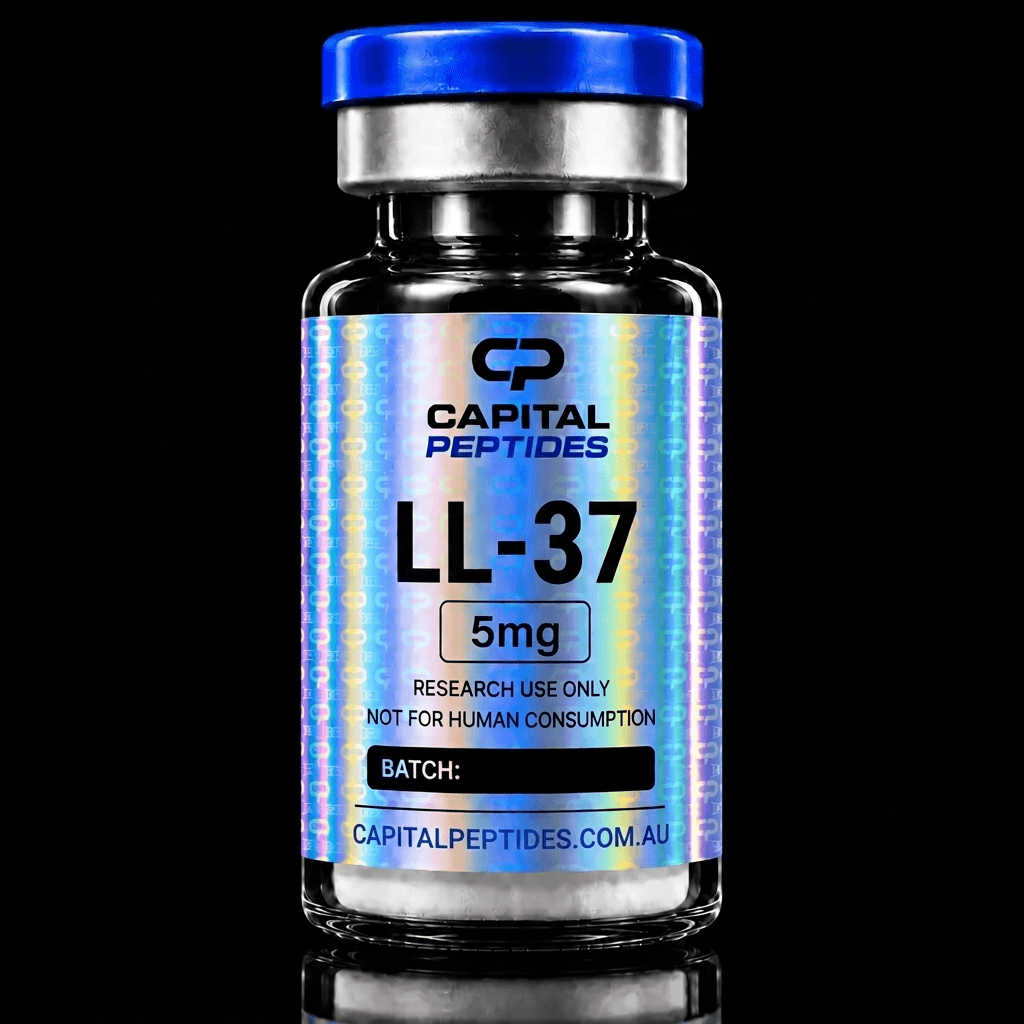
Tissue Repair & Recovery · 5mg
Janoshik-tested · 10 vials per kit
LL-37 is a 37-amino-acid human cathelicidin-derived antimicrobial peptide studied in preclinical research for its immunomodulatory and wound-healing properties. Research has examined its potential to disrupt bacterial membranes against gram-positive and gram-negative pathogens, modulate innate immune responses, promote keratinocyte migration and angiogenesis, and reduce biofilm formation. Studies have also explored anti-inflammatory and antiviral activities.
≥98%
Purity
Lyophilised
Format
2–3 wks
Arrival
Don't want to wait 3 weeks?
Check local stock — weekday same/next-day delivery available.
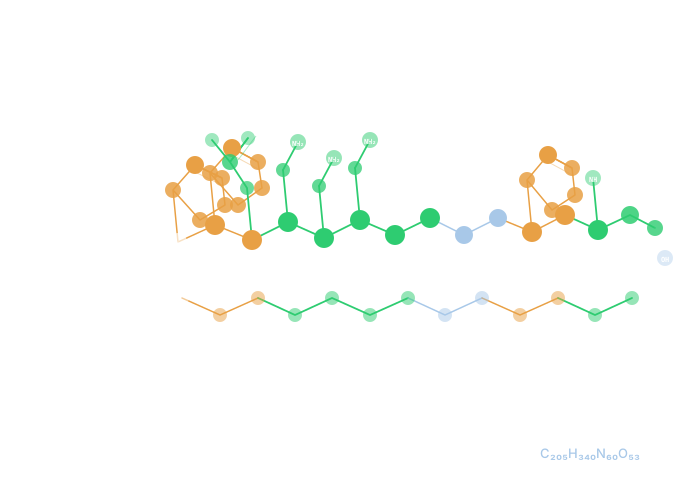
Chemical Properties
Need to work out your dose?
Use our reconstitution calculator — syringe units in seconds.
Research Use Only — Disclaimer
This product is intended solely as a research chemical for laboratory and scientific study purposes only. It is not approved by the TGA or any regulatory body for human or animal consumption, therapeutic use, or clinical application. The information provided on this website is for educational purposes only. Handling must be limited to suitably qualified professionals operating within applicable laws and regulations. This product is not classified as a drug, food, cosmetic, or medicinal product and must not be used or labelled as such. By purchasing, you confirm you are a qualified research professional and accept full responsibility for compliance with all relevant laws in your jurisdiction.
LL-37
Human Cathelicidin Antimicrobial Peptide
LL-37 is a 37-amino-acid cationic host defence peptide and the only human cathelicidin. It is derived from the C-terminal domain of hCAP18 (human cationic antimicrobial protein 18), produced by neutrophils, monocytes, NK cells, mast cells, and epithelial cells. Named for the two N-terminal leucines and 37-amino-acid length, it is central to innate immune defence at mucosal and skin surfaces.
LL-37 disrupts bacterial membranes through amphipathic alpha-helical interactions that cause membrane permeabilisation and lysis across a broad spectrum of Gram-positive, Gram-negative, and fungal pathogens. Immune modulation occurs via formyl peptide receptor 2 (FPR2/ALX) and purinergic receptors, inducing chemokine production (IL-8, MCP-1), promoting wound healing cytokines, and stimulating angiogenesis via VEGF-A upregulation. LL-37 also directly neutralises lipopolysaccharide (LPS), reducing septic shock signalling.
Research applications include wound healing (accelerated re-epithelialisation in diabetic wound models), anti-biofilm activity (penetrates and disrupts established biofilms resistant to conventional antibiotics), airway defence (cystic fibrosis and COPD models), anti-viral activity (enveloped viruses including influenza and HIV), and cancer research (dual roles — cytostatic in some cancers while promoting angiogenesis in others).
Key References
For research reference only. All information pertains to preclinical or published human trial data. Not intended as medical advice. This product is for research use only.
Don't have supplies? Grab them while you're here.