Capital Peptides
← All research overviews

Semax Peptide Research Overview

Important Notice: All information provided is for educational and informational purposes only. All peptides mentioned are intended exclusively for laboratory and in-vitro research and are not approved to diagnose, treat, cure, or prevent any disease.

Simplified Summary

Semax is a synthetic peptide that has been extensively examined in preclinical research for its potential role in neuroregulation and cognitive-associated signaling pathways. Derived as an analog of a fragment of adrenocorticotropic hormone (ACTH), Semax is composed of a short chain of amino acids engineered to enhance stability and functional activity within experimental models. Unlike peptides originating from mitochondrial processes, Semax is synthetically designed and primarily investigated for its interaction with central nervous system mechanisms.

Across laboratory and animal-based studies, Semax has been evaluated for its influence on neurotransmitter systems and neurotrophic factors. Research has explored its interactions with pathways involving dopamine, serotonin, and brain-derived neurotrophic factor (BDNF), with particular focus on receptor activity, intracellular signaling cascades, and gene expression linked to neuroplasticity and cognitive adaptation. These effects have been analyzed in models involving learning processes, stress exposure, neural injury simulations, and chemically induced imbalances.

Beyond its neurological research applications, Semax has also been studied for its potential involvement in inflammatory and oxidative stress pathways under controlled experimental conditions. Preclinical findings suggest that the peptide may play a role in modulating cytokine activity and cellular responses to environmental or induced stressors.

To support experimental consistency, various stabilized and modified forms of Semax have been developed and utilized in laboratory settings to extend activity and improve reproducibility. All findings referenced are strictly derived from non-clinical research. There are no established conclusions regarding human safety, pharmacokinetics, dosing, or therapeutic use, and all observations remain within the scope of ongoing scientific investigation.

Key Findings Reported in Preclinical Models

  • Neuronal cell cultures: Semax has been studied in neural cell systems, where exposure has been associated with modulation of neurotrophic signaling and reduced indicators of cellular stress under experimentally induced conditions. Findings often suggest involvement in pathways linked to brain-derived neurotrophic factor (BDNF) and neuronal stability.
  • Behavioral and cognitive models in rodents: In controlled animal studies, Semax administration has been associated with changes in performance during maze-based learning and conditioning tasks. These observations are typically evaluated alongside shifts in dopamine and serotonin activity under both normal and stress-induced conditions.
  • Stress-response models: Experimental models involving acute and chronic stress exposure indicate that Semax may influence biochemical markers tied to stress adaptation, including corticosterone levels and signaling within the hypothalamic-pituitary-adrenal (HPA) axis.
  • Neuroinflammatory models: Semax has been examined in models simulating inflammation in neural tissue, with findings suggesting potential modulation of cytokine expression and oxidative stress markers under controlled laboratory conditions.
  • Ischemic and hypoxic models: In preclinical studies involving reduced oxygen or blood flow, Semax has been evaluated for its interaction with cellular response mechanisms, including pathways associated with neuronal survival and metabolic adaptation.
  • Gene expression and enzymatic activity studies: Research suggests that Semax may influence gene expression related to neuroplasticity, synaptic signaling, and enzymatic regulation, based on molecular and biochemical assays conducted in vitro and in animal models.
  • Peptide stability and analog development: Modified and stabilized forms of Semax have been explored to improve experimental consistency and duration of activity, supporting more reliable observations across preclinical research settings.

Introduction

Semax Research has emerged at the intersection of neuropeptide science, cognitive signaling pathways, and experimental models of stress adaptation. Neuropeptides are now recognized as more than simple messengers—they function as regulators of complex communication networks within the central nervous system, influencing processes such as learning, memory formation, attention, and responses to environmental stressors. In preclinical models, disruptions in these systems are often associated with neurochemical imbalance, altered neurotrophic support, and dysregulated stress-response signaling.

Within this context, synthetic peptides like Semax have drawn research attention for their potential role in modulating neurocognitive and biochemical processes. As a modified analog of a fragment of adrenocorticotropic hormone (ACTH), Semax was engineered to enhance stability and activity while targeting pathways relevant to central nervous system function. Early investigations focused on its interaction with neurotransmitter systems and neurotrophic factors, particularly its observed influence on dopamine, serotonin, and brain-derived neurotrophic factor (BDNF) activity in controlled experimental settings.

As research expanded, Semax has been evaluated across a wider range of preclinical models, including those involving cognitive stress, neural injury simulations, hypoxic conditions, and inflammatory responses. Findings suggest that its activity may involve coordinated modulation of receptor dynamics, intracellular signaling pathways, and gene expression associated with neuroplasticity and cellular adaptation, depending on the experimental model applied.

Despite a growing body of mechanistic data, Semax Research remains strictly within the preclinical domain. Differences in study design, peptide formulations, and laboratory conditions underscore the need for careful interpretation of results. Ongoing investigation continues to contribute to a broader understanding of how synthetic peptides may influence neurochemical regulation, adaptive responses, and central nervous system signaling in experimental environments.

Molecular Origin & Structural Characteristics

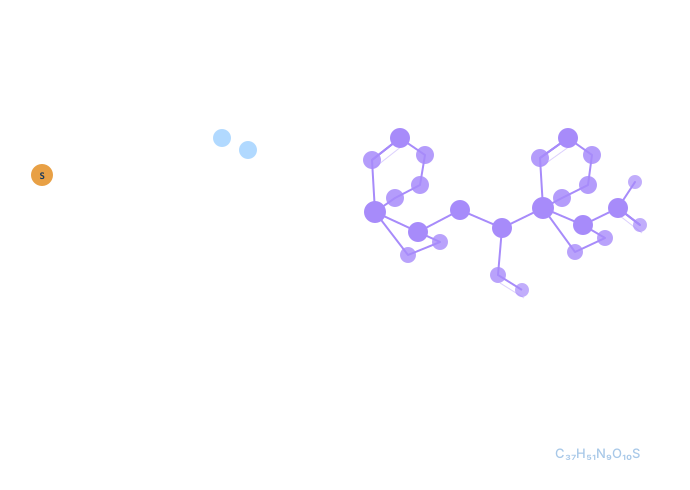
Semax is a fully synthetic peptide derived from a fragment of adrenocorticotropic hormone (ACTH), specifically the sequence ACTH(4-7), which is known to participate in neuroregulatory signaling. Structurally, Semax is a short peptide composed of the sequence Met-Glu-His-Phe-Pro-Gly-Pro (MEHFPGP). The addition of the Pro-Gly-Pro (PGP) tripeptide to the core ACTH-derived segment was intentionally designed to enhance resistance to enzymatic degradation and prolong activity in experimental systems. Unlike peptides encoded by mitochondrial or nuclear DNA, Semax is engineered to replicate and stabilize specific biological signaling functions observed in endogenous peptide fragments.

From a structural perspective, Semax contains multiple residues that contribute to its stability and functional behavior. The presence of proline residues, particularly within the PGP segment, introduces conformational constraints that may reduce susceptibility to proteolytic enzymes. This structural rigidity is considered important in preclinical environments, where peptide persistence can directly influence observed biochemical and neurochemical effects.

Structure-function analyses suggest that Semax's activity is closely tied to the integrity of its full peptide sequence. The N-terminal ACTH-derived portion (Met-Glu-His-Phe) is associated with interactions relevant to neurotrophic and neurotransmitter-related pathways, while the C-terminal Pro-Gly-Pro extension contributes to stability and may influence receptor interaction dynamics. Experimental modifications to either region have been shown to alter activity profiles in vitro, indicating that both segments play a role in the peptide's overall functional characteristics.

Semax does not include a conventional signal peptide and is typically examined through exogenous application in preclinical models. Its relatively small molecular size and enhanced stability make it suitable for studying interactions within central nervous system pathways, including experimental observations related to transport across biological barriers. Although precise receptor-binding mechanisms remain under investigation, Semax has been associated with modulation of neurochemical signaling and enzymatic activity in laboratory settings.

Compared to larger and more structurally complex proteins, Semax represents a compact and rationally designed peptide with properties optimized for experimental consistency. Ongoing research continues to examine how its sequence and structural features influence binding interactions, intracellular signaling, and persistence across preclinical neurobiological and biochemical models.

Mechanistic Insights & Cellular Targets

Preclinical investigations suggest that Semax interacts with a network of neurochemical and cellular pathways involved in cognitive processing, stress adaptation, and neuronal signaling. Rather than acting through a single receptor or linear mechanism, Semax appears to function as a regulatory peptide with context-dependent effects shaped by cell type, experimental conditions, and the surrounding signaling environment. Most mechanistic insights are derived from in vitro studies and animal models examining neurochemical balance, neurotrophic signaling, and adaptive responses to physiological stressors.

Neurotransmitter System Modulation

Semax has been widely studied for its interaction with central neurotransmitter systems, particularly those involving dopamine and serotonin. Experimental findings suggest that Semax may influence neurotransmitter turnover, receptor sensitivity, and synaptic signaling efficiency under controlled conditions. These effects are often evaluated in models of cognitive processing and stress exposure, where shifts in monoamine activity are closely monitored.

Gene Expression and Transcriptional Activity

Preclinical data indicate that Semax may alter the expression of genes associated with neuroplasticity, neurotransmission, and cellular adaptation. Changes in mRNA levels of signaling proteins and transcription factors have been observed in neural tissues following peptide exposure. While these findings point toward transcriptional modulation, the underlying mechanisms—whether direct or mediated through upstream signaling pathways—remain under investigation.

Neurotrophic and Synaptic Signaling

In neuronal models, Semax has been associated with modulation of pathways linked to neurotrophic support, particularly those involving brain-derived neurotrophic factor (BDNF). Observations include changes in markers related to synaptic plasticity and neuronal communication, suggesting a role in maintaining functional stability under experimentally induced stress or cognitive demand.

Inflammatory and Cytokine Regulation

Semax has also been examined in preclinical models involving inflammatory signaling. Findings suggest potential modulation of cytokine expression and oxidative stress markers, indicating that the peptide may influence interactions between neural and immune-related pathways under controlled laboratory conditions.

Enzymatic Activity and Peptide Metabolism

Research has explored Semax's interaction with enzymatic systems involved in neurotransmitter metabolism and peptide processing. Experimental observations suggest that Semax may affect enzyme activity related to neurotransmitter degradation, potentially influencing the duration and intensity of synaptic signaling in preclinical models.

Stress-Response Signaling

In models of acute and chronic stress exposure, Semax has been associated with changes in biochemical markers linked to hypothalamic-pituitary-adrenal (HPA) axis activity. These include observed modulation of stress-related hormones and behavioral responses, supporting its relevance in experimental studies of adaptive signaling.

Barrier Interaction and Central Distribution

Due to its relatively small size and structural stability, Semax has been investigated for its interaction with biological barriers in experimental systems. Some studies suggest potential access to central nervous system compartments following administration, although transport mechanisms and distribution patterns remain under active investigation.

Context-Dependent Integration

Importantly, Semax's observed effects vary across experimental models, with outcomes influenced by variables such as dosage, delivery method, and the specific physiological or stress-related conditions being studied. Current evidence supports a model in which Semax modulates interconnected neurochemical, neurotrophic, and inflammatory pathways, contributing to adaptive cellular responses—exclusively within preclinical research settings.

Preclinical Research Landscape

The preclinical research landscape surrounding Semax is broad and methodologically diverse, reflecting ongoing scientific interest in synthetic peptides that influence neurocognitive signaling and adaptive stress responses. Since its development as an analog of an adrenocorticotropic hormone (ACTH) fragment, Semax has been evaluated across a range of experimental systems, including in vitro neural models, behavioral animal studies, neuroinflammatory paradigms, and molecular-level investigations. Collectively, these studies contribute to a growing body of mechanistic and functional data, while also revealing variability in experimental design, peptide formulation, and interpretation of results.

In Vitro Experimental Systems

Cell-based studies serve as a foundational component of Semax research. Neuronal and glial cultures are frequently used to examine its effects on neurotrophic signaling, gene expression, and cellular stress responses. In these systems, Semax exposure has been associated with modulation of signaling pathways linked to brain-derived neurotrophic factor (BDNF), as well as changes in synaptic protein expression and intracellular communication under induced experimental conditions.

Additional in vitro models include mixed cell populations and immune-related cell systems, where Semax has been evaluated for its influence on cytokine activity, receptor interactions, and oxidative stress markers. As with most peptide-focused research, outcomes are highly dependent on variables such as concentration, exposure duration, and cellular environment, contributing to differences across findings.

Behavioral and Central Nervous System Models

Animal models examining behavior and central nervous system activity represent a major area of Semax research. Rodent studies commonly employ maze-based learning tasks, conditioning paradigms, and stress-induction protocols to assess changes in cognitive performance and adaptive behavior. In these controlled settings, Semax administration has been associated with measurable shifts in task performance, often interpreted alongside neurochemical and molecular analyses.

Complementary biochemical studies in these models report changes in neurotransmitter activity, receptor sensitivity, and gene expression within brain regions associated with cognition and stress regulation. These findings suggest that Semax may influence integrated neural signaling networks under experimental conditions, though outcomes vary depending on study design.

Stress and Neuroendocrine Models

Semax has been investigated in models designed to simulate both acute and prolonged stress exposure. These studies typically assess hormonal markers—such as corticosterone levels—alongside behavioral and molecular endpoints. Observations indicate that Semax may influence signaling pathways associated with hypothalamic-pituitary-adrenal (HPA) axis activity, contributing to adaptive responses in controlled laboratory environments.

Neuroinflammatory and Immune Research Models

A significant portion of Semax research explores its role in inflammatory and immune-related signaling. Experimental models involving induced inflammation in neural or peripheral systems have shown changes in cytokine expression and oxidative stress markers following peptide exposure. These findings suggest potential involvement in regulatory pathways linking neural and immune system activity, though all observations remain within preclinical contexts.

Molecular and Biochemical Investigations

Beyond whole-animal models, Semax has been studied at the molecular level for its interaction with enzymatic systems and intracellular signaling processes. Research indicates potential effects on enzymes involved in neurotransmitter metabolism and peptide processing, which may influence synaptic signaling dynamics and cellular communication pathways.

Methodological Variability and Limitations

Despite the expanding body of research, the Semax literature is characterized by notable heterogeneity. Studies differ in peptide preparation, dosing strategies, delivery methods, and experimental endpoints. Replication across independent laboratories remains limited, and inconsistencies in methodology can contribute to variation in reported outcomes.

Importantly, all available data are derived exclusively from non-clinical research. No human studies have established safety, pharmacokinetics, dosing standards, or therapeutic applications. As such, Semax remains an investigational peptide within preclinical science, primarily serving as a research tool for exploring neurochemical regulation, cognitive signaling, and adaptive stress-response pathways.

Safety Considerations & Research Limitations

All available data on Semax are derived exclusively from preclinical research, including in vitro experiments and animal models. To date, no controlled human studies have established its safety profile, pharmacokinetics, biodistribution, or tolerability. As a result, key parameters—such as dose-response relationships, long-term exposure effects, metabolic pathways, and tissue-specific distribution—remain undefined. Any interpretation of Semax's biological activity must therefore be confined strictly to controlled experimental settings.

Several limitations characterize the current body of research. Findings often vary depending on the model system, study design, peptide formulation, and route of administration. Differences in behavioral assays, molecular endpoints, and stress-induction protocols further contribute to variability across studies. In many cases, results are context-dependent, making direct comparisons between experiments challenging.

Peptide stability is another important consideration. While Semax has been structurally modified to enhance resistance to enzymatic degradation compared to its parent ACTH fragment, its behavior may still differ across experimental environments. Variations in preparation, delivery methods, and exposure timing can influence observed outcomes, potentially introducing inconsistencies between studies.

Context-specific responses also add complexity. Although Semax is frequently associated with modulation of neurotrophic, neurochemical, and inflammatory pathways in preclinical models, some studies report minimal or variable effects depending on the biological system or experimental condition. These differences highlight the importance of considering baseline physiology, experimental design, and the nature of induced stress or imbalance.

Additionally, the broader research landscape may be influenced by publication bias, where studies reporting significant or positive findings are more likely to be published than those with neutral or negative results. Limited replication across independent laboratories further restricts the ability to generalize findings.

Taken together, these factors emphasize that Semax remains an investigational peptide within preclinical research. Substantial gaps in safety evaluation, mechanistic clarity, and translational relevance must be addressed before any conclusions beyond foundational scientific investigation can be made.

Conclusion

Semax represents a well-characterized synthetic regulatory peptide within the field of preclinical neurocognitive and neurochemical research. Developed as an analog of a fragment of adrenocorticotropic hormone (ACTH), it has been explored across a wide range of experimental systems, including behavioral models, neurotransmitter studies, stress-response paradigms, and neurotrophic signaling frameworks. Its engineered structure and relatively small size distinguish it from naturally occurring peptides, positioning Semax as a valuable model for investigating peptide-based modulation of central nervous system activity.

Across in vitro systems and animal models, Semax has been associated with coordinated effects on neurotransmitter dynamics, gene expression, and neurotrophic signaling pathways. These findings suggest that Semax functions as a context-dependent modulator of interconnected biological networks rather than acting through a single, isolated mechanism. Recurring themes—particularly its interaction with monoaminergic systems and pathways linked to brain-derived neurotrophic factor (BDNF)—highlight its relevance as a research tool for studying cognitive processes and adaptive responses under experimental conditions.

At the same time, the Semax research landscape presents notable limitations. All available findings remain strictly within the preclinical domain, with variability across experimental designs, biological models, and study conditions. Differences in peptide formulation, administration methods, and measured endpoints further complicate interpretation, while replication across independent studies remains limited. No conclusions can be drawn regarding human safety, efficacy, or clinical applicability.

Accordingly, Semax should be regarded as an investigational peptide that contributes to the foundational understanding of neuropeptide signaling, neuroplasticity, and stress adaptation, while continuing to present unanswered questions that require further systematic and controlled research.

References

  • Dolotov, O. V., et al. (2006). Semax, an analog of ACTH(4-10), modulates brain-derived neurotrophic factor (BDNF) signaling in the hippocampus. PubMed.
  • Medvedeva, E. V., et al. (2014). The peptide Semax affects gene expression related to immune and vascular system function in rat brain under ischemic conditions. Frontiers in Pharmacology.
  • Dmitrieva, V. G., et al. (2009). Semax and Pro-Gly-Pro activate transcription of neurotrophins and their receptors in rat brain. Molecular Biology.
  • Eremin, K. O., et al. (2005). Effects of Semax on dopaminergic and serotonergic systems in experimental models. PubMed.
  • Filippenkov, I. B., et al. (2020). Protective properties of Semax in models of cerebral ischemia and gene expression regulation. PMC.
  • Sudarkina, O. Y., et al. (2021). Brain protein expression profile confirms protective effects of ACTH(4-7)PGP (Semax) in ischemia-reperfusion models. International Journal of Molecular Sciences.
  • Dergunova, L. V., et al. (2023). Neuroprotective peptides and strategies for ischemic brain injury: focus on Semax. Genes (MDPI).
  • Potaman, V. N., et al. (1991). Degradation and stability of ACTH(4-10) and its synthetic analog Semax in biological systems. Biochemical and Biophysical Research Communications.
  • Kolbaev, S. N., et al. (2025). Effects of Semax on intracellular calcium dynamics in hippocampal neurons. PubMed.
  • Radchenko, A. I., et al. (2025). The potential of Semax and its derivatives in cognitive and neurodegenerative research models. Acta Naturae.

For research use only. Capital Peptides products are not approved by the TGA for therapeutic use. By purchasing you confirm you are a licensed research entity or qualified professional.