Simplified Summary
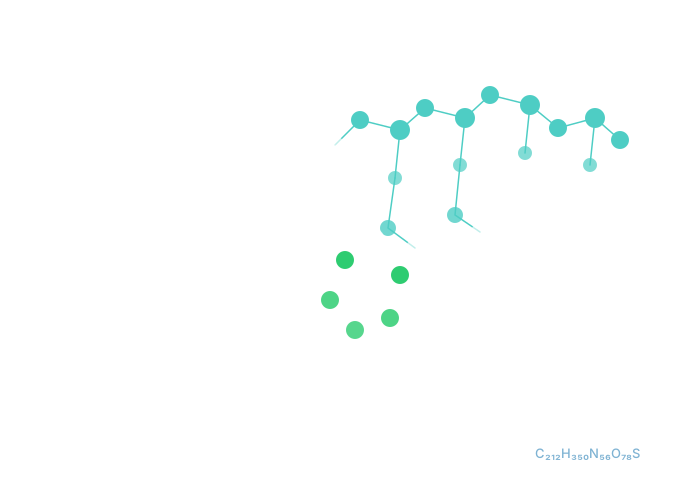
Thymosin Beta-4 Fragment (TB-500) is a synthetic peptide derived from a naturally occurring protein known as Thymosin Beta-4, which has been widely studied in preclinical research for its potential role in cellular repair and regeneration processes. As a fragment-based analog, TB-500 is designed to mirror specific functional regions of the parent peptide, particularly those associated with cell migration, structural organization, and tissue remodeling. Research into TB-500 is conducted primarily in controlled laboratory and animal-based models, with a focus on understanding its biological activity at the cellular level.
Across experimental settings, TB-500 has been examined for its potential influence on mechanisms such as cell differentiation, angiogenesis, and cytoskeletal dynamics. Its interaction with actin—a key component of cellular structure—has been a central focus, as this relationship may play a role in how cells move, repair, and reorganize following injury in model systems. Researchers have also explored how TB-500 may affect signaling pathways involved in inflammation, tissue regeneration, and wound healing under preclinical conditions.
In addition to its structural and regenerative research focus, TB-500 has been evaluated for its potential involvement in recovery-related processes within experimental models. Studies have investigated its possible role in supporting cellular responses to stress, including oxidative stress and localized tissue disruption. These investigations often center on how the peptide may influence biological signaling cascades tied to repair efficiency and cellular resilience.
To support consistent experimental outcomes, TB-500 is synthesized and stabilized for laboratory use, enabling researchers to isolate and examine its functional properties under controlled conditions. All findings referenced are derived exclusively from non-clinical research. There are no established conclusions regarding human safety, pharmacokinetics, dosing, or therapeutic applications, and all observations remain within the scope of ongoing scientific investigation.
Key Findings Reported in Preclinical Models
- Cellular and tissue-level systems: TB-500 has been investigated in cell culture studies where experimental exposure has been associated with changes in cellular migration, differentiation, and structural organization. Findings often highlight its interaction with actin, suggesting a potential role in cytoskeletal remodeling and intracellular transport processes under controlled laboratory conditions.
- Wound healing and tissue repair models in animals: In animal-based studies, TB-500 has been examined for its relationship with tissue regeneration and repair mechanisms. Observations frequently focus on accelerated cellular migration, angiogenesis, and extracellular matrix remodeling in response to induced injury, providing insight into how the peptide may influence recovery-related pathways in preclinical settings.
- Inflammation and immune-response models: Preclinical research suggests that TB-500 may interact with signaling pathways associated with inflammation. Experimental findings have explored its potential influence on inflammatory mediators and immune cell activity, particularly in models involving localized tissue damage or inflammatory stressors.
- Angiogenesis and vascular studies: TB-500 has been studied for its potential involvement in the formation of new blood vessels. Research in experimental models has examined how it may influence endothelial cell activity and vascular development, with a focus on pathways that regulate blood vessel growth and tissue perfusion.
- Musculoskeletal and connective tissue models: In studies involving muscle, tendon, and ligament systems, TB-500 has been evaluated for its potential role in structural repair and functional recovery. Findings often center on cellular proliferation, collagen organization, and tissue remodeling processes following experimentally induced strain or injury.
- Oxidative stress and cellular resilience studies: Laboratory investigations have explored how TB-500 may affect cellular responses to oxidative stress. Some findings suggest potential involvement in pathways that support cellular stability and resilience under environmental or experimentally induced stress conditions.
- Gene expression and biochemical pathway analysis: Molecular assays indicate that TB-500 may influence gene expression and enzymatic activity related to cell migration, inflammation, and tissue repair. These studies aim to better understand how the peptide interacts with regulatory pathways at the genetic and biochemical levels in vitro and in animal models.
- Peptide stability and laboratory formulation research: To support experimental consistency, synthesized forms of TB-500 are used in research environments. These formulations are designed to enhance peptide stability and reproducibility, allowing for more controlled investigation of its biological activity.
Introduction
TB-500 research sits at the intersection of peptide biology, cellular repair mechanisms, and tissue regeneration within controlled experimental models. Peptides in this category are increasingly viewed not as isolated signaling agents, but as coordinators of complex biological activity—helping regulate how cells migrate, organize, and respond to injury. In preclinical settings, disruptions in these processes are often associated with impaired tissue repair, prolonged inflammation, and reduced cellular adaptability.
Within this context, Thymosin Beta-4 Fragment (TB-500) has drawn scientific attention due to its relationship with Thymosin Beta-4, a naturally occurring peptide involved in cellular structure and repair. Unlike entirely synthetic compounds, TB-500 is modeled after a biologically active region of its parent molecule, with early investigations focusing on its interaction with actin and its potential influence on cell migration, angiogenesis, and cytoskeletal organization in experimental systems.
As research has expanded, TB-500 has been examined across a wider range of preclinical models, including those involving tissue injury, inflammatory response, vascular development, and musculoskeletal stress. Findings suggest that its activity may involve coordination between intracellular signaling pathways, extracellular matrix remodeling, and cellular communication networks that contribute to structural repair and regeneration under controlled conditions.
Despite growing interest, TB-500 research remains firmly within the preclinical domain. Variability in experimental design, peptide formulation, and model systems underscores the need for careful interpretation of findings. Ongoing studies aim to further clarify how TB-500 may influence tissue repair dynamics, cellular resilience, and biological adaptation processes within laboratory environments.
Molecular Origin & Structural Characteristics
TB-500 (Thymosin Beta-4 Fragment) is a synthetic peptide derived from the naturally occurring protein Thymosin Beta-4, which is widely distributed across mammalian tissues and studied for its role in cellular organization and repair. Unlike full-length peptides, TB-500 represents a functional fragment designed to replicate specific biological regions associated with cell migration and structural regulation. While the parent molecule is endogenous, TB-500 itself is typically synthesized for controlled laboratory investigation.
From a structural standpoint, TB-500 is characterized by a relatively small and flexible peptide sequence, allowing it to interact with intracellular components involved in maintaining cell integrity. A central feature of its activity is its interaction with actin, a key element of the cytoskeleton. This interaction has been associated in preclinical studies with changes in cell shape, motility, and intracellular transport dynamics under experimental conditions.
Structure-function analyses suggest that the biological activity of TB-500 is closely tied to its ability to bind and regulate actin polymerization. By influencing how actin filaments assemble and disassemble, TB-500 may contribute to cellular processes such as migration, differentiation, and tissue remodeling in vitro and in animal models. Unlike larger proteins with complex tertiary structures, TB-500's relatively simple configuration allows for broader distribution and interaction across different tissue types in experimental systems.
Because naturally occurring peptides are often rapidly degraded by enzymes, TB-500 is synthesized and stabilized to improve its persistence and reproducibility in laboratory environments. These modifications support more consistent observation of its biological effects, particularly in studies focused on tissue repair and regenerative signaling pathways.
Compared to larger peptide systems, TB-500 represents a compact yet functionally significant fragment with structural properties that support flexibility and wide-ranging cellular interactions. Ongoing research continues to explore how its molecular characteristics contribute to observed effects on cell migration, angiogenesis, and tissue regeneration—strictly within preclinical models.
Mechanistic Insights & Cellular Targets
Preclinical investigations suggest that LL-37 interacts with a broad network of immune, cellular, and molecular pathways involved in host defense, inflammation, and tissue homeostasis. Rather than functioning solely as a direct antimicrobial agent, LL-37 is increasingly described as a modulatory peptide whose activity varies depending on environmental context, cell type, and experimental conditions. Most mechanistic insights are derived from in vitro studies and animal models examining infection, inflammation, and immune signaling.
Cytoskeletal Dynamics and Cell Migration
A primary focus of TB-500 research is its interaction with actin-related pathways. Experimental findings suggest that it may regulate cytoskeletal remodeling, enabling cells to migrate more efficiently during processes such as wound healing and tissue repair.
Angiogenesis and Vascular Signaling
TB-500 has been studied for its potential role in angiogenesis, with research examining how it may influence endothelial cell behavior and the formation of new blood vessels. These effects are often evaluated in models of tissue injury or regeneration.
Inflammatory Pathway Modulation
Some preclinical studies suggest that TB-500 may interact with signaling pathways associated with inflammation. Observations include potential effects on cytokine activity and localized inflammatory responses, particularly in models involving tissue damage or stress.
Cell Differentiation and Tissue Remodeling
Research has explored how TB-500 may influence cellular differentiation and extracellular matrix organization. These processes are central to tissue remodeling, where coordinated signaling is required for structural repair and regeneration.
Oxidative Stress and Cellular Resilience
Laboratory studies have examined TB-500's potential involvement in cellular responses to oxidative stress. Findings suggest it may influence pathways that help maintain cellular stability under adverse experimental conditions.
Gene Expression and Biochemical Pathways
Molecular analyses indicate that TB-500 may affect gene expression related to cell migration, inflammation, and repair mechanisms. These effects are typically evaluated through in vitro assays and animal-based models to better understand downstream signaling interactions.
Peptide Stability and Metabolic Processing
As a synthetic fragment, TB-500 is designed for improved stability compared to naturally occurring peptides. Research has examined how it interacts with enzymatic degradation pathways and how formulation strategies may influence its persistence in experimental systems.
Distribution and Tissue Interaction
Due to its size and structural properties, TB-500 has been studied for its ability to distribute across different tissue types in preclinical models. Investigations often focus on how it reaches sites of injury and interacts with localized cellular environments.
Context-Dependent Effects
Importantly, TB-500's observed activity varies depending on experimental conditions such as dosage, administration method, and model type. Current evidence supports a framework in which TB-500 interacts with interconnected cellular and biochemical pathways involved in repair and adaptation—strictly within non-clinical research settings.
Preclinical Research Landscape
The preclinical research landscape surrounding TB-500 (Thymosin Beta-4 Fragment) is broad and methodologically diverse, reflecting sustained scientific interest in peptides associated with tissue repair, cellular migration, and regenerative signaling. Derived from Thymosin Beta-4, TB-500 has been explored across a range of experimental systems, including in vitro cellular models, animal-based injury studies, vascular research, and molecular-level analyses. While these investigations provide valuable insights, the overall body of evidence remains variable in design, peptide formulation, and interpretation of results.
In Vitro Experimental Systems
Cell-based models form a core component of TB-500 research. Studies using fibroblasts, endothelial cells, and muscle-related cell lines have examined its potential effects on cellular migration, proliferation, and structural organization. A central focus is its interaction with actin, which plays a key role in cytoskeletal dynamics. In controlled environments, TB-500 exposure has been associated with changes in intracellular signaling, gene expression, and pathways linked to tissue repair and cellular stability.
Additional in vitro systems include mixed-cell and inflammatory models, where TB-500 has been evaluated for its potential influence on cytokine signaling and cellular adaptation. As with many peptide-based studies, outcomes depend heavily on variables such as concentration, exposure duration, and cell type, contributing to differences across findings.
Tissue Repair and Injury Models
Animal-based studies investigating tissue damage and repair represent a central area of TB-500 research. These models often examine wound healing, muscle injury, and connective tissue disruption under controlled conditions. Observations typically focus on cellular migration, extracellular matrix remodeling, and angiogenesis, alongside structural and functional recovery markers in affected tissues.
Inflammation and Immune-Response Models
TB-500 has been studied in experimental models involving localized inflammation and immune activation. These investigations explore potential interactions with inflammatory mediators, including cytokine activity and immune cell signaling. Findings suggest possible involvement in pathways that regulate inflammatory balance and tissue response to injury, though mechanisms remain under investigation.
Angiogenesis and Vascular Research
A significant area of focus involves TB-500's potential role in angiogenesis. Experimental models have examined its influence on endothelial cell behavior, vascular formation, and blood vessel remodeling. These studies often aim to understand how vascular support contributes to broader tissue repair processes.
Molecular and Biochemical Investigations
At the molecular level, TB-500 has been evaluated for its interaction with intracellular signaling pathways and gene expression related to repair, inflammation, and cellular organization. Research includes biochemical assays exploring enzyme activity, peptide metabolism, and regulatory pathways that influence how cells respond to injury and environmental stressors.
Methodological Variability and Limitations
Despite continued scientific interest, the TB-500 literature is characterized by notable variability. Studies differ in peptide synthesis methods, stabilization techniques, dosing strategies, delivery routes, and experimental endpoints. Replication across independent research groups remains limited, and inconsistencies in methodology contribute to variation in reported outcomes.
Importantly, all available findings are derived exclusively from non-clinical research. There are no established conclusions regarding human safety, pharmacokinetics, dosing protocols, or therapeutic applications. TB-500 remains an investigational compound, primarily used as a research tool to explore mechanisms related to tissue repair, cellular dynamics, and regenerative signaling within controlled experimental environments.
Safety Considerations & Research Limitations
All currently available data on TB-500 (Thymosin Beta-4 Fragment) originate exclusively from preclinical research, including in vitro experiments and animal-based models. No controlled human studies have established its safety profile, pharmacokinetics, biodistribution, or tolerability. As such, key parameters—such as dose-response relationships, long-term exposure effects, metabolic processing, and tissue-specific distribution—remain largely undefined. Any interpretation of TB-500's biological activity should therefore remain strictly within controlled experimental settings.
Several limitations define the current research landscape. Study outcomes often vary depending on the experimental model, design framework, peptide preparation, and route of administration. Differences in injury models, inflammatory assays, and tissue-specific endpoints contribute to variability across findings. In many cases, results are highly context-dependent, making it difficult to directly compare outcomes between studies or establish consistent conclusions.
Peptide stability is another important consideration. While TB-500 is derived from Thymosin Beta-4, it is typically synthesized and may be modified for improved stability in laboratory settings. However, variations in formulation, handling, and delivery methods can significantly influence how the peptide behaves in experimental systems. These differences may affect its interaction with intracellular targets such as actin and related signaling pathways.
Context-specific responses further add complexity. Although TB-500 is often associated in preclinical studies with processes like cell migration, angiogenesis, and tissue remodeling, some models report variable or limited effects depending on the biological environment and experimental conditions. Factors such as baseline tissue state, severity of induced injury, and timing of administration may all influence observed outcomes.
The broader research landscape may also be influenced by publication bias, where studies reporting statistically significant or positive findings are more likely to be published than those with neutral or inconclusive results. Additionally, limited replication across independent laboratories reduces confidence in generalizing findings across different experimental systems.
Taken together, these considerations highlight that TB-500 remains an investigational peptide within preclinical science. Significant gaps persist in safety evaluation, mechanistic clarity, and translational relevance. Further research is required before any conclusions can extend beyond foundational scientific investigation.
Conclusion
TB-500 (Thymosin Beta-4 Fragment) represents a compelling area of investigation within preclinical research focused on tissue repair, cellular migration, and regenerative biology. As a synthetic fragment derived from Thymosin Beta-4, it has been explored across a wide range of experimental systems, including injury models, vascular studies, inflammatory research, and cellular-level analyses. Its relatively simple structure, combined with its functional connection to endogenous biological processes, positions TB-500 as a valuable model for studying peptide-driven repair mechanisms.
Across in vitro systems and animal models, TB-500 has been associated with processes involving cytoskeletal organization, angiogenesis, and tissue remodeling. Its interaction with actin highlights its relevance in studies examining how cells migrate, adapt, and reorganize in response to injury or stress. These findings suggest that TB-500 may function as a context-dependent modulator within interconnected biological pathways rather than acting through a single, clearly defined mechanism.
At the same time, the TB-500 research landscape presents clear limitations. All existing data are confined to preclinical settings, with notable variability in experimental design, peptide formulation, and study conditions. Differences in methodology, model selection, and outcome measures make cross-study comparisons challenging, and independent replication remains limited. There are no established conclusions regarding human safety, efficacy, or clinical application.
Accordingly, TB-500 should be regarded as an investigational peptide that contributes to the foundational understanding of cellular repair, structural organization, and regenerative signaling. However, significant gaps remain in mechanistic clarity and translational relevance, underscoring the need for further systematic and controlled research.
References
- Goldstein, A. L., & Kleinman, H. K. (1995). Advances in the basic and clinical applications of thymosin β4. Annals of the New York Academy of Sciences.
- Malinda, K. M., et al. (1999). Thymosin beta 4 accelerates wound healing. Journal of Investigative Dermatology.
- Bock-Marquette, I., et al. (2004). Thymosin beta 4 activates integrin-linked kinase and promotes cardiac cell migration, survival, and repair. Nature.
- Smart, N., et al. (2007). Thymosin β4 induces adult epicardial progenitor mobilization and neovascularization. Nature.
- Hinkel, R., et al. (2008). Thymosin beta 4 is an essential paracrine factor of embryonic endothelial progenitor cell-mediated cardioprotection. Circulation.
- Philp, D., et al. (2004). Thymosin beta 4 promotes angiogenesis, wound healing, and hair follicle development. Mechanisms of Ageing and Development.
- Huff, T., et al. (2001). The role of thymosin β4 in actin regulation and cellular motility. Biochemical Journal.
- Grant, D. S., et al. (1999). Thymosin beta 4 enhances endothelial cell differentiation and angiogenesis. FASEB Journal.
- Srivastava, D., et al. (2010). Thymosin β4 and tissue regeneration: molecular mechanisms and therapeutic potential. Trends in Molecular Medicine.
- Zhao, Y., & Qiu, F. (2015). Role of thymosin β4 in tissue repair and regeneration. International Journal of Molecular Sciences.
- Brotto, M., & Abreu, E. L. (2012). Thymosin beta 4: emerging role in skeletal muscle repair and regeneration. Journal of Molecular and Cellular Cardiology.
- Yang, Y., et al. (2012). Thymosin beta 4 and its role in inflammation and tissue protection. Annals of the New York Academy of Sciences.
For research use only. Capital Peptides products are not approved by the TGA for therapeutic use. By purchasing you confirm you are a licensed research entity or qualified professional.