Capital Peptides
← All research overviews

Thymosin Alpha-1 Peptide Research Overview

Important Notice: All information provided is for educational and informational purposes only. All peptides mentioned are intended exclusively for laboratory and in-vitro research and are not approved to diagnose, treat, cure, or prevent any disease.

Simplified Summary

Thymosin Alpha-1 (Tα1) is a naturally derived peptide that has been widely examined in preclinical research for its potential role in immune system regulation and cellular signaling. Originally isolated from the thymus, this peptide is composed of a short chain of amino acids and is considered endogenous in origin. Scientific interest in Thymosin Alpha-1 has largely centered on how it may interact with immune pathways under controlled laboratory conditions, particularly in relation to host defense mechanisms and cellular communication.

Across in vitro and animal-based models, Thymosin Alpha-1 has been studied for its potential influence on immune modulation, including interactions with T cells, dendritic cells, and cytokine signaling pathways. Research has explored how it may affect immune system balance by supporting signaling processes involved in pathogen recognition and inflammatory response regulation. These investigations often focus on receptor-mediated activity, intracellular signaling cascades, and the broader coordination of innate and adaptive immune responses.

Beyond immune-focused studies, Thymosin Alpha-1 has also been evaluated for its potential involvement in cellular resilience and regulatory processes in experimental environments. Some findings suggest it may play a role in maintaining immune homeostasis and influencing responses to environmental or induced stressors at the cellular level, particularly in models examining inflammation and immune adaptation.

To support consistent experimental outcomes, Thymosin Alpha-1 is commonly synthesized for laboratory research, allowing for controlled analysis of its structural and functional properties. All findings referenced are derived exclusively from non-clinical studies. There are no established conclusions regarding human safety, pharmacokinetics, dosing, or therapeutic applications, and all observations remain within the scope of ongoing scientific investigation.

Key Findings Reported in Preclinical Models

  • Immune cell signaling and activation models: Thymosin Alpha-1 has been investigated in immune cell cultures, where experimental exposure has been associated with changes in signaling pathways involved in immune activation and regulation. Findings from in vitro studies suggest potential interactions with T lymphocytes and antigen-presenting cells, including modulation of cytokine release and receptor-mediated signaling under controlled laboratory conditions.
  • Innate and adaptive immune response models in animals: In animal-based studies, Thymosin Alpha-1 has been examined for its relationship with both innate and adaptive immune processes. Observations often focus on its influence on immune coordination, including effects on dendritic cell activity, T-cell differentiation, and immune surveillance mechanisms, particularly in models involving induced immune challenges.
  • Inflammation and immune modulation studies: Preclinical research suggests that Thymosin Alpha-1 may influence biochemical markers associated with inflammatory signaling. These include potential interactions with pathways regulating cytokines such as interleukins and tumor necrosis factor (TNF), as well as modulation of immune responses during experimentally induced inflammatory conditions.
  • Host defense and pathogen-response models: Thymosin Alpha-1 has been explored in experimental models designed to assess host defense mechanisms. Studies have examined its potential role in supporting immune recognition and response to pathogens, including effects on cellular signaling pathways involved in immune readiness and pathogen clearance under controlled conditions.
  • Cellular resilience and stress-response models: Some preclinical findings indicate that Thymosin Alpha-1 may contribute to cellular resilience in response to environmental or induced stressors. Investigations have focused on its potential involvement in maintaining immune homeostasis and regulating cellular responses linked to oxidative stress and inflammatory balance.
  • Gene expression and molecular pathway analysis: Molecular and biochemical assays suggest that Thymosin Alpha-1 may influence gene expression related to immune regulation and cellular signaling. These studies examine its effects on transcription factors, enzymatic activity, and intracellular pathways associated with immune coordination and cellular communication in vitro and in animal models.
  • Peptide stability and laboratory formulation research: To enhance experimental reliability, synthesized forms of Thymosin Alpha-1 are commonly used in research settings. These formulations are designed to improve peptide stability and consistency across studies, enabling more precise observation of its biological activity and interactions under controlled laboratory conditions.

Introduction

Thymosin Alpha-1 Research sits at the intersection of peptide biology, immunology, and cellular signaling within controlled experimental models. Peptides involved in immune regulation are increasingly recognized as dynamic coordinators rather than isolated messengers—they help orchestrate complex communication between cells, influencing processes such as immune surveillance, inflammatory balance, and cellular adaptation. In preclinical research, disruptions in these systems are often associated with impaired immune responses, dysregulated inflammation, and altered signaling across innate and adaptive pathways.

Within this context, Thymosin Alpha-1 has attracted sustained scientific attention due to its proposed role in immune modulation and regulatory signaling. Originally isolated from the thymus, this peptide is considered endogenous and has been studied for its interactions with immune cells and signaling networks. Early investigations focused on its relationship with T-cell function, antigen presentation, and cytokine activity, as well as its potential influence on pathways involved in immune system coordination under experimental conditions.

As research expanded, Thymosin Alpha-1 has been examined across a broader range of preclinical models, including those involving immune challenges, inflammatory conditions, and cellular stress environments. Findings suggest that its activity may involve receptor-mediated interactions, modulation of cytokine signaling, and influence over intracellular pathways linked to immune balance and host defense mechanisms. These studies often explore how the peptide participates in maintaining equilibrium between immune activation and regulation.

Despite growing interest, Thymosin Alpha-1 Research remains firmly within the preclinical domain. Variability in experimental design, peptide formulation, and model conditions underscores the need for careful interpretation of findings. Ongoing investigations aim to better understand how Thymosin Alpha-1 may contribute to immune system regulation, cellular communication, and adaptive responses within controlled laboratory environments.

Molecular Origin & Structural Characteristics

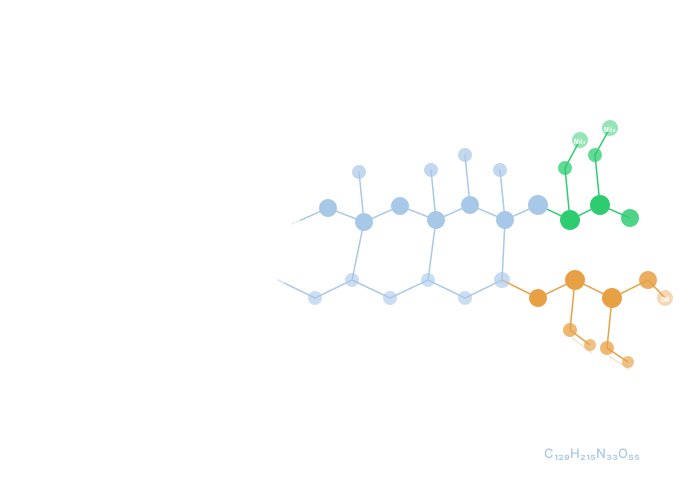
Thymosin Alpha-1 (Tα1) is a naturally derived peptide originally isolated from the thymus and widely studied in the context of immune system regulation. It consists of a 28-amino acid sequence and is considered endogenous in origin, formed through enzymatic processing of a larger precursor protein known as prothymosin alpha. Unlike smaller neuropeptides, its slightly longer structure allows for more defined interactions with cellular components involved in immune signaling. Despite being well-characterized structurally, aspects of its distribution, metabolism, and full biological role continue to be explored in preclinical research.

From a structural perspective, Thymosin Alpha-1 adopts a flexible conformation in solution but may form more organized secondary structures—such as alpha-helical regions—when interacting with cell membranes or molecular targets. This structural adaptability is believed to support its interaction with a range of immune-related receptors and signaling pathways. Its amino acid composition includes residues that contribute to solubility and stability in physiological environments, allowing it to function effectively within extracellular and intracellular spaces in experimental models.

Structure-function investigations suggest that the integrity of the full peptide sequence is important for its observed biological activity. Modifications or fragmentation of the sequence have been shown to alter its interaction with immune cells and signaling mechanisms in vitro. Compared to smaller peptides, Thymosin Alpha-1 demonstrates greater inherent stability, though it is still subject to enzymatic degradation, which has led to the use of synthesized forms in laboratory settings to ensure consistency and reproducibility.

Unlike peptides that rely on a single, highly specific receptor, Thymosin Alpha-1 is often described as interacting with multiple components of the immune system. It has been studied for its ability to engage pattern recognition receptors, influence membrane-associated signaling, and modulate intracellular pathways tied to immune activation and regulation. Its size and structure may also support interaction with extracellular environments, including signaling gradients and immune cell interfaces.

Compared to compact peptides like DSIP, Thymosin Alpha-1 represents a more structurally versatile molecule with broader interaction potential. Ongoing research continues to examine how its sequence, conformational flexibility, and biochemical properties contribute to its activity across preclinical models focused on immune modulation, inflammation, and cellular communication.

Mechanistic Insights & Cellular Targets

Preclinical investigations suggest that Thymosin Alpha-1 interacts with a complex network of immune and cellular signaling pathways involved in host defense, inflammation, and immune regulation. Rather than acting through a single defined receptor, it is often described as a modulatory peptide with context-dependent effects that vary based on cell type, experimental conditions, and immune status. Most mechanistic insights are derived from in vitro studies and animal models examining immune activation, pathogen response, and inflammatory signaling.

Immune Cell Activation and Differentiation

Thymosin Alpha-1 has been studied for its interaction with immune cells such as T lymphocytes, dendritic cells, and macrophages. Experimental findings suggest that it may influence T-cell maturation and differentiation, as well as enhance antigen-presenting cell activity, contributing to coordinated immune responses in controlled models.

Cytokine and Inflammatory Signaling

A key area of research focuses on its role in cytokine modulation. Studies indicate that Thymosin Alpha-1 may influence the production and regulation of signaling molecules such as interleukins and interferons, which are central to immune communication and inflammatory balance. These effects are often examined in models of immune challenge or induced inflammation.

Innate Immune Pathway Interaction

Thymosin Alpha-1 has been explored for its potential interaction with innate immune receptors, including Toll-like receptors (TLRs). These interactions are believed to support early-stage immune recognition and activation, particularly in response to external stimuli in experimental environments.

Gene Expression and Cellular Signaling Cascades

Molecular studies suggest that Thymosin Alpha-1 may influence gene expression related to immune regulation and cellular defense. Observed effects include modulation of transcription factors and intracellular signaling pathways that govern immune cell behavior and response coordination.

Inflammation and Immune Homeostasis

In preclinical models, Thymosin Alpha-1 has been associated with balancing pro-inflammatory and anti-inflammatory signals. This includes potential involvement in regulating immune responses to prevent excessive activation while maintaining effective defense mechanisms.

Cellular Stress and Adaptive Response

Some studies indicate that Thymosin Alpha-1 may play a role in cellular adaptation to stress conditions, including oxidative and inflammatory stress. These investigations focus on its potential to support cellular resilience and maintain functional stability under experimentally induced challenges.

Peptide Stability and Metabolic Processing

Although more stable than smaller peptides, Thymosin Alpha-1 is still subject to enzymatic breakdown. Laboratory research often utilizes synthesized versions to ensure consistent dosing and to better evaluate its biological activity and persistence across experimental systems.

Distribution and Cellular Interaction

Thymosin Alpha-1 has been examined for its interaction with cellular membranes and extracellular environments, where it may influence signaling gradients and immune cell communication. Its distribution and uptake mechanisms remain areas of ongoing investigation.

Context-Dependent Activity

Importantly, the activity of Thymosin Alpha-1 varies across experimental models. Outcomes are influenced by factors such as dosage, method of administration, and the specific immune or inflammatory conditions being studied. Current evidence supports a model in which it operates as a broad immunomodulatory peptide, interacting with interconnected cellular pathways—strictly within the scope of preclinical research.

Preclinical Research Landscape

The preclinical research landscape surrounding Thymosin Alpha-1 (Tα1) is broad and methodologically diverse, reflecting sustained scientific interest in peptides involved in immune regulation, inflammation, and cellular signaling. Since its initial isolation from thymic tissue, Thymosin Alpha-1 has been examined across a wide range of experimental systems, including in vitro immune cell models, animal-based disease and immune-response studies, and molecular-level investigations. Collectively, these approaches contribute to a growing—yet still evolving—body of research, with variability in experimental design, peptide formulation, and interpretation of findings.

In Vitro Experimental Systems

Cell-based models form a central component of Thymosin Alpha-1 research. Immune-related cell cultures—such as T lymphocytes, dendritic cells, and macrophages—have been used to explore its potential effects on signaling pathways linked to immune activation, cytokine production, and cellular communication. In these controlled environments, exposure to Thymosin Alpha-1 has been associated with changes in intracellular signaling, gene expression, and immune cell behavior under experimentally induced conditions.

Additional in vitro systems include mixed immune cell populations and inflammation-focused models, where Thymosin Alpha-1 has been evaluated for its interaction with cytokine networks and regulatory pathways. As with many peptide studies, outcomes are influenced by variables such as concentration, exposure duration, and cell type, contributing to differences across reported findings.

Immune and Inflammatory Models in Animals

Animal-based studies represent a major area of investigation for Thymosin Alpha-1. These models often examine immune system dynamics under conditions such as infection, immune suppression, or induced inflammation. Observations typically focus on immune cell activation, cytokine signaling, and overall immune coordination, often paired with biochemical and histological analyses to assess systemic responses.

Host Defense and Pathogen-Response Models

Thymosin Alpha-1 has been explored in experimental models designed to simulate host defense against pathogens. These studies investigate how the peptide may influence immune readiness, antigen recognition, and coordinated cellular responses during experimentally induced immune challenges. Findings often highlight its potential involvement in supporting communication between innate and adaptive immune systems.

Inflammation and Immune Balance Studies

A significant portion of preclinical research focuses on Thymosin Alpha-1's role in inflammatory regulation. Experimental models involving induced inflammation have examined changes in cytokine expression, immune signaling pathways, and markers of immune balance following peptide exposure. These findings suggest potential interactions with pathways that regulate both pro-inflammatory and anti-inflammatory responses.

Molecular and Biochemical Investigations

At the molecular level, Thymosin Alpha-1 has been studied for its interaction with intracellular signaling systems and gene expression pathways related to immune function. Research explores its effects on transcription factors, enzymatic activity, and signaling cascades that govern immune cell behavior and coordination. These investigations aim to clarify how the peptide influences communication within and between cells in controlled environments.

Methodological Variability and Limitations

Despite extensive research activity, the Thymosin Alpha-1 literature is characterized by variability in experimental approaches. Studies differ in peptide synthesis methods, formulation stability, dosing strategies, delivery techniques, and selected endpoints. While a relatively larger body of research exists compared to some peptides, inconsistencies in study design and model conditions contribute to differences in reported outcomes.

Importantly, all available findings are derived exclusively from non-clinical research. There are no established conclusions regarding human safety, pharmacokinetics, dosing protocols, or therapeutic applications within this context. Thymosin Alpha-1 remains an investigational peptide, primarily utilized as a research tool for exploring mechanisms related to immune modulation, inflammation, and cellular signaling within controlled experimental settings.

Safety Considerations & Research Limitations

All currently available data on Thymosin Alpha-1 (Tα1) within this context are derived from preclinical and experimental research settings, including in vitro systems and animal-based models. While the peptide itself has been studied more extensively than many others, interpretations here remain limited to controlled, non-clinical environments. Key parameters—such as pharmacokinetics, biodistribution, long-term exposure effects, and precise dose-response relationships in experimental models—are still being actively investigated. As a result, any conclusions about its biological activity should remain confined strictly to research conditions.

Several limitations shape the current research landscape. Outcomes often vary depending on the experimental model, study design, immune challenge conditions, and peptide formulation. Differences in assay selection, cytokine measurement techniques, and methods used to induce immune or inflammatory responses contribute to variability across findings. In many cases, results are highly context-dependent, making direct comparisons between studies challenging and limiting the ability to draw uniform conclusions.

Peptide stability and formulation also play a role in experimental variability. Although Thymosin Alpha-1 is more structurally stable than smaller peptides, it is still subject to enzymatic degradation in biological systems. To address this, synthesized and purified forms are commonly used in laboratory settings; however, differences in preparation, storage, and delivery methods can influence observed biological effects and reproducibility across studies.

Context-specific responses further add complexity. Thymosin Alpha-1 is often associated with immune modulation and inflammatory signaling in preclinical models, yet some studies report variable or condition-dependent effects based on factors such as baseline immune status, type of experimental stimulus, and duration of exposure. These variations highlight the importance of experimental context when interpreting outcomes.

The broader body of research may also be influenced by publication bias, where studies reporting significant or favorable findings are more likely to be published than those with neutral or inconsistent results. In addition, limited replication across independent research groups can make it difficult to validate findings or establish consistency across different experimental settings.

Taken together, these factors underscore that Thymosin Alpha-1 remains an investigational peptide within the scope of preclinical science. While research continues to expand, important gaps persist in mechanistic clarity, experimental standardization, and broader interpretation. Further investigation is required before any conclusions can extend beyond foundational scientific research.

Conclusion

Thymosin Alpha-1 (Tα1) represents a significant area of investigation within preclinical research focused on immune regulation, inflammatory signaling, and cellular communication. As a naturally derived peptide originally identified in thymic tissue, it has been explored across a wide range of experimental systems, including immune-response models, inflammation studies, host defense investigations, and molecular-level analyses. Its endogenous origin and structurally versatile profile distinguish it from many engineered peptides, positioning it as a valuable model for studying peptide-driven regulation within complex immune networks.

Across in vitro systems and animal models, Thymosin Alpha-1 has been associated with interactions involving immune cell activation, cytokine signaling, and cellular adaptation processes. These findings suggest that it may function as a context-dependent modulator within interconnected immune pathways rather than acting through a single, isolated mechanism. Recurring areas of interest—particularly its relationship with innate and adaptive immunity, inflammatory balance, and cellular signaling coordination—underscore its relevance as a research tool in experimental immunology.

At the same time, the Thymosin Alpha-1 research landscape presents clear limitations. While more extensively studied than some peptides, findings within this context remain confined to preclinical and controlled experimental conditions. Variability in study design, peptide formulation, and experimental models contributes to differences in reported outcomes, and replication across independent settings remains an ongoing need. There are no established conclusions here regarding safety, efficacy, or broader application beyond research environments.

Accordingly, Thymosin Alpha-1 should be regarded as an investigational peptide that contributes to the foundational understanding of immune system regulation, inflammatory processes, and cellular communication. At the same time, it continues to present gaps in mechanistic clarity and experimental consistency, highlighting the need for further systematic and controlled research.

References

  • Goldstein, A. L., & Badamchian, M. (2004). Thymosins: Chemistry and biological properties in health and disease. Expert Opinion on Biological Therapy.
  • Garaci, E., et al. (2007). Thymosin alpha-1: From bench to bedside. Annals of the New York Academy of Sciences.
  • King, R., & Tuthill, C. (2016). Immune modulation with thymosin alpha-1. Annals of the New York Academy of Sciences.
  • Rasi, G., et al. (1996). Thymosin alpha-1 in immune response regulation. International Journal of Immunopharmacology.
  • Romani, L., et al. (2006). Thymosin alpha-1 activates dendritic cells for antifungal resistance. Blood.
  • Li, J., et al. (2010). Thymosin alpha-1: Biological activities, applications and mechanisms. Journal of Cellular and Molecular Medicine.
  • Zhang, Y., et al. (2012). Mechanisms of thymosin alpha-1 in immune regulation. International Immunopharmacology.
  • Dominari, A., et al. (2020). Thymosin alpha 1: A comprehensive review of the literature. World Journal of Virology.
  • Liu, Y., et al. (2023). Mechanism and research progress of thymosin alpha-1. Frontiers in Immunology.
  • Wu, J., et al. (2025). Efficacy of thymosin α1 in experimental and clinical models. BMJ.

For research use only. Capital Peptides products are not approved by the TGA for therapeutic use. By purchasing you confirm you are a licensed research entity or qualified professional.