Loading
Loading
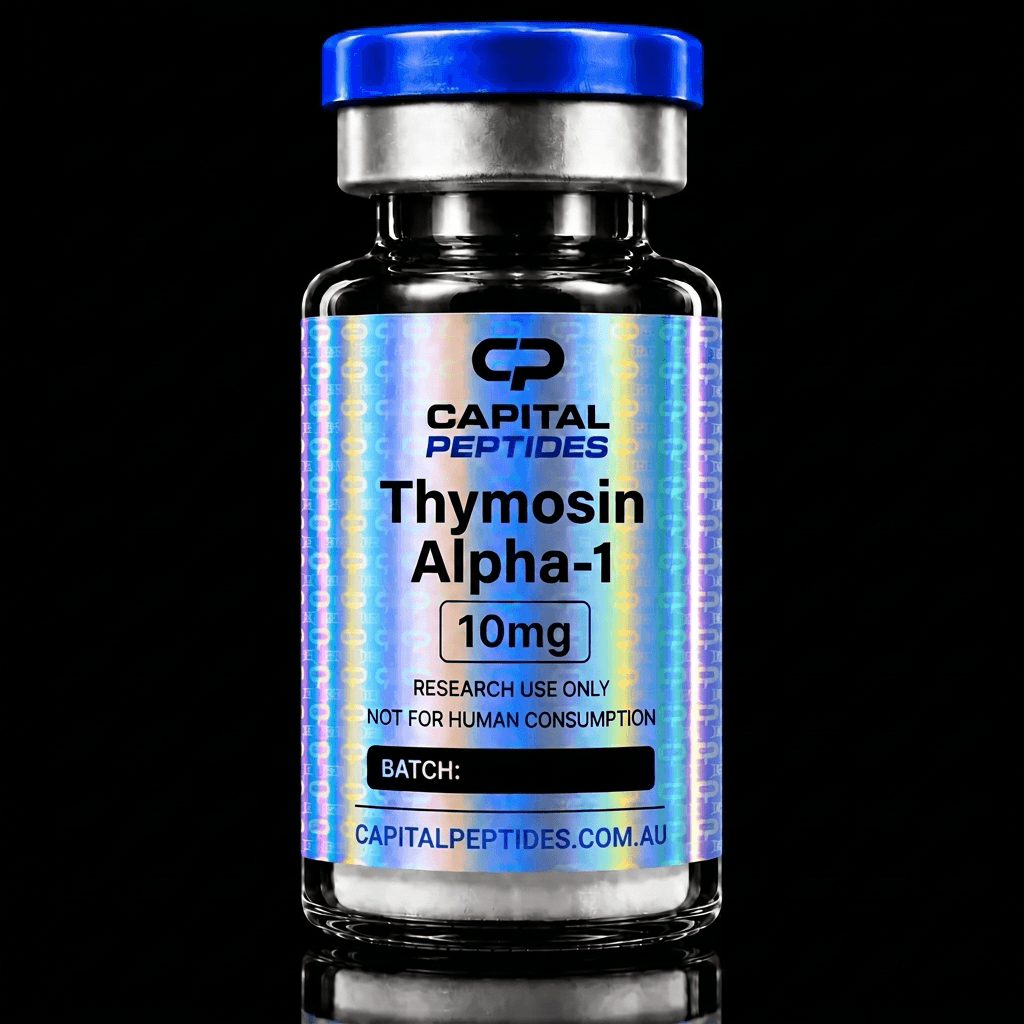
Tissue Repair & Recovery · 10mg
Choose dose
Janoshik-tested · 10 vials per kit
Thymosin Alpha-1 is a 28-amino-acid immune peptide derived from thymus tissue, studied in preclinical and clinical research for its T-cell regulatory and immune enhancement properties. Research has examined its potential to activate immune cell differentiation, enhance antiviral and antibacterial response, and support vaccine efficacy.
≥98%
Purity
Lyophilised
Format
2–3 wks
Arrival
Don't want to wait 3 weeks?
Check local stock — weekday same/next-day delivery available.
Chemical Properties
Need to work out your dose?
Use our reconstitution calculator — syringe units in seconds.
Research Use Only — Disclaimer
This product is intended solely as a research chemical for laboratory and scientific study purposes only. It is not approved by the TGA or any regulatory body for human or animal consumption, therapeutic use, or clinical application. The information provided on this website is for educational purposes only. Handling must be limited to suitably qualified professionals operating within applicable laws and regulations. This product is not classified as a drug, food, cosmetic, or medicinal product and must not be used or labelled as such. By purchasing, you confirm you are a qualified research professional and accept full responsibility for compliance with all relevant laws in your jurisdiction.
Thymosin Alpha-1
Thymalfasin
Thymosin Alpha-1 (Tα1) is a 28-amino-acid peptide naturally secreted by thymic epithelial cells. Isolated in 1977 by Allan Goldstein and colleagues, it is commercially available as Zadaxin (thymalfasin) and approved in over 35 countries for hepatitis B, hepatitis C, and as an immune adjuvant. It remains one of the most extensively clinically studied thymic peptides.
Tα1 promotes differentiation of T-lymphocyte precursors into mature T-cells and shifts Th1/Th2 balance toward Th1 immunity — enhancing cell-mediated responses relevant to viral defence and tumour surveillance. It activates dendritic cells via toll-like receptors (TLR7, TLR9), upregulates MHC class I expression on tumour and infected cells (improving cytotoxic T-cell recognition), enhances NK cell cytotoxicity, and supports interferon-γ production. It also modulates regulatory T-cell activity without inducing immune hyperactivity.
Clinical applications include adjuvant therapy in hepatitis B and C (improving antiviral response to interferon), immune reconstitution post-chemotherapy, and COVID-19 (several Chinese randomised trials demonstrated reduced mortality and ICU admission in severe cases). As an immune stimulant in elderly and immunocompromised populations it has shown consistent improvements in immune parameters across multiple studies.
Key References
For research reference only. All information pertains to preclinical or published human trial data. Not intended as medical advice. This product is for research use only.
Don't have supplies? Grab them while you're here.