Loading
Loading
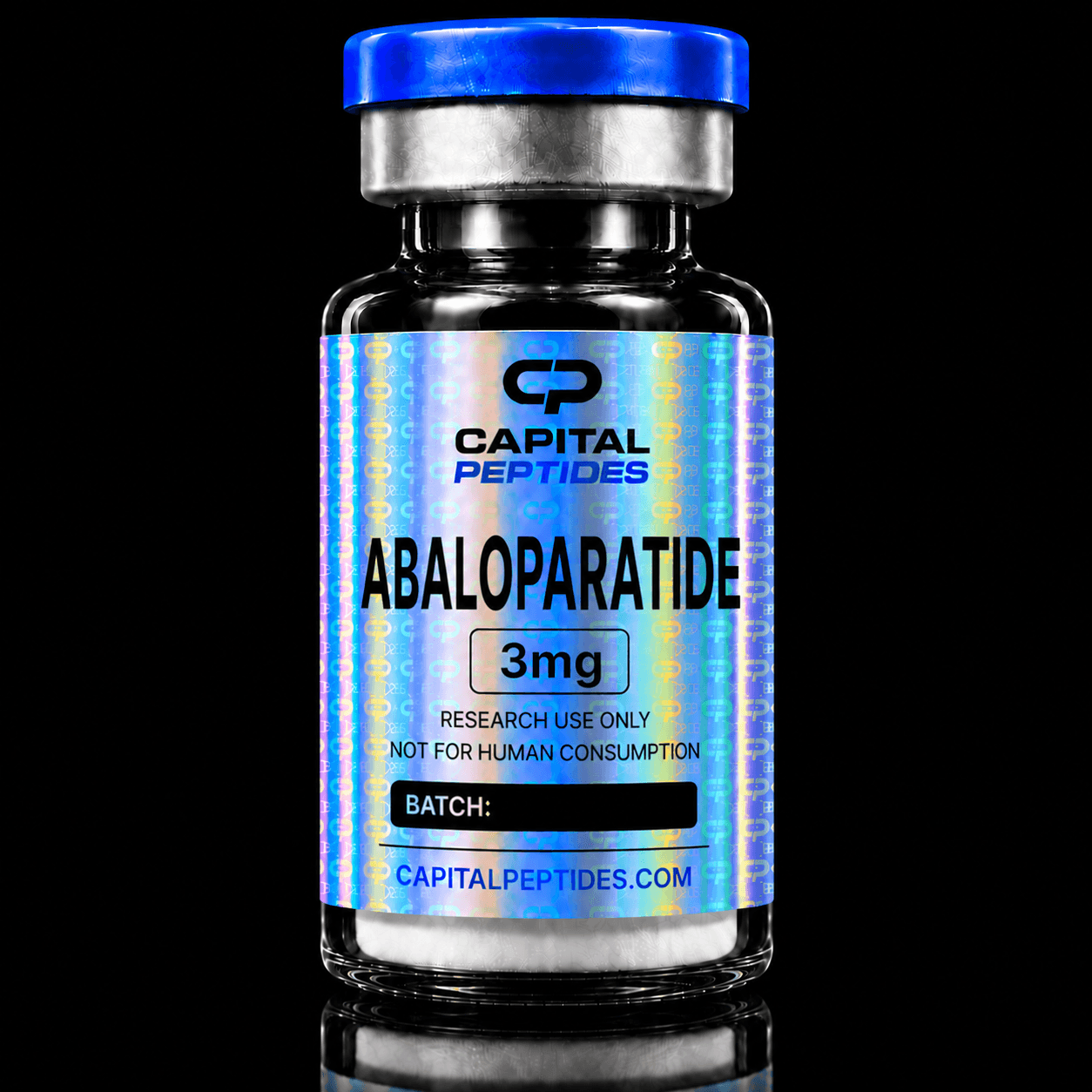
Advanced / Specialty Compounds · 3mg
Janoshik-tested · 10 vials per kit
Abaloparatide is a synthetic peptide analog of PTHrP(1-34) studied in preclinical and clinical research for its bone metabolism effects. Research has examined its potential to bind PTH1R receptors on osteoblasts, activate cAMP signaling pathways, promote osteoblast proliferation and collagen synthesis, and inhibit osteoblast apoptosis. Studies have shown associations with increased bone mineral density, improved bone microarchitecture, and enhanced bone strength.
≥98%
Purity
Lyophilised
Format
2–3 wks
Arrival
Don't want to wait 3 weeks?
Check local stock — weekday same/next-day delivery available.
Chemical Properties
Need to work out your dose?
Use our reconstitution calculator — syringe units in seconds.
Research Use Only — Disclaimer
This product is intended solely as a research chemical for laboratory and scientific study purposes only. It is not approved by the TGA or any regulatory body for human or animal consumption, therapeutic use, or clinical application. The information provided on this website is for educational purposes only. Handling must be limited to suitably qualified professionals operating within applicable laws and regulations. This product is not classified as a drug, food, cosmetic, or medicinal product and must not be used or labelled as such. By purchasing, you confirm you are a qualified research professional and accept full responsibility for compliance with all relevant laws in your jurisdiction.
Abaloparatide
Tymlos / BA058
Abaloparatide is a 34-amino-acid synthetic analog of parathyroid hormone-related protein (PTHrP 1-34) approved by the FDA in 2017 as Tymlos for postmenopausal osteoporosis at high fracture risk. It shares the PTHrP(1-34) template but with modifications at multiple positions that alter receptor conformation preference.
Abaloparatide activates PTH1R (parathyroid hormone 1 receptor) with a preference for the RG conformation — biasing signalling toward Gs/cAMP and away from β-arrestin-mediated internalisation. This selectivity produces a shorter duration of receptor activation per dose but a predominantly anabolic (bone formation) rather than catabolic (bone resorption) response compared to teriparatide (PTH 1-34), which binds both RG and R0 conformations.
The ACTIVE trial demonstrated superior fracture risk reduction for abaloparatide compared to both placebo and teriparatide at 18 months in postmenopausal women with osteoporosis. The transient receptor activation profile produces a greater anabolic-to-catabolic ratio. Research continues into male osteoporosis, glucocorticoid-induced bone loss, and sequential therapy with anti-resorptive agents (denosumab or bisphosphonates) following completion of the anabolic course.
Key References
For research reference only. All information pertains to preclinical or published human trial data. Not intended as medical advice. This product is for research use only.
Don't have supplies? Grab them while you're here.