Loading
Loading
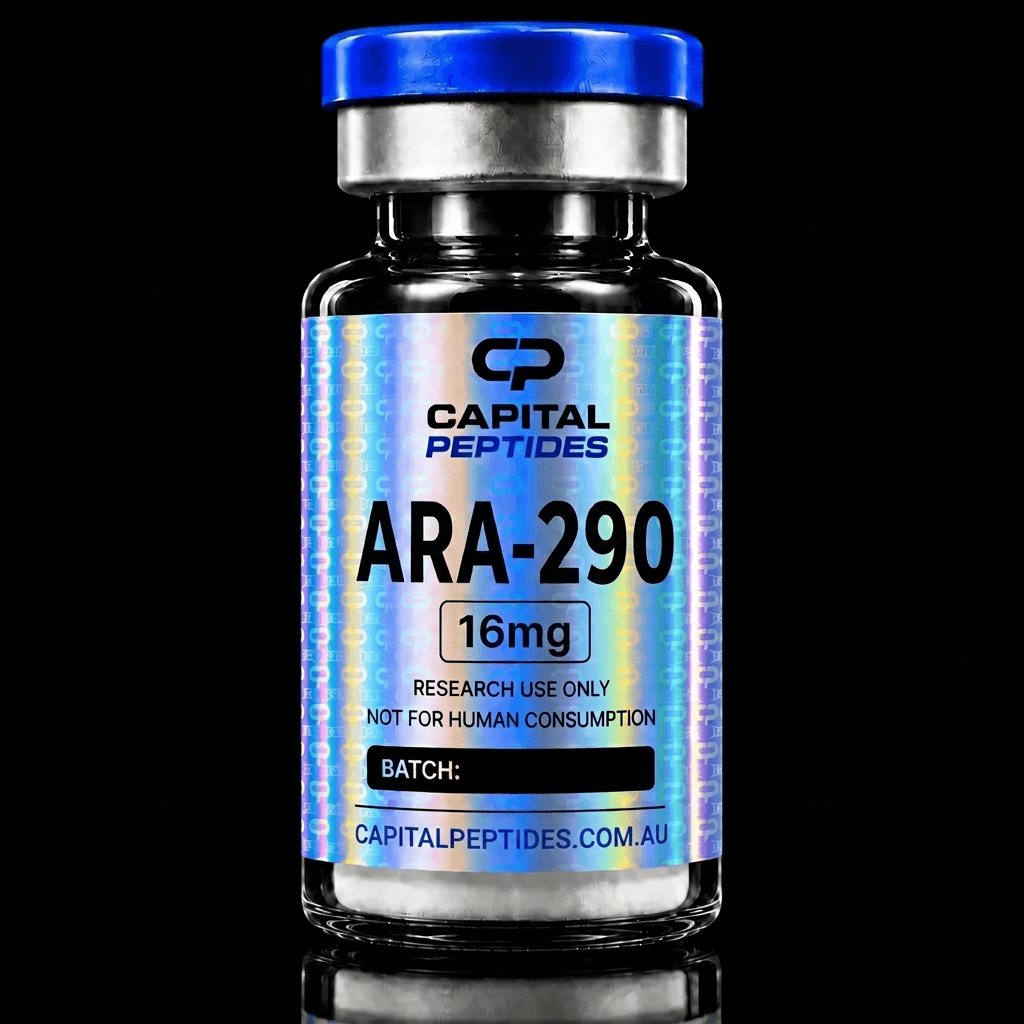
Tissue Repair & Recovery · 16mg
Choose dose
Janoshik-tested · 10 vials per kit
ARA-290 (Cibinetide) is a synthetic 11-amino-acid peptide derived from erythropoietin studied in preclinical and clinical research for its neuroprotective and tissue-repair properties. Research has examined its potential to activate the innate repair receptor (IRR), reduce neuropathic pain, promote small nerve fibre regeneration, and modulate inflammatory cytokine profiles without erythropoietic activity. Studies have explored applications in neuropathy and sarcoidosis models.
≥98%
Purity
Lyophilised
Format
2–3 wks
Arrival
Don't want to wait 3 weeks?
Check local stock — weekday same/next-day delivery available.
Chemical Properties
Need to work out your dose?
Use our reconstitution calculator — syringe units in seconds.
Research Use Only — Disclaimer
This product is intended solely as a research chemical for laboratory and scientific study purposes only. It is not approved by the TGA or any regulatory body for human or animal consumption, therapeutic use, or clinical application. The information provided on this website is for educational purposes only. Handling must be limited to suitably qualified professionals operating within applicable laws and regulations. This product is not classified as a drug, food, cosmetic, or medicinal product and must not be used or labelled as such. By purchasing, you confirm you are a qualified research professional and accept full responsibility for compliance with all relevant laws in your jurisdiction.
ARA-290
Cibinetide
ARA-290 (Cibinetide) is a synthetic 11-amino-acid peptide designed to selectively activate the innate repair receptor (IRR) — a heterodimer of erythropoietin receptor (EPOR) and beta-common receptor (βcR). Developed to capture the tissue-protective properties of erythropoietin (EPO) without triggering the EPO homodimer responsible for haematopoiesis, thrombosis, and hypertension. ARA-290 has received Orphan Drug designation in the EU for sarcoidosis-related neuropathy.
ARA-290 binds the EPOR:βcR heterodimer expressed on neural, cardiac, renal, and immune cells — not the EPOR homodimer on red blood cell precursors. This activates PI3K/Akt and MAPK survival pathways, reduces NF-κB-driven neuroinflammation, and promotes neuronal repair. At therapeutic doses it does not stimulate haematocrit elevation, platelet activation, or hypertension, isolating the cytoprotective dimension of EPO's pharmacology.
Phase 2 clinical trials in sarcoidosis-associated small fibre neuropathy (SFN) demonstrated significant improvement in intraepidermal nerve fibre density and corneal nerve density. Research continues in diabetic peripheral neuropathy (where Orphan status is also sought), cardiac ischaemia-reperfusion injury, inflammatory pain, and pulmonary fibrosis models.
Key References
For research reference only. All information pertains to preclinical or published human trial data. Not intended as medical advice. This product is for research use only.
Don't have supplies? Grab them while you're here.