Loading
Loading
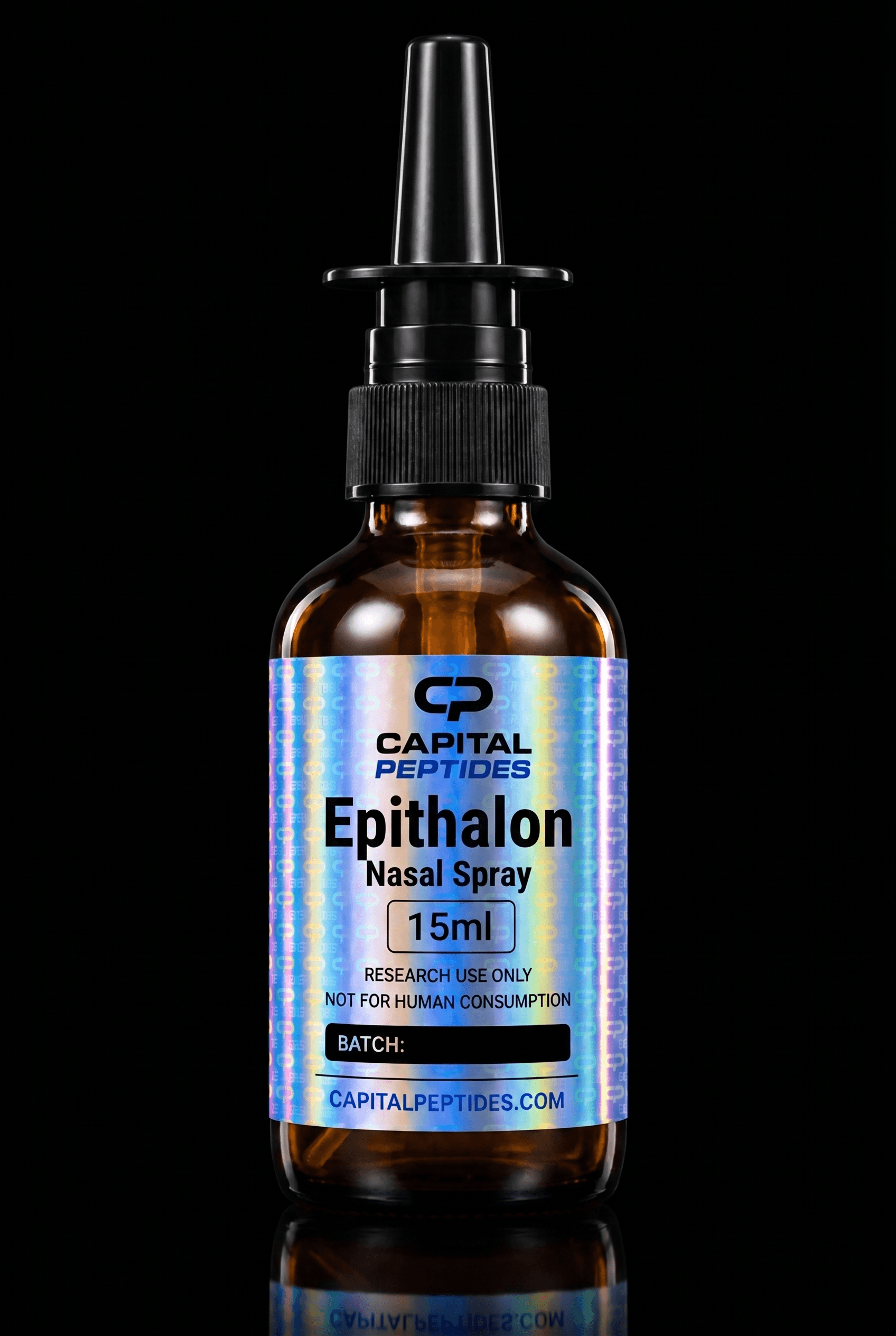
Product image is a representation — actual packaging and label may vary.
Nasal Sprays · 10ml
🕐 Pre-order — ships from 31 August 2026
This product is pre-order only right now. Your order will be dispatched once stock arrives on 31 August 2026.
$106
AUD · 1 pack
Flat rate · ships with your order
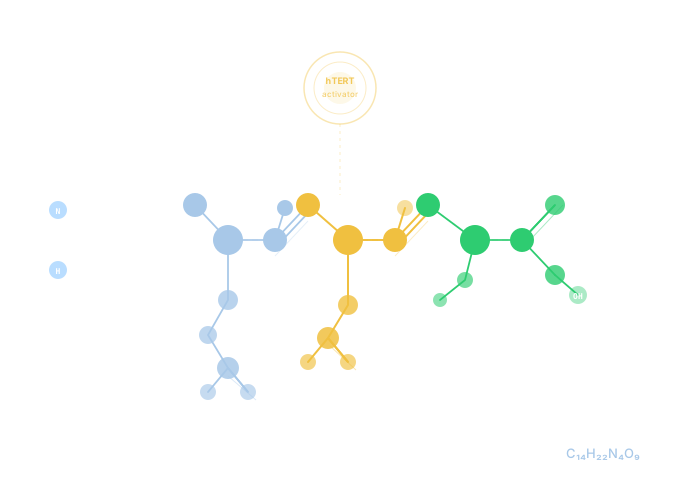
Epithalon is a synthetic tetrapeptide studied in preclinical research as a telomerase activator and longevity-associated peptide. Research has examined its potential to enhance TERT gene expression, lengthen telomeres, regulate melatonin and cortisol circadian rhythms, and inhibit spontaneous tumour development in animal models. Studies have explored potential applications in aging-related diseases and retinitis pigmentosa.
Chemical Properties
Research Use Only — Disclaimer
These consumable supplies are intended solely for use in research and laboratory settings. All items are sterile and individually packaged for professional handling. BAC water is for peptide reconstitution purposes only and is not intended for injection without appropriate professional supervision. Not for human or animal consumption in any form.
Epithalon
Ala-Glu-Asp-Gly Tetrapeptide
Epithalon (also spelled Epitalon) is a synthetic tetrapeptide (Ala-Glu-Asp-Gly) modelled on epithalamin, a pineal gland extract. Developed by Vladimir Khavinson and colleagues at the St. Petersburg Institute of Bioregulation and Gerontology, it is one of the most extensively studied short peptide bioregulators in the Russian gerontological literature and has been studied in both animal models and limited human pilot trials.
The most-cited mechanism of Epithalon is telomerase activation: in vitro studies have shown that the tetrapeptide can induce telomerase expression in human somatic cells — including retinal pigment epithelial cells and fibroblasts — potentially extending replicative lifespan. Epithalon has also been studied for its effects on the hypothalamus-pituitary-pineal axis, including normalising melatonin secretion rhythms in aged animal models. Antioxidant and anti-tumour properties have been reported in preclinical settings.
Russian-language literature describes studies showing extended median and maximum lifespan in animal models, reduced spontaneous tumour incidence, and improved circadian melatonin rhythmicity. Western preclinical studies have confirmed telomerase induction and anti-apoptotic effects in retinal cell lines. Some pilot human studies have suggested improved antioxidant status and melatonin levels in elderly subjects.
Key References
For research reference only. All information pertains to preclinical or published human trial data. Not intended as medical advice. This product is for research use only.