Loading
Loading
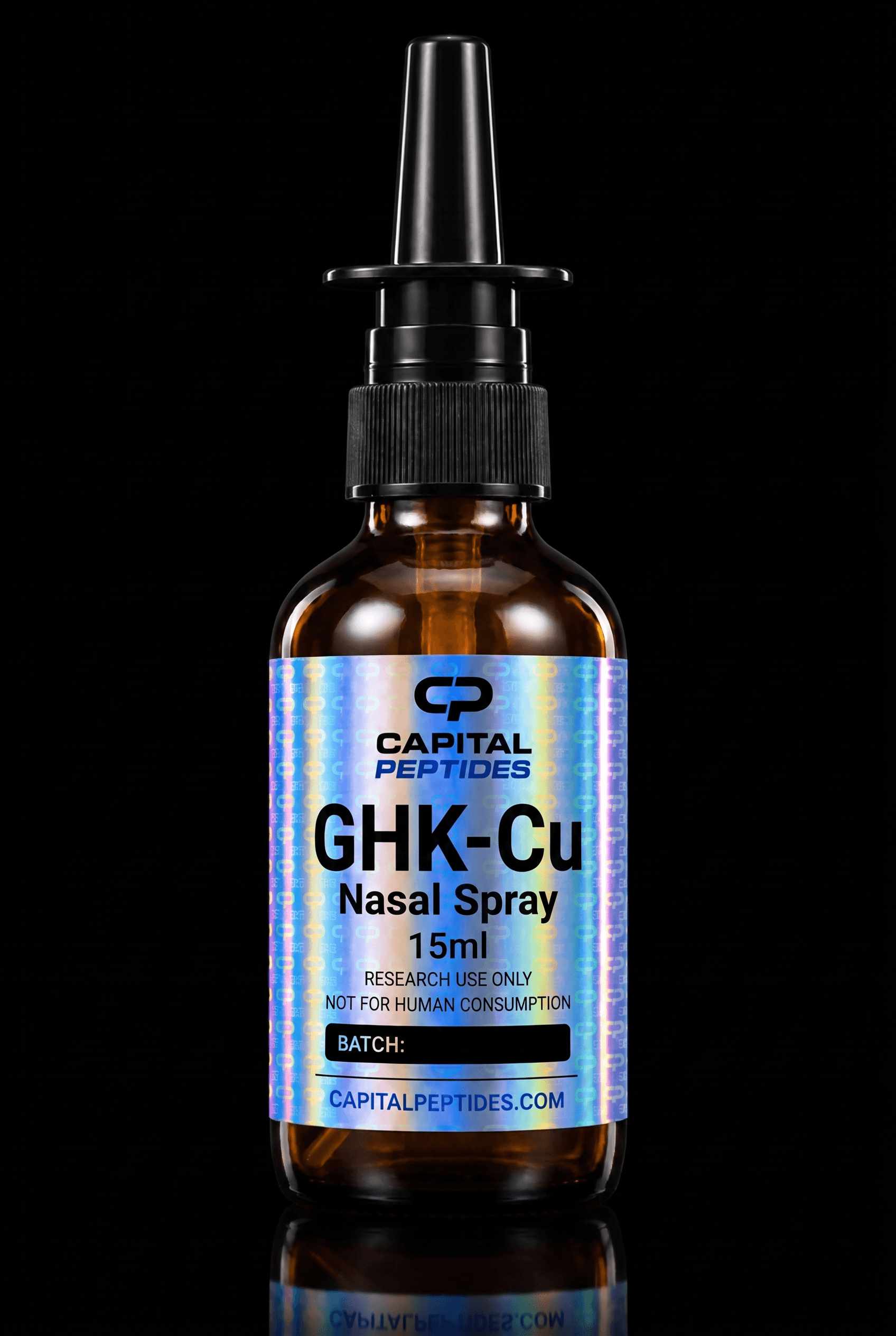
Product image is a representation — actual packaging and label may vary.
Nasal Sprays · 15ml
🕐 Pre-order — ships from 31 August 2026
This product is pre-order only right now. Your order will be dispatched once stock arrives on 31 August 2026.
$95
AUD · 1 pack
Flat rate · ships with your order
GHK-Cu is a tripeptide-copper complex studied in preclinical research for its multi-target biological activity. Research has examined its potential to stimulate fibroblast proliferation, promote collagen, elastin, and glycosaminoglycan synthesis, and modulate extracellular matrix remodelling. Studies have explored anti-inflammatory effects, angiogenesis promotion, accelerated wound healing, and antioxidant activity through reactive oxygen species scavenging, with dermatological applications for skin barrier improvement and wrinkle reduction.
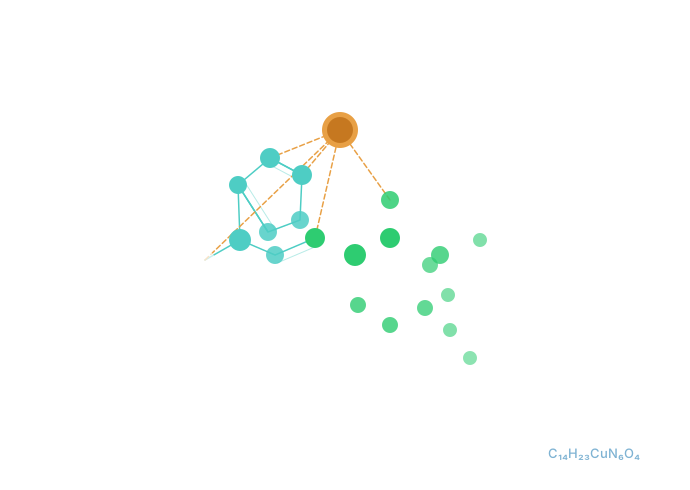
Chemical Properties
Research Use Only — Disclaimer
These consumable supplies are intended solely for use in research and laboratory settings. All items are sterile and individually packaged for professional handling. BAC water is for peptide reconstitution purposes only and is not intended for injection without appropriate professional supervision. Not for human or animal consumption in any form.
GHK-Cu
Copper Tripeptide-1
GHK-Cu (glycyl-L-histidyl-L-lysine : copper 2+) is a naturally occurring copper-binding tripeptide found in human plasma, urine, and saliva. First isolated by Loren Pickart in 1973 from plasma shown to stimulate liver tissue repair, its plasma concentration is approximately 200 ng/mL at age 20, declining to under 80 ng/mL by age 60 — a reduction correlated with reduced tissue repair capacity.
GHK-Cu promotes collagen, elastin, and glycosaminoglycan (including hyaluronic acid) synthesis in fibroblasts. It activates matrix metalloproteinases (MMP-1, 2, 9) for clearance of damaged tissue proteins while simultaneously upregulating their inhibitors (TIMPs) — a coordinated remodelling rarely seen in wound biology. Growth factor upregulation includes TGF-β1, FGF, and VEGF. The copper component is essential for lysyl oxidase activity (collagen and elastin crosslinking) and superoxide dismutase function.
Preclinical studies have demonstrated GHK-Cu's effects on skin tightening and elasticity, hair follicle enlargement, wound contraction, and anti-inflammatory activity. Microarray analyses of GHK-Cu-treated cells show upregulation of over 50 antioxidant and repair genes. Topical application remains the most studied route in human subjects, with documented improvements in skin density and photoaged skin appearance in several controlled trials.
Key References
For research reference only. All information pertains to preclinical or published human trial data. Not intended as medical advice. This product is for research use only.