Loading
Loading
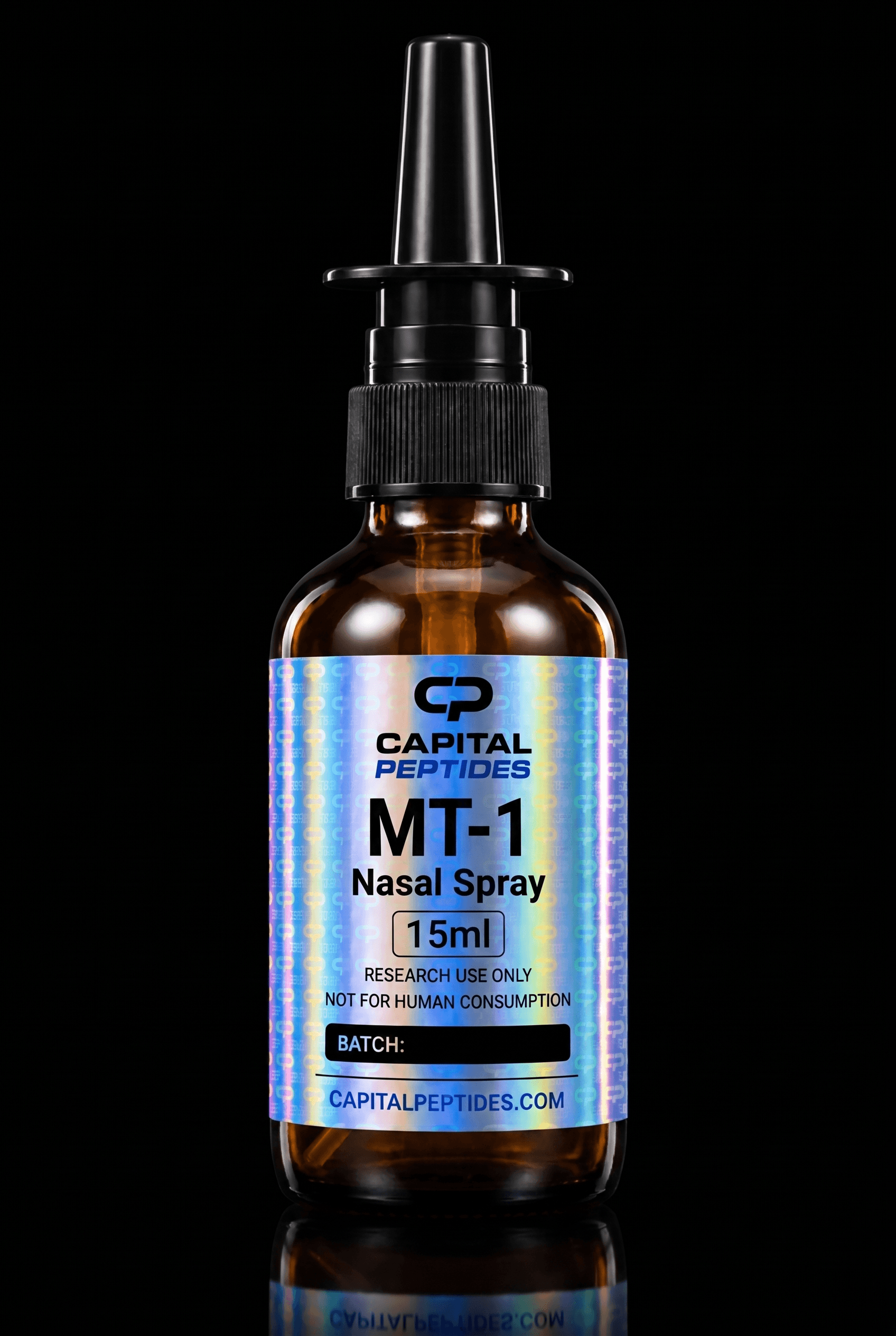
Product image is a representation — actual packaging and label may vary.
Nasal Sprays · 10ml
🕐 Pre-order — ships from 31 August 2026
This product is pre-order only right now. Your order will be dispatched once stock arrives on 31 August 2026.
$106
AUD · 1 pack
Flat rate · ships with your order
Melanotan-1 (MT-I) is a synthetic analog of alpha-melanocyte stimulating hormone (α-MSH) studied in preclinical and clinical research for its pigmentation effects. Research has examined its potential to stimulate melanocytes to produce and distribute melanin, darken skin tone, boost the skin's natural UV defence, and reduce sun-induced damage. As a non-specific melanocortin receptor agonist, studies have also explored its influence on light sensitivity symptoms.
Chemical Properties
Research Use Only — Disclaimer
These consumable supplies are intended solely for use in research and laboratory settings. All items are sterile and individually packaged for professional handling. BAC water is for peptide reconstitution purposes only and is not intended for injection without appropriate professional supervision. Not for human or animal consumption in any form.
Melanotan I
Afamelanotide
Melanotan I (Afamelanotide) is a linear synthetic analog of α-MSH developed from the same University of Arizona programme as Melanotan II. Unlike MT-2 (cyclic, non-selective), MT-1 is a [Nle4, D-Phe7]-α-MSH analog with substantially greater selectivity for MC1R. It is approved as Scenesse in Europe and Australia for erythropoietic protoporphyria (EPP).
By preferentially activating MC1R on epidermal and follicular melanocytes, afamelanotide stimulates eumelanin production in a sun-independent manner. The resulting melanin deposition provides photoprotection by absorbing UV radiation before it reaches DNA. Greater MC1R selectivity relative to MT-2 means markedly fewer off-target central (MC4R) effects such as spontaneous arousal or nausea.
Clinical data for afamelanotide as Scenesse (an implantable extended-release form) documents protection from phototoxic episodes in EPP patients. Research continues in polymorphous light eruption, acne vulgaris, and vitiligo re-pigmentation. Its superior selectivity profile makes it the preferred compound for photoprotection research. In vitro studies have also shown anti-inflammatory properties at the keratinocyte level.
Key References
For research reference only. All information pertains to preclinical or published human trial data. Not intended as medical advice. This product is for research use only.