Loading
Loading
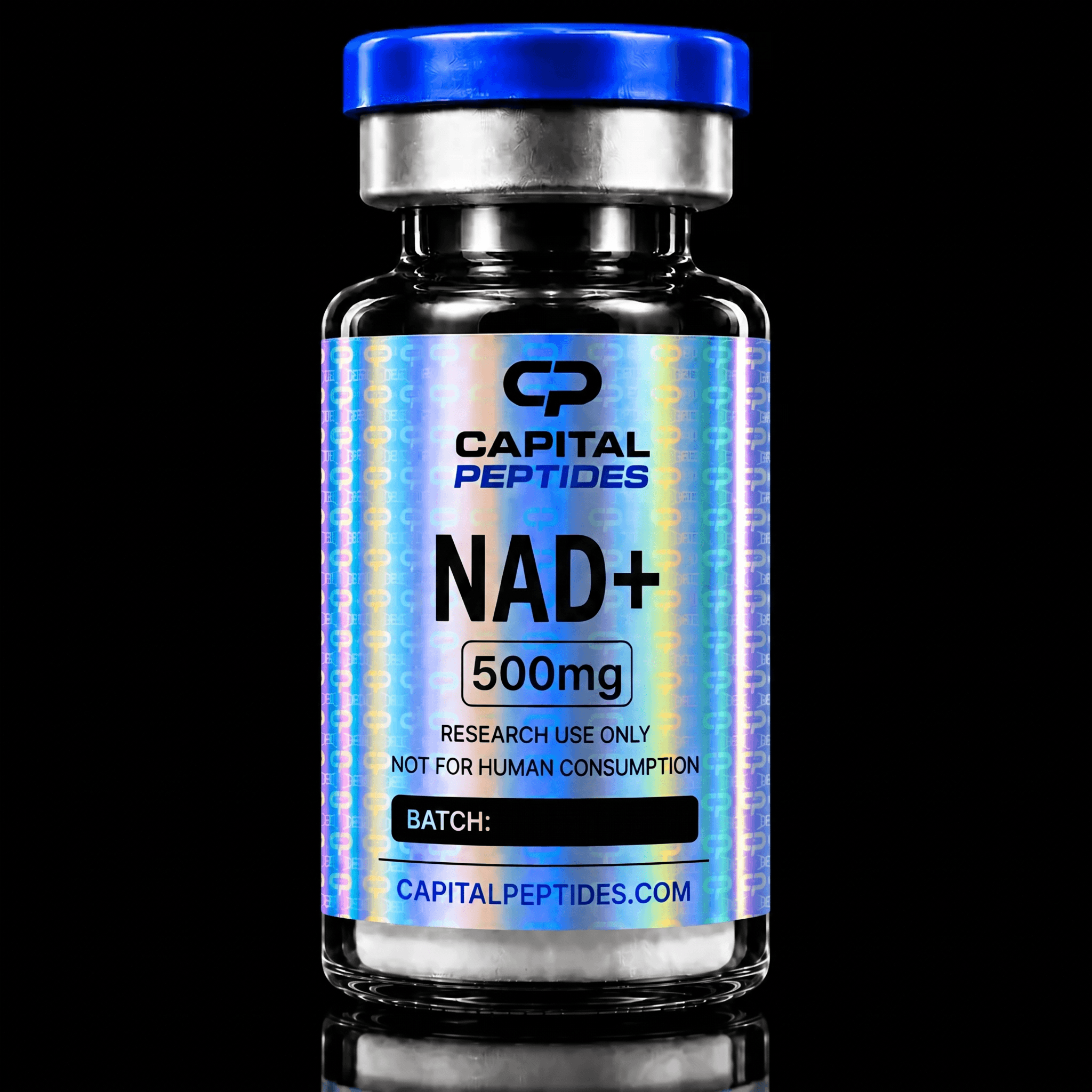
Regenerative & Anti-Aging · 500mg
Choose dose
Janoshik-tested · 10 vials per kit
NAD+ (Nicotinamide Adenine Dinucleotide) is a core coenzyme studied in preclinical and clinical research for its fundamental role in cellular energy metabolism, DNA repair, and oxidative stress response. Research has examined its potential to activate sirtuins and PARP enzymes, promote cell repair, support immune function, metabolic health, cardiovascular protection, and neural maintenance. Widely studied as a central molecule in longevity research.
≥98%
Purity
Lyophilised
Format
2–3 wks
Arrival
Don't want to wait 3 weeks?
Check local stock — weekday same/next-day delivery available.
Chemical Properties
Need to work out your dose?
Use our reconstitution calculator — syringe units in seconds.
Research Use Only — Disclaimer
This product is intended solely as a research chemical for laboratory and scientific study purposes only. It is not approved by the TGA or any regulatory body for human or animal consumption, therapeutic use, or clinical application. The information provided on this website is for educational purposes only. Handling must be limited to suitably qualified professionals operating within applicable laws and regulations. This product is not classified as a drug, food, cosmetic, or medicinal product and must not be used or labelled as such. By purchasing, you confirm you are a qualified research professional and accept full responsibility for compliance with all relevant laws in your jurisdiction.
NAD+
Nicotinamide Adenine Dinucleotide
Nicotinamide adenine dinucleotide (NAD+) is a coenzyme found in every living cell, essential for over 500 enzymatic reactions. It exists in oxidised (NAD+) and reduced (NADH) forms. Cellular NAD+ levels decline by approximately 50% between age 40 and 70 across multiple tissues — a reduction proposed as a contributing factor to age-associated metabolic decline, mitochondrial dysfunction, and reduced DNA repair capacity.
NAD+ serves dual biochemical roles. As a hydride-transfer agent it accepts electrons in glycolysis, beta-oxidation, and the TCA cycle, then donates them to the mitochondrial electron transport chain for ATP synthesis. As a signalling substrate it fuels three distinct enzyme families: sirtuins (SIRT1–7), NAD+-dependent deacylases that regulate gene expression, mitochondrial biogenesis, and metabolism; PARP enzymes (PARP1/2/3), which consume NAD+ in single-strand DNA break repair; and CD38/CD157 NAD+ases, which generate cyclic ADP-ribose for calcium signalling. Replenishing NAD+ therefore supports metabolic flexibility, genome integrity, and cellular stress responses simultaneously.
Intravenous NAD+ has been studied in addiction recovery (alcohol and opioid dependence), neurodegenerative disease, chronic fatigue, and anti-ageing protocols. Animal studies using NAD+ precursors (NMN, NR) demonstrate restoration of mitochondrial function, improved muscle endurance, and cognitive benefits in aged subjects. Human NAD+ infusion studies have documented rapid increases in blood and tissue NAD+ levels, with subjective improvement in energy, focus, and sleep in some populations.
Key References
For research reference only. All information pertains to preclinical or published human trial data. Not intended as medical advice. This product is for research use only.
Don't have supplies? Grab them while you're here.