Loading
Loading
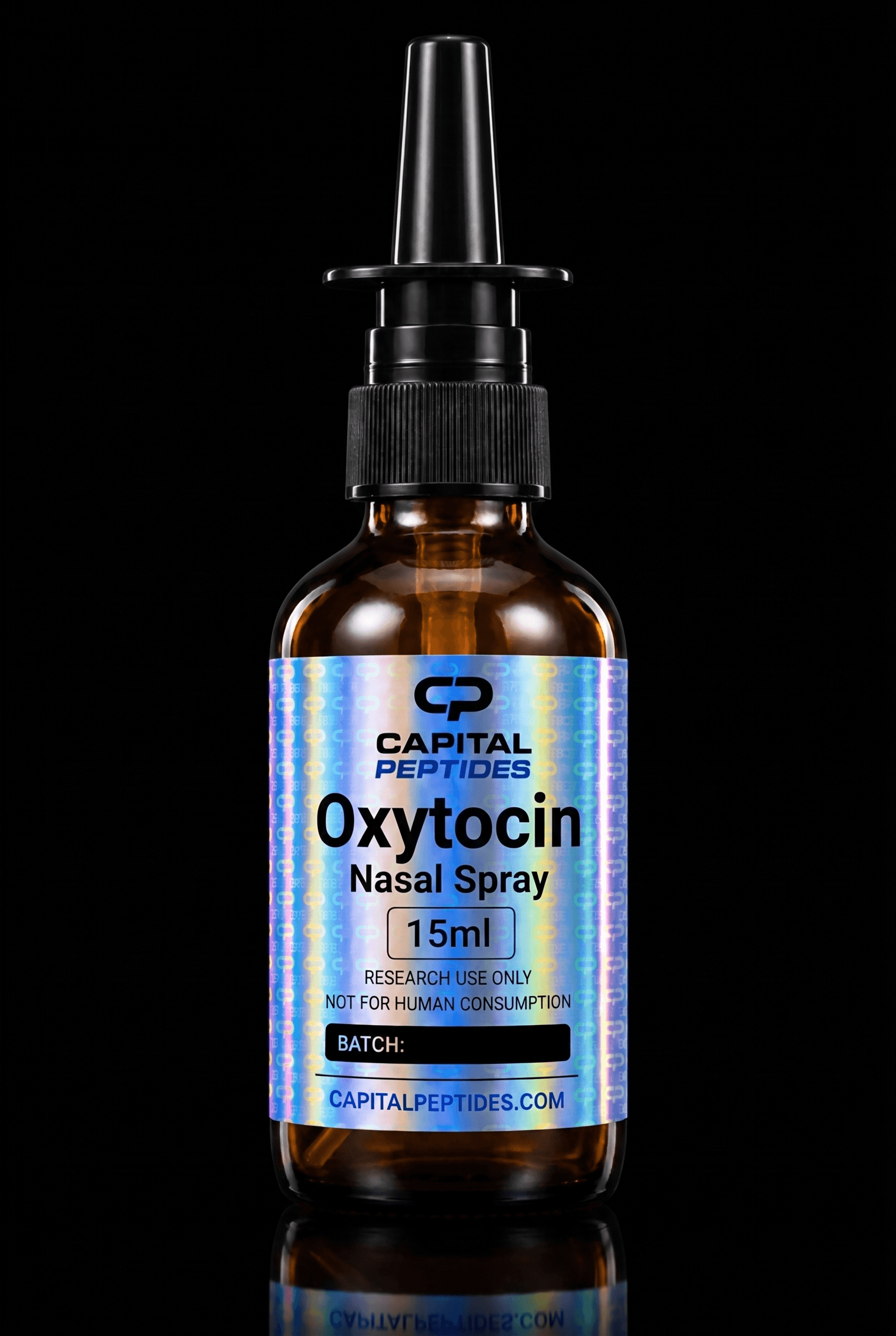
Product image is a representation — actual packaging and label may vary.
Nasal Sprays · 15ml
🕐 Pre-order — ships from 31 August 2026
This product is pre-order only right now. Your order will be dispatched once stock arrives on 31 August 2026.
$106
AUD · 1 pack
Flat rate · ships with your order
Oxytocin is a nonapeptide neuropeptide and neurohormone studied in preclinical and clinical research for its social, bonding, and physiological properties. Research has examined its potential to modulate prosocial behavior, reduce anxiety and stress responses, influence pain perception, support uterine contraction, promote lactation, and regulate inflammatory cytokines. Studies have explored applications in social anxiety, autism spectrum disorder, and bonding research models.
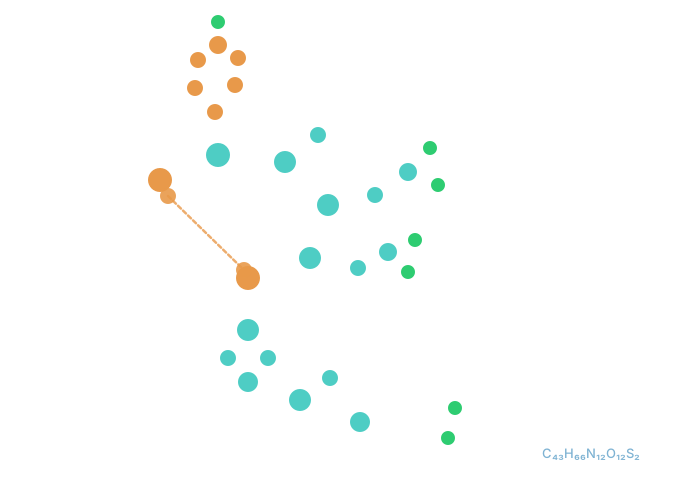
Chemical Properties
Research Use Only — Disclaimer
These consumable supplies are intended solely for use in research and laboratory settings. All items are sterile and individually packaged for professional handling. BAC water is for peptide reconstitution purposes only and is not intended for injection without appropriate professional supervision. Not for human or animal consumption in any form.
Oxytocin
Posterior Pituitary Nonapeptide
Oxytocin is a 9-amino-acid nonapeptide hormone (Cys-Tyr-Ile-Gln-Asn-Cys-Pro-Leu-Gly-NH2, with a Cys1-Cys6 disulfide bond) synthesised by magnocellular neurons of the hypothalamic paraventricular nucleus (PVN) and supraoptic nucleus (SON). Released both into peripheral circulation from the posterior pituitary and centrally as a neuromodulator, it plays foundational roles in social bonding, parturition, lactation, and a wide range of metabolic and cardiovascular functions.
Oxytocin acts via Gq-protein-coupled oxytocin receptors (OXTR) expressed in uterus, breast, kidney, heart, and extensively throughout the CNS (amygdala, nucleus accumbens, hypothalamus, brainstem, prefrontal cortex). Centrally, oxytocin modulates the mesolimbic dopamine reward pathway (reducing dependence-like responses), attenuates amygdala reactivity to threat stimuli (reducing social fear and anxiety), and promotes prosocial behaviour through PVN-to-limbic projections. Peripherally it drives uterine contractions (parturition, milk letdown) and exerts direct cardioprotective and anti-inflammatory effects via OXTR on cardiac and immune cells.
Social anxiety and autism spectrum disorder (reduced threat processing in randomised human trials), pair bonding and trust research, stress resilience, metabolic effects (appetite suppression, anti-obesity via hypothalamic OXTR — OXT knockout mice develop late-onset obesity), pain modulation (analgesic via spinal cord OXTR), cardiovascular protection (myocardial infarction models), and addiction research (opioid and alcohol cue-reactivity reduction).
Key References
For research reference only. All information pertains to preclinical or published human trial data. Not intended as medical advice. This product is for research use only.