Loading
Loading
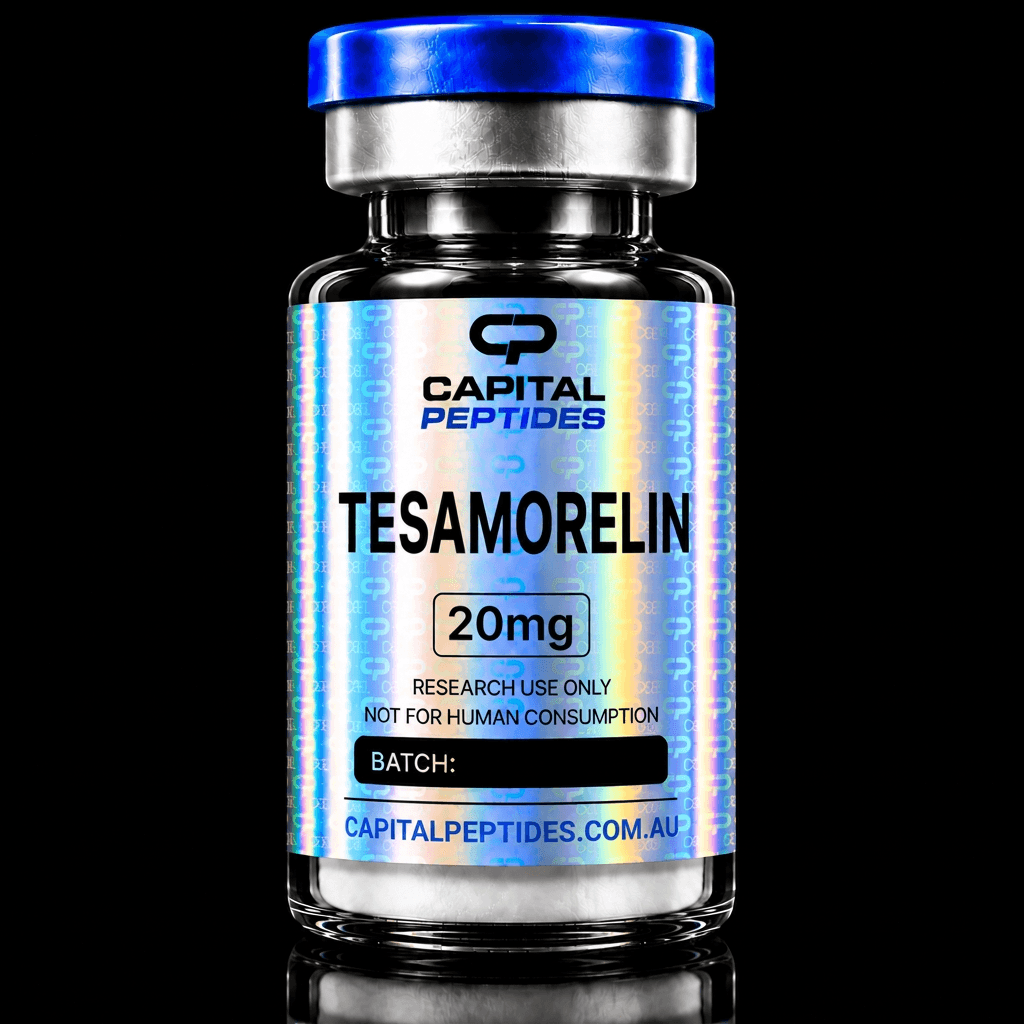
Growth Hormone & Secretagogues · 20mg
Choose dose
Janoshik-tested · 10 vials per kit
Tesamorelin is a synthetic GHRH analog studied in preclinical and clinical research for its growth hormone-releasing properties. Research has examined its potential to stimulate the anterior pituitary to release growth hormone, boost IGF-1 levels, promote lipolysis, and reduce visceral fat accumulation. Studies have explored applications in HIV-related lipodystrophy and visceral adiposity models.
≥98%
Purity
Lyophilised
Format
2–3 wks
Arrival
Don't want to wait 3 weeks?
Check local stock — weekday same/next-day delivery available.
Chemical Properties
Need to work out your dose?
Use our reconstitution calculator — syringe units in seconds.
Research Use Only — Disclaimer
This product is intended solely as a research chemical for laboratory and scientific study purposes only. It is not approved by the TGA or any regulatory body for human or animal consumption, therapeutic use, or clinical application. The information provided on this website is for educational purposes only. Handling must be limited to suitably qualified professionals operating within applicable laws and regulations. This product is not classified as a drug, food, cosmetic, or medicinal product and must not be used or labelled as such. By purchasing, you confirm you are a qualified research professional and accept full responsibility for compliance with all relevant laws in your jurisdiction.
Tesamorelin
Egrifta
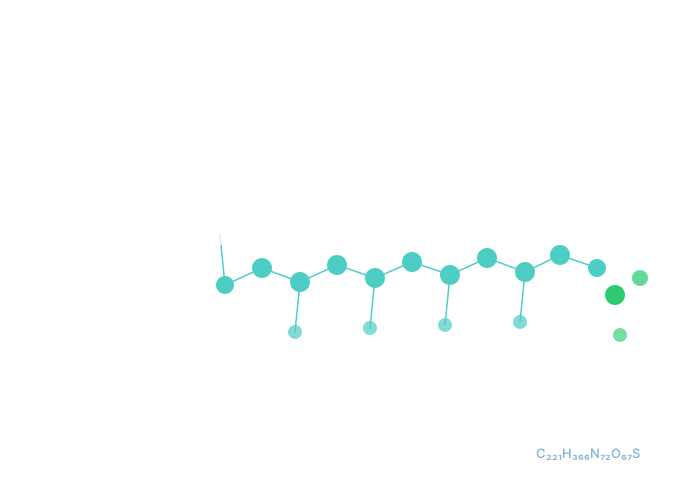
Tesamorelin is a synthetic analog of GHRH(1-44) modified with a trans-3-hexenoic acid group at the N-terminus for stability. This modification protects against cleavage by dipeptidyl peptidase IV (DPP-IV), extending biological half-life while preserving full GHRH receptor agonist activity. Approved by the FDA in 2010 as Egrifta for HIV-associated lipodystrophy — abdominal fat accumulation in HIV patients on antiretroviral therapy.
Tesamorelin binds GHRH receptors on anterior pituitary somatotrophs to stimulate GH release in physiological pulses, subsequently raising IGF-1 and IGFBP-3 levels. Unlike exogenous GH, pituitary-mediated release maintains feedback regulation, reducing the risk of supraphysiological IGF-1. In lipodystrophic subjects GH-mediated lipolysis preferentially targets visceral adipose tissue. Shorter-acting than CJC-1295 DAC due to lacking albumin-binding technology.
Phase 3 EGRIFTA trials documented significant visceral adipose tissue reduction (15-20% by MRI) in HIV-lipodystrophy patients. Research continues in non-HIV applications including age-related GH deficiency and Alzheimer's disease — the SNAP-NL trial demonstrated reduction in amyloid burden in older adults with mild cognitive impairment. Metabolic syndrome-associated visceral obesity is another active research area.
Key References
For research reference only. All information pertains to preclinical or published human trial data. Not intended as medical advice. This product is for research use only.
Don't have supplies? Grab them while you're here.