Loading
Loading
Research Overview
Potent synthetic GHRP that activates GHS-R1a receptors; also demonstrated cardioprotective properties in preclinical models via CD36 receptor binding, independently of its GH-releasing action.
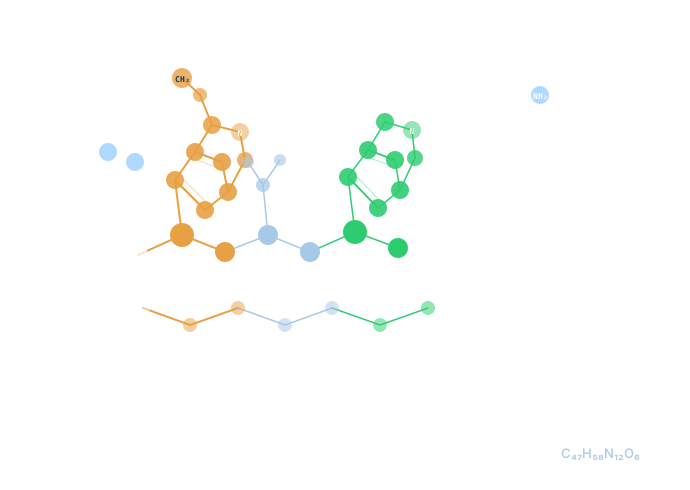
Hexarelin (His-D-2MeTrp-Ala-Trp-D-Phe-Lys-NH2) is a synthetic hexapeptide designed to potently stimulate growth hormone secretion through activation of the ghrelin receptor (GHSR-1a) in the pituitary gland and hypothalamus. Preclinical research has characterised its pharmacological profile across both pituitary GH-releasing activity and cardiovascular tissue effects mediated through CD36 receptor engagement.
A distinctive feature of hexarelin's preclinical research profile is its ability to engage CD36, a multifunctional scavenger receptor expressed in cardiac tissue, independent of its ghrelin receptor activity. Preclinical cardiovascular studies have used hexarelin as a pharmacological tool to study CD36 biology in cardiac cells and animal models of cardiac function.
Sold strictly as a research chemical for non-human, in-vitro, and laboratory use
FDA approved compound
Listed as prohibited under WADA anti-doping regulations
Prescription availability in Australia and internationally
In Australia, hexarelin (ghrp-6 analogue) has no TGA approval for therapeutic use. It is sold by Capital Peptides strictly as a research chemical for non-human, in-vitro, and laboratory research use only.
Hexarelin (GHRP-6 Analogue) research is most relevant to protocols examining:
GH secretagogue research requiring high potency
Cardioprotective peptide studies via CD36 receptor biology
Researchers studying GH release independent of its cardiac effects
Comparative potency studies of GHRP molecules
Initial phase
Compound begins accumulating in target tissue. Most researchers note subtle changes by end of week one. Baseline measurements recommended.
Early response
Measurable effects begin to establish. Mid-cycle assessment is appropriate at this point in well-designed protocols.
Peak activity window
Primary outcomes are typically strongest in this window. Human trial literature provides benchmarks for comparison.
Washout & review
Allow full washout (~5× half-life: ~1–2 hours). Review data, confirm baseline recovery before any repeat protocol.
Potent synthetic GHRP that activates GHS-R1a receptors; also demonstrated cardioprotective properties in preclinical models via CD36 receptor binding, independently of its GH-releasing action.
| Parameter | Value |
|---|---|
| Dose range | 100–200 mcg/dose |
| Schedule | 1–2× daily |
| Route | Subcutaneous |
| Half-life | ~1–2 hours |
Community & Anecdotal Signal
Community signal is sparse, Hexarelin has largely been displaced by Ipamorelin in practical use because of Ipamorelin's cleaner side effect profile. Reports that do exist note potent GH release but also cortisol and prolactin elevation, which the community treats as a meaningful drawback. Desensitization with repeated dosing is frequently flagged, leading experienced users to recommend short cycles or intermittent use. Cardiac function discussions appear occasionally in longevity-focused forums, referencing the animal cardioprotection data. The community consensus seems to be that Hexarelin is
Anecdotal reports are not clinical evidence. Signal may reflect sourcing quality, dosing variation, and expectation bias.
For research use only. Capital Peptides products are not approved by the TGA for therapeutic use. By purchasing you confirm you are a licensed research entity or qualified professional.